


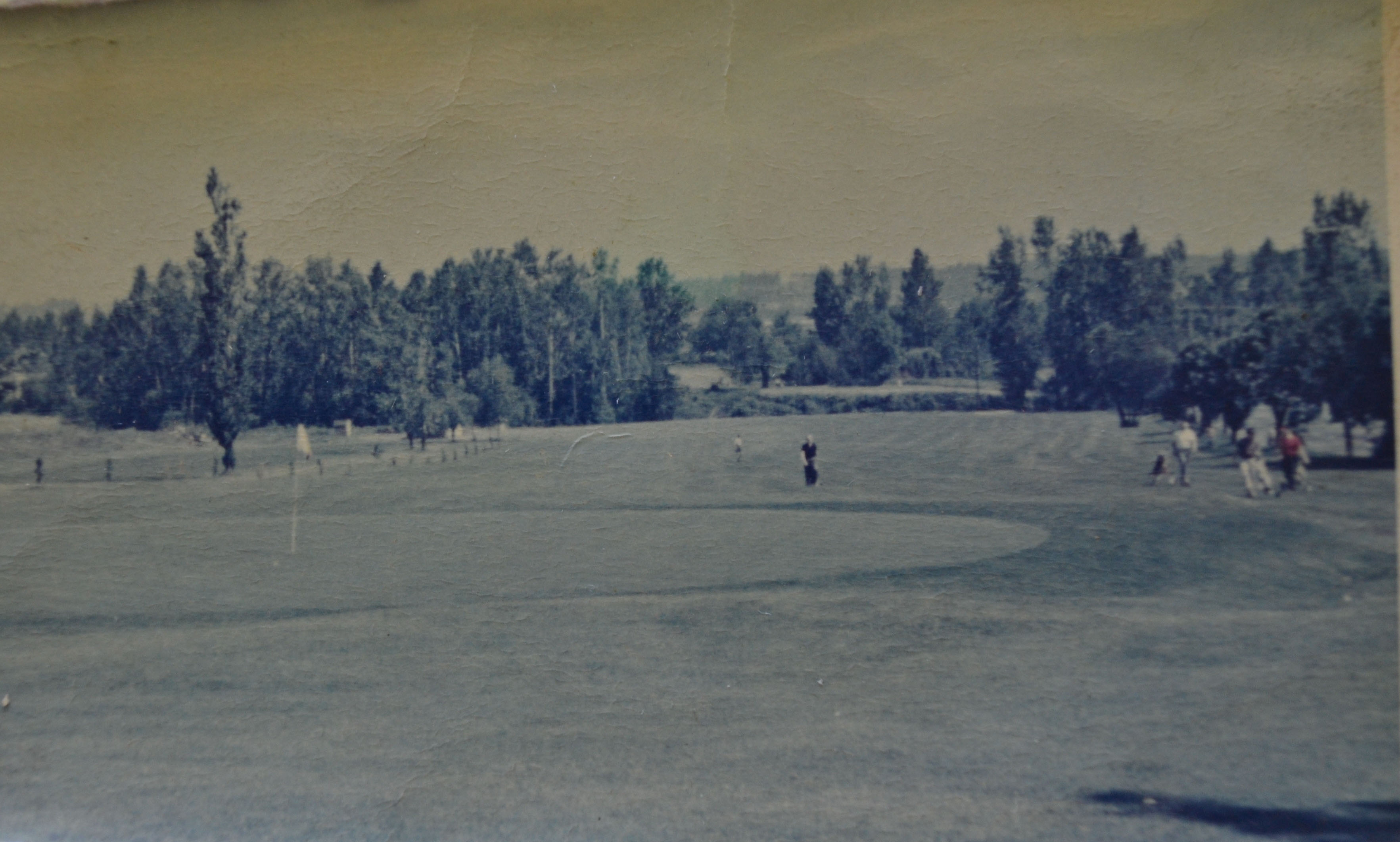
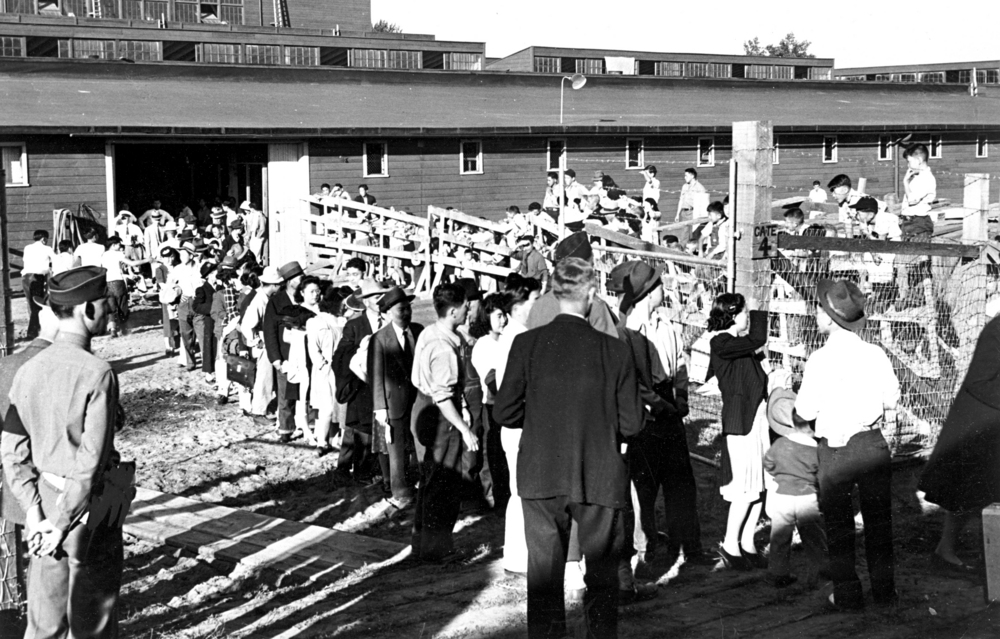
The Heron Lakes Golf Club, opened in 1971, is the first golf course in the state designed by renowned course architect Robert Trent Jones, Jr., and one of very few publicly owned courses in Oregon with 36 holes. It is located on and near two historically significant sites in North Portland: Vanport City, a wartime housing community built to accommodate shipyard workers, including thousands of Black employees who were denied housing in Portland; and the Portland Assembly Center (now Portland Expo Center), where Japanese and Japanese Americans were imprisoned before being sent to incarceration camps during World War II. The course is owned and operated by Portland Parks and Recreation.
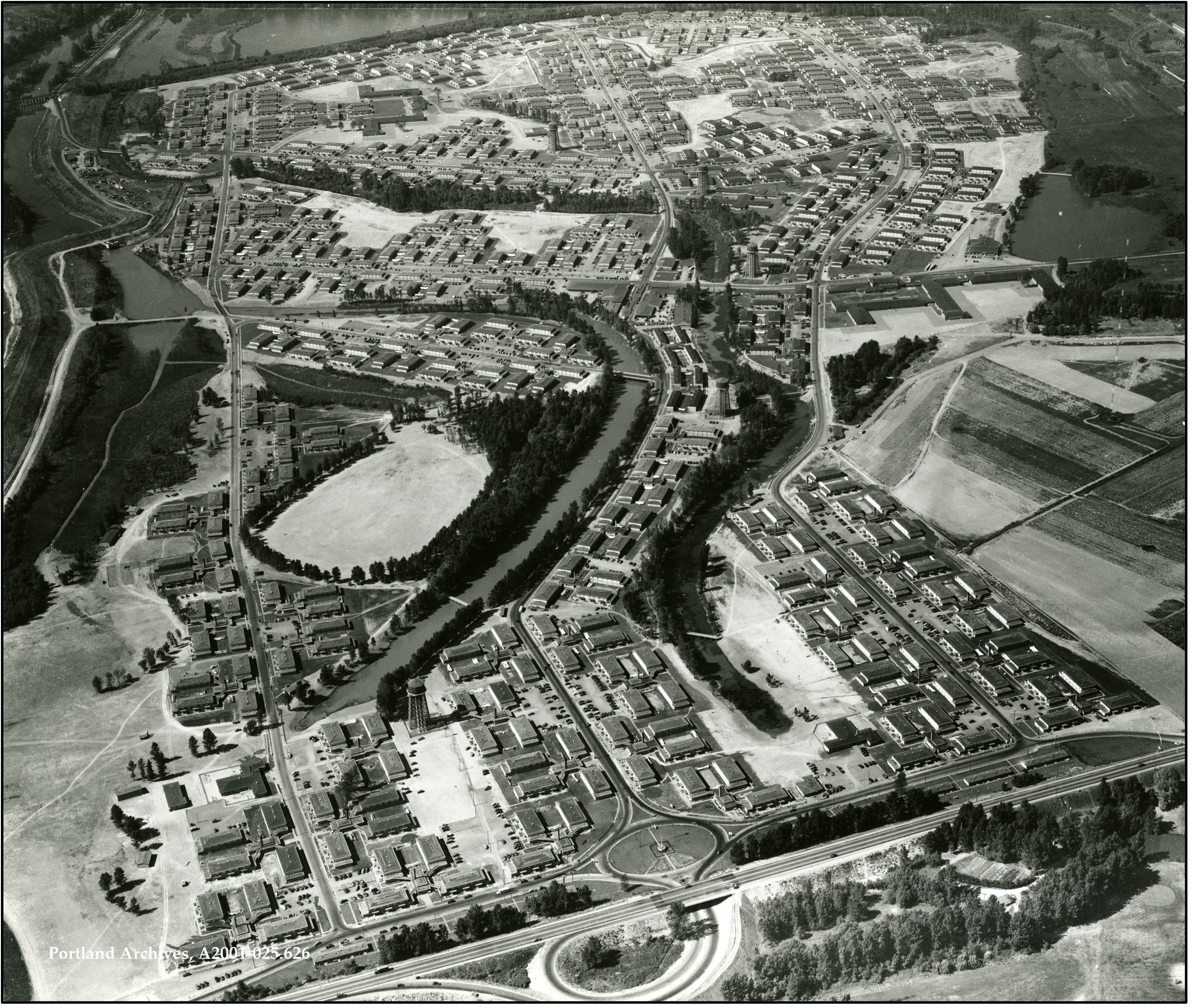
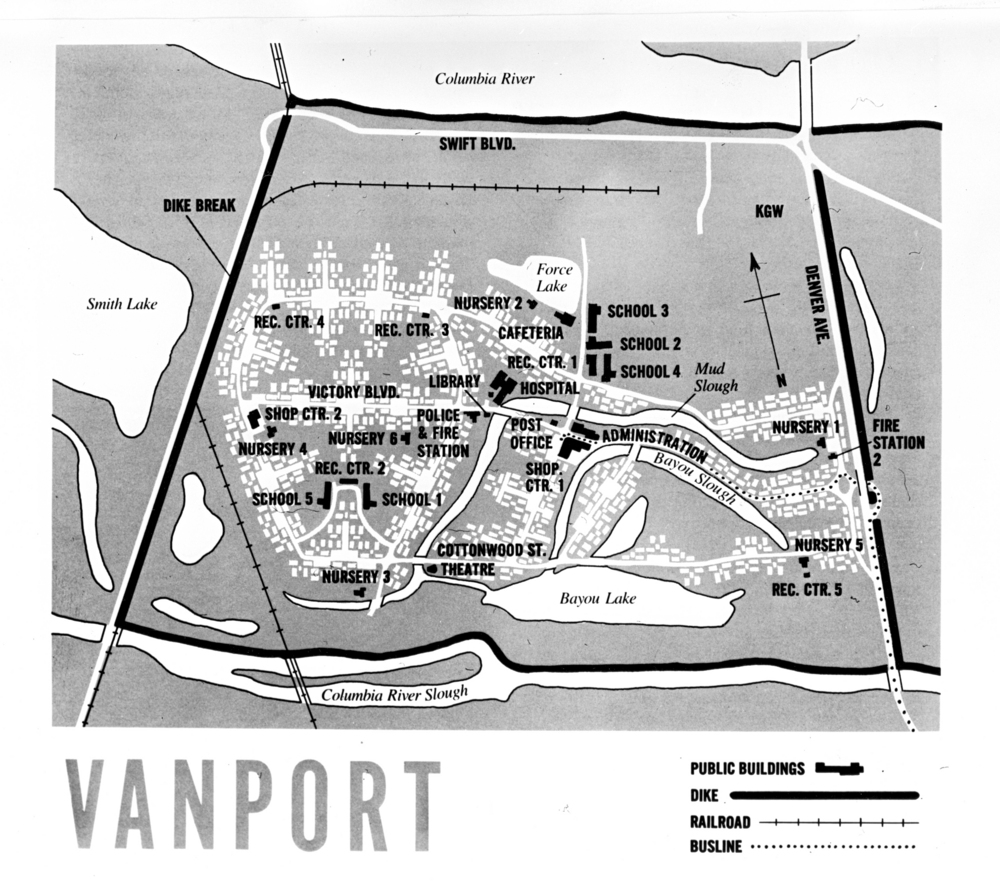
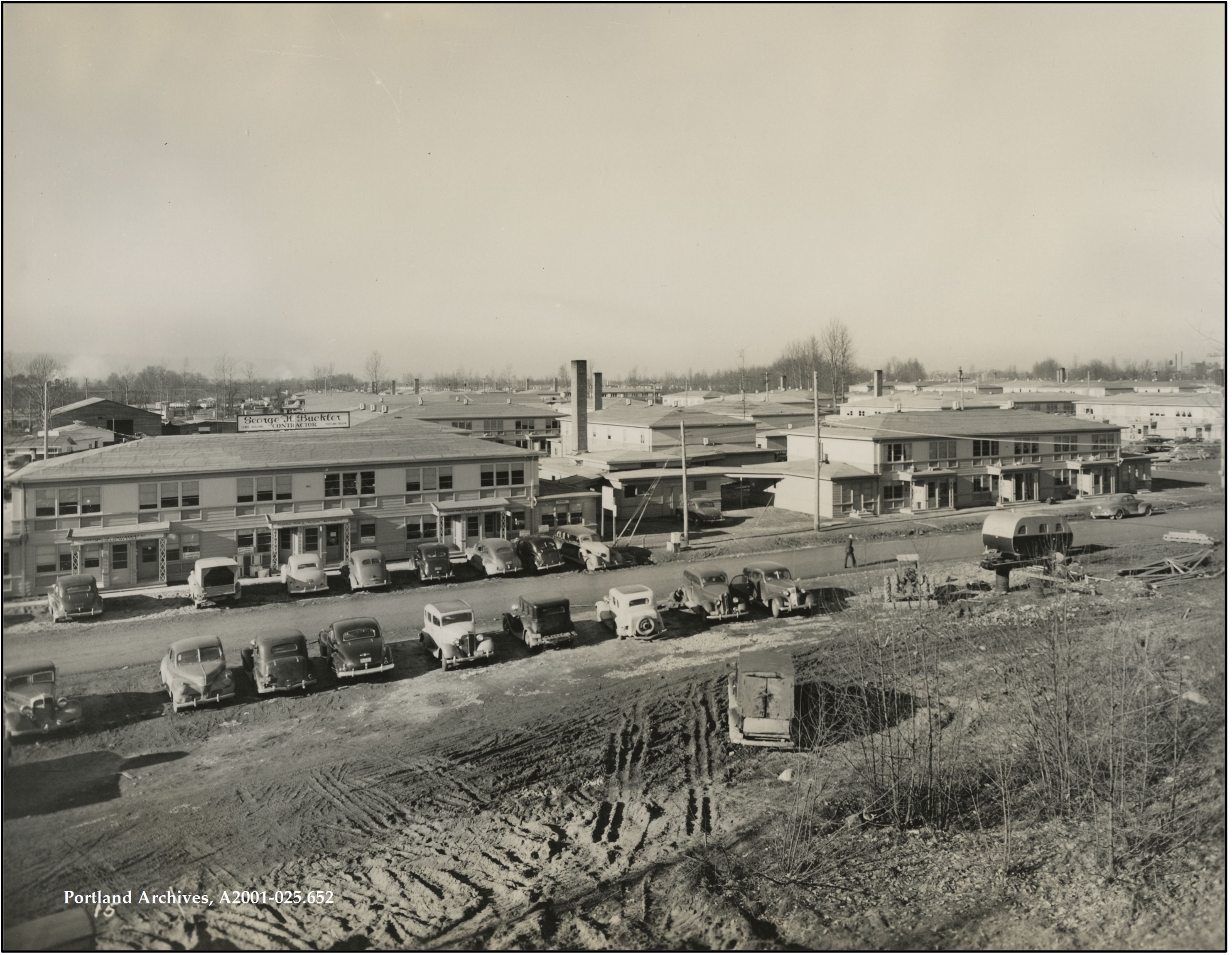
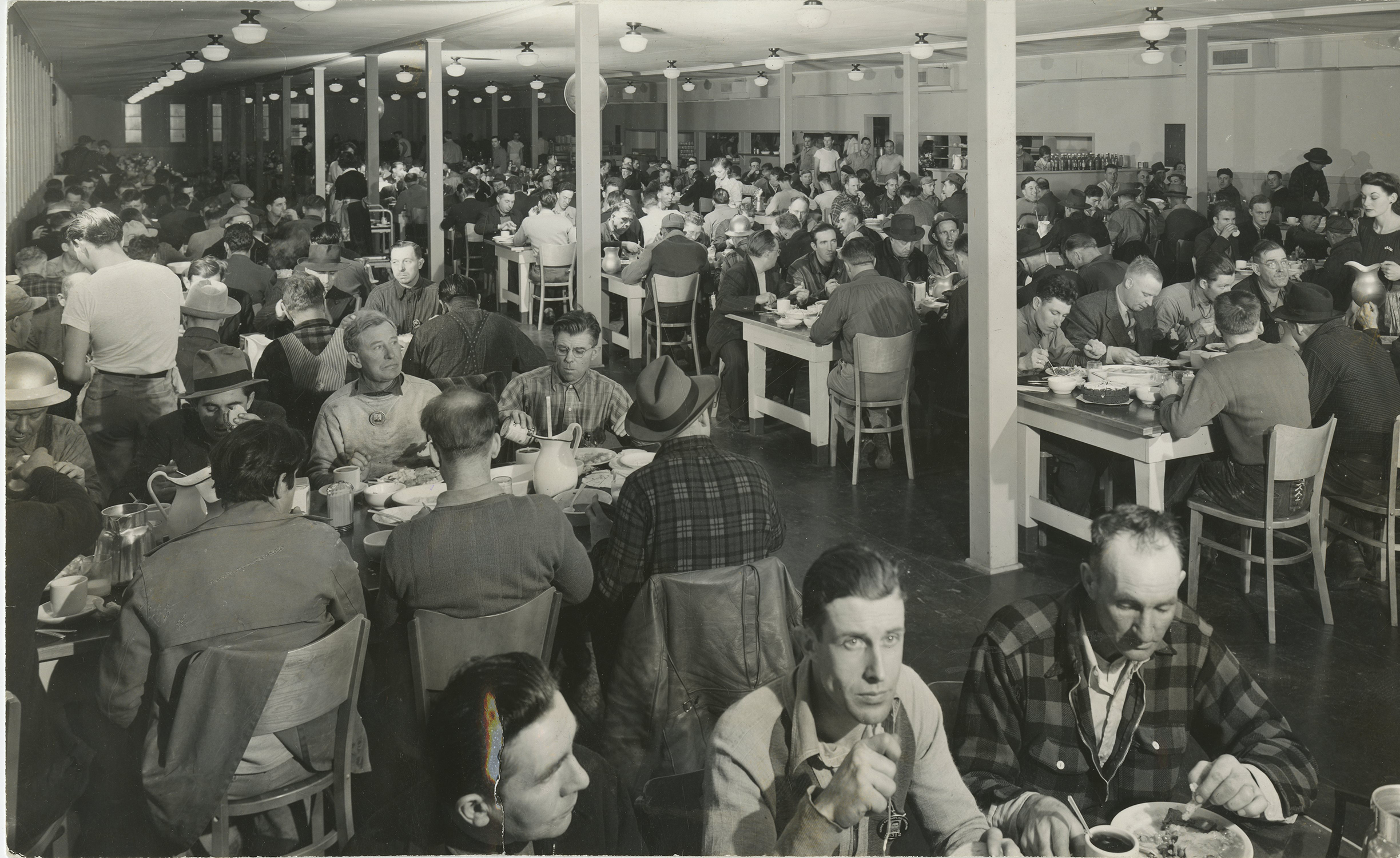
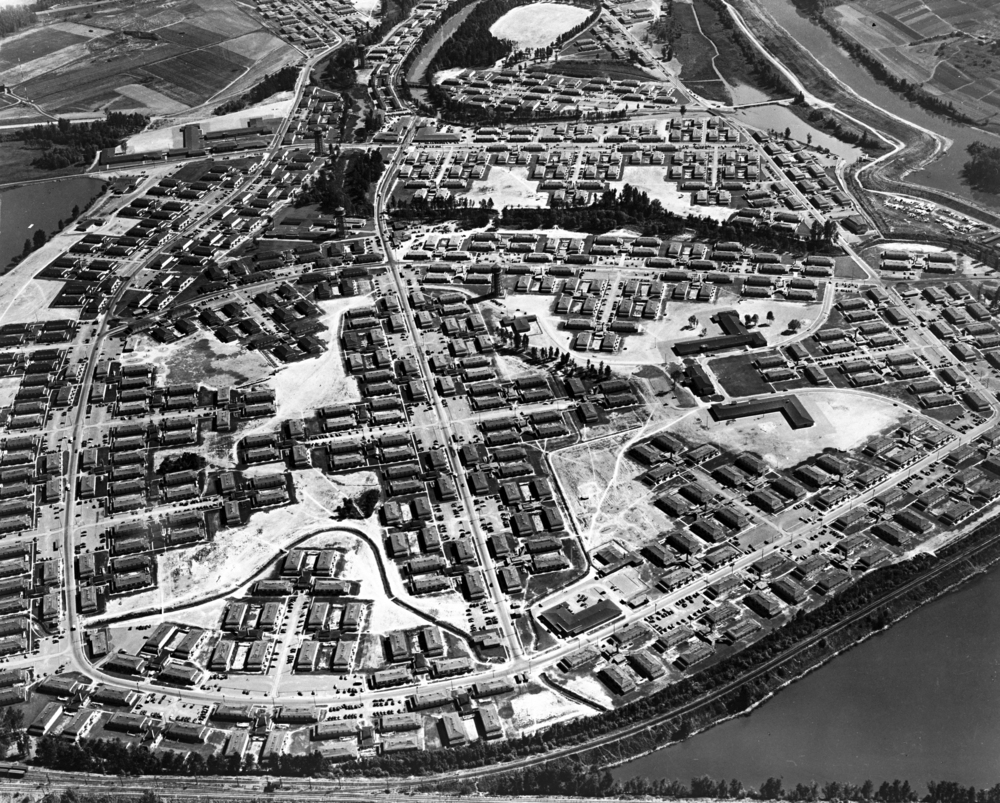
Heron Lakes Golf Club is located to the east of Smith Lake on a section of the Columbia River flood plain on what had been the western portion of Vanport, once the second-largest city in Oregon with a peak population of 42,000. Vanport was built in 1942 as part of Edgar Kaiser’s deal with the U.S. Maritime Commission to house workers for his three shipyards on the lower Willamette and Columbia Rivers. The apartment buildings and medical services were racially segregated, and the schools and public buildings were integrated.
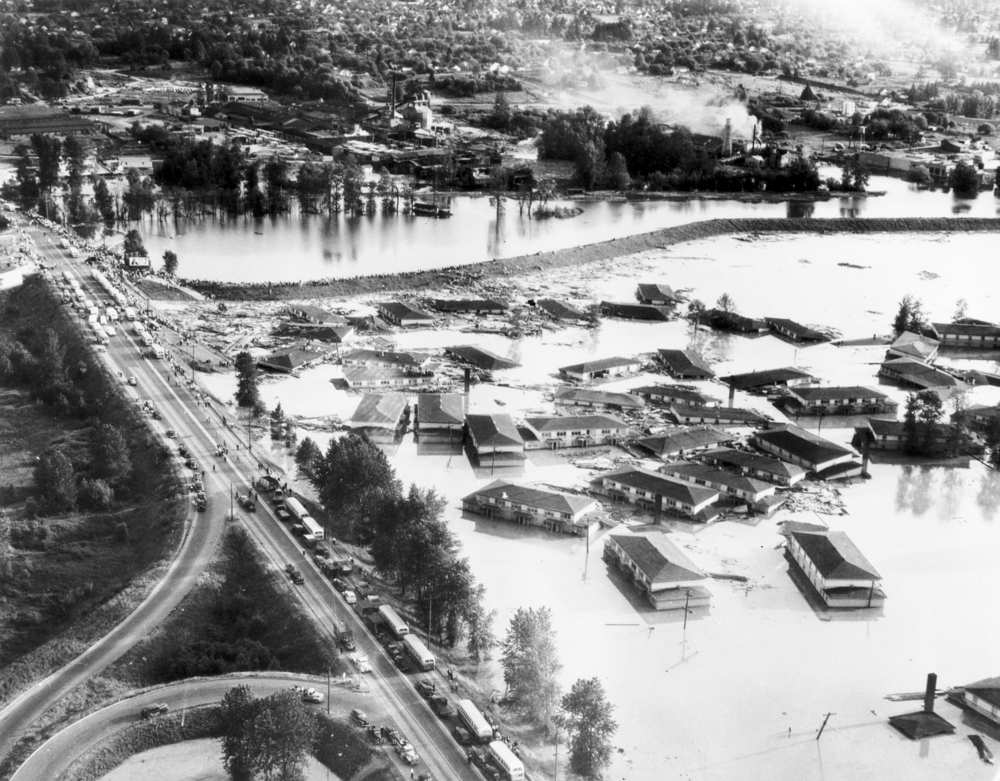
After the war, the city’s population declined to around 18,500, and the Housing Authority of Portland (HAP) began dismantling buildings and planning for redevelopment. Approximately 6,000 Black residents remained in Vanport, in large part because of restrictive housing covenants used by White Portlanders to exclude Black tenants and homeowners. In May 1948, the various efforts by the U.S. government and HAP to keep the Columbia River out of the flood plain came to naught when a levee failed. The town was inundated and left in ruins, never to be rebuilt, displacing residents and creating a housing crisis exacerbated by racist housing policies.
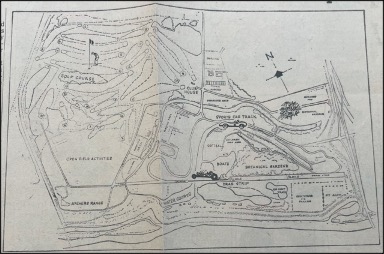
Once the debris from the flood had been removed, Portland mayor Fred Peterson requested that the U.S. Air Force, which had a claim to the land through the Federal Public Housing Authority, give up rights to approximately 640 acres in 1953. Peterson wanted the land for inclusion in the Port of Portland in order to provide for industrial sites and commercial expositions. By 1961, the land transfer was complete, and the area was renamed West Delta Park. Over the next decades, the city built a mix of public, recreational, and transportation facilities.
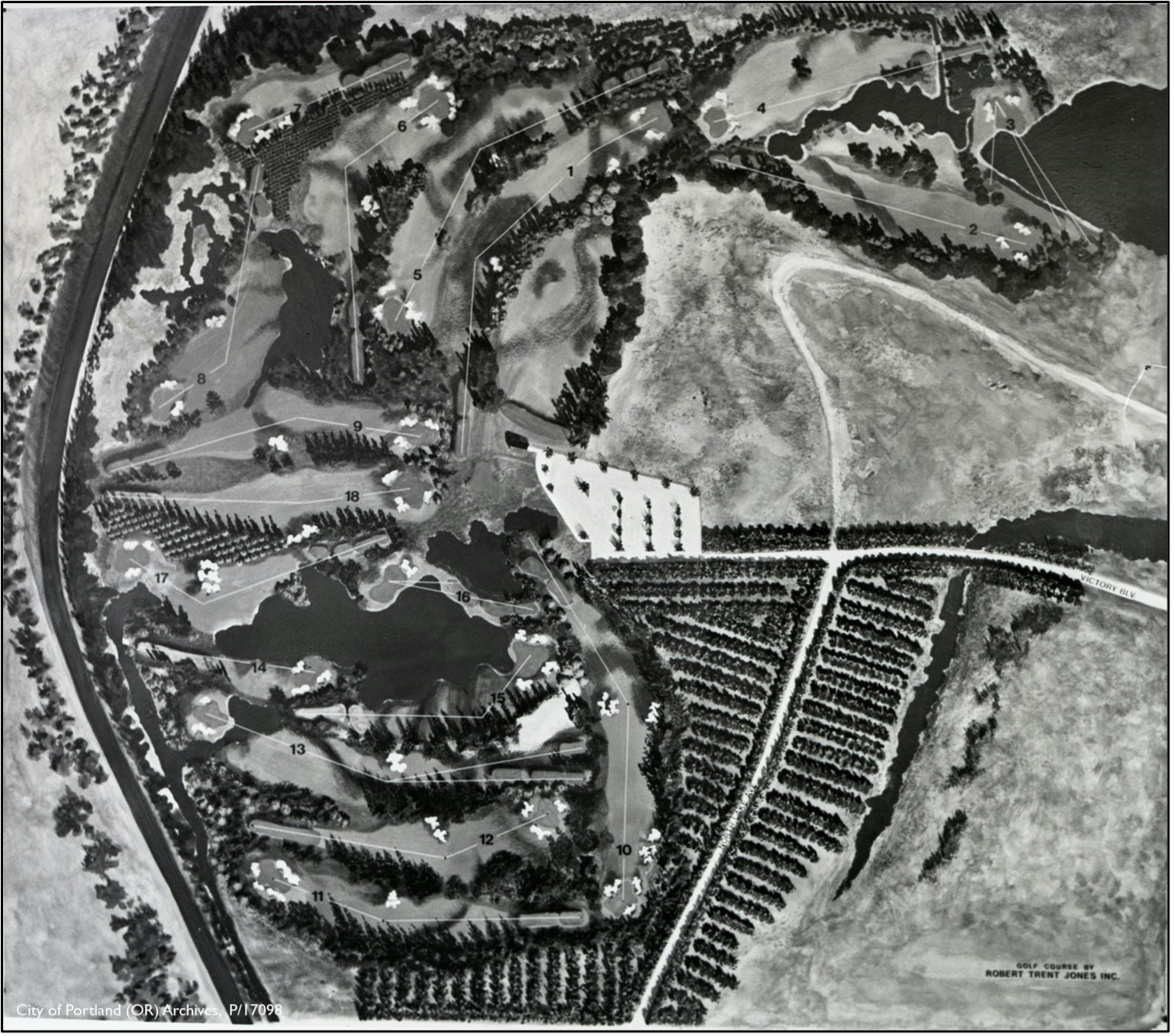
In 1967, the City of Portland budgeted $600,000 from a voter-passed bond to commission Robert Trent Jones, Inc.—a well-known golf course architectural firm formed in the 1930s—to design an 18-hole course on the former site of the Vanport Extension Center (now Portland State University in southwest Portland). The project was led by Robert Trent Jones, Jr., (under the guidance of his father, Jones, Sr.) as one of his final projects before founding his own firm. Because the terrain sat just ten feet above sea level, below the Columbia River’s flood stage, environmental engineering played a crucial role in the course’s development. To mitigate flood risk, the site was protected by levees, flood walls, pump stations, and retention ponds managed by the Multnomah County Drainage District.
Construction involved moving 360,000 cubic yards of earth and excavating six lakes to shape the course’s contours and water features. The landscape was reshaped with over 3,500 trees and shrubs, creating a park-like setting. Original planting records from the 1960s documented 2,795 trees representing fifty deciduous and sixteen coniferous species, including maple, cedar, sweetgum, pine, hawthorn, fir, willow, and plum trees, alongside native berry bushes and grasses. The course layout was designed to showcase prominent landmarks —Hole 1 faces Mount St. Helens, and Hole 18 finishes with a line toward Mount Hood. The facility opened with 18 holes in 1971 as the West Delta Park Golf Course.
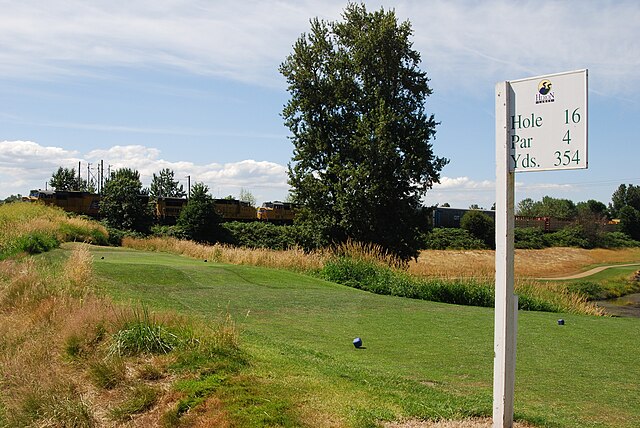
The original layout integrates Jones Sr.'s hallmark design elements, including strategic hazards, variable lengths, and shot-shaping opportunities, with an emphasis on accessibility and aesthetic landscaping. The initial courses at Heron Lakes were built in the parkland style to challenge golfers competing in tournaments. The grounds feature large greens, tee boxes, and strategic water hazards. The city extended the course to 27 holes in 1987 and named the new holes the Red Nine. The first 9 holes became the Blue Nine, and the second 9 became the White Nine. The facility was renamed Heron Lakes in 1988, after the birds who nested nearby. In 1992, an additional 9 holes were added to the Red Nine to create the Great Blue Course, completing the current 36-hole layout. The Great Blue was modeled after links-style courses (the oldest type of golf course) and is among the most challenging in Portland. Its uneven, rolling fairways are narrow and rough, with water and sand hazards throughout.
Heron Lakes retains significant integrity in both design and function. Historic photographs show that the original pin layouts and structures remain largely unchanged from the design plans by Jones, Sr., including the clubhouse situated between the historic 18-hole Greenback course (designed by Jones, Sr.) and the Great Blue 18-hole course (designed by Jones, Jr.), a mid-century modern relief station (bathroom) between Holes 13 and 15, and a wooden bridge between Holes 13 and 14. Overall, Heron Lakes is notable for its dual purpose of recreation and flood control, while preserving the remains of the historically significant sites of Vanport City and the Portland Assembly Center.
-
![]()
Aerial view of Heron Lakes Golf Course, 1971.
Courtesy Portland CIty Archives, P/I7098
-
![]()
Aerial photo of Vanport City, 1943.
Courtesy City of Portland Housing Authority, Portland City Archives, A2001-025.626
-
![]()
Map of Vanport, by Maben Manly.
Oreg. Hist. Soc. Research Library, OrHi 94480
-
![]()
Vanport Apartment buildings, c.1942.
Courtesy City of Portland Housing Authority, Portland City Archives, A2001-025.652
-
![]()
Vanport flood, 1948.
Oreg. Hist. Soc. Research Library, bb000004
-
![]()
City of Portland's plans for a recreation complex at the former Vanport City, 1963.
Courtesy Portland City Archives
-
![]()
One of the design plans for the original 18 holes of the West Delta Park/Heron Lakes Golf Course, by Robert Trent Jones Inc..
Courtesy Public Works Administration, 1968
-
![]()
Heron Lakes Golf Course, July 3, 2007.
Courtesy David Van Horn, Wikimedia Commons -
![]()
Front view of relief station facing northeast.
Courtesy Jody Reeser, AIA NCARB, Architect and Architectural Historian


Related Entries
-
![Columbia River]()
Columbia River
The River For more than ten millennia, the Columbia River has been the…
-
![Colwood Golf Course]()
Colwood Golf Course
Colwood National Golf Course in Northeast Portland, originally named Me…
-
![Housing Authority of Portland]()
Housing Authority of Portland
The Housing Authority of Portland was created in 1941 in response to th…
-
![Kaiser Shipyards]()
Kaiser Shipyards
During World War II, industrialist Henry J. Kaiser established three sh…
-
![Portland]()
Portland
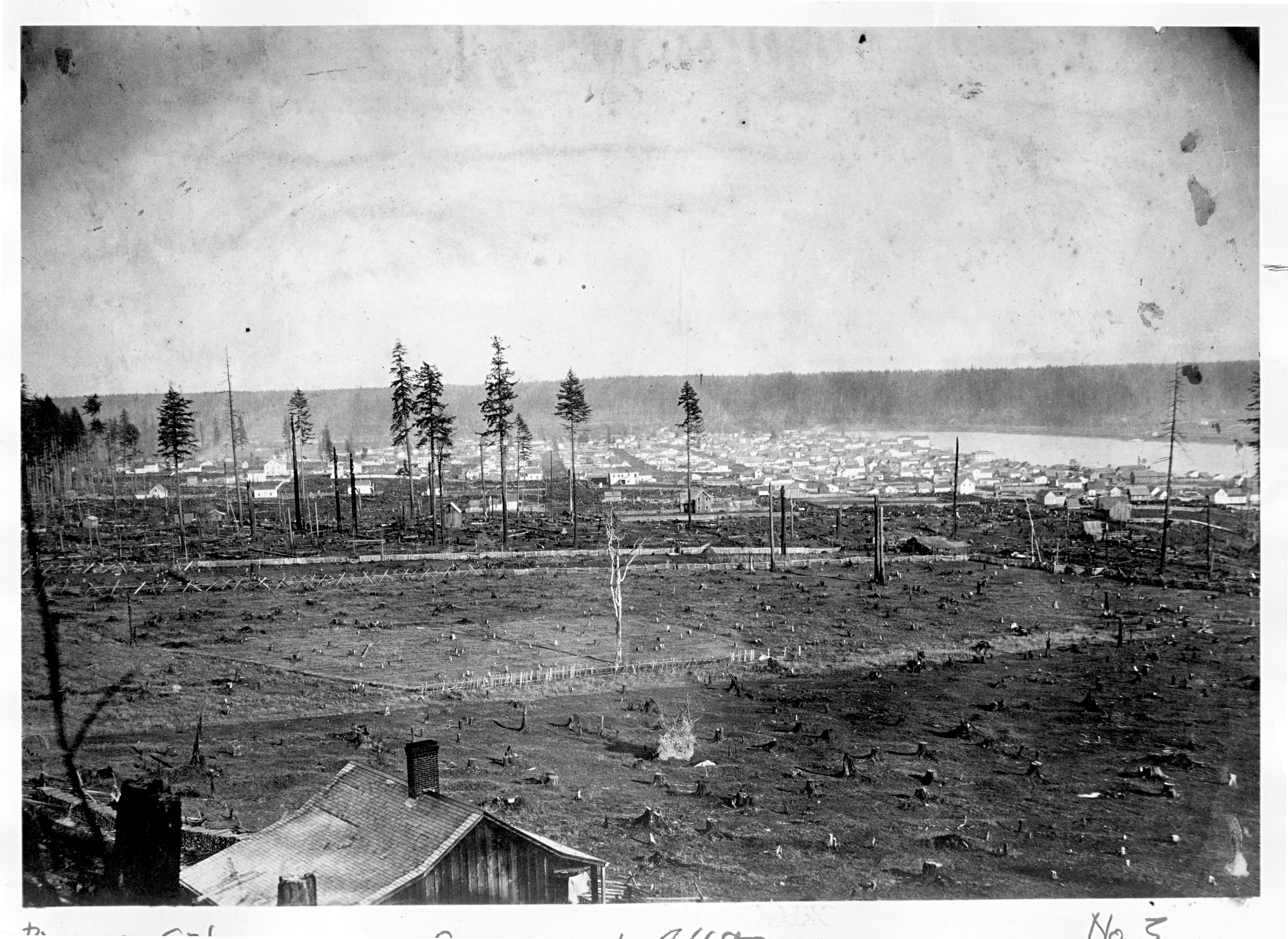
Portland, with a 2020 population of 652,503 within its city limits and …
-
![Portland Temporary Detention Center (Portland Assembly Center)]()
Portland Temporary Detention Center (Portland Assembly Center)
From May 2 to September 10, 1942, an eleven-acre building on the south …
-
![Port of Portland]()
Port of Portland
The Oregon Legislature created the current Port of Portland in 1970 by …
-
![Vanport]()
Vanport
In its short history, from 1942 to 1948, Vanport was the nation’s large…
-
![Vanport Extension Center]()
Vanport Extension Center
The Vanport Extension Center grew from a converted shopping mall and re…

Related Historical Records
Map This on the Oregon History WayFinder
The Oregon History Wayfinder is an interactive map that identifies significant places, people, and events in Oregon history.
Further Reading
Hansen, James R. A Difficult Par: Robert Trent Jones Sr. and the making of modern golf. New York, NY: Gotham Books, 2014.
“Heron Lakes Golf Course.” Ebasco Services Incorporated, 1962. AF/33904, AD/16333, City of Portland Archives, Oregon.
Boos, Donald G. “Parks - West Delta Golf Course,” 1971. AF/11218, AD/12306, City of Portland Archives, Oregon.
“Parks-West Delta Golf Course.” City of Portland City Auditor, Commissioner. 1971. AD/12306, City of Portland Archives, Oregon.
Mershon, Andy. “Once-Ruined Area Takes New Life.” Sunday Oregonian, May 26, 1968, p. 73.
Mershon, Andy. "Delta Park Plans Envision $5 Million Complex." The Oregonian, August 22, 1966, p. 5.
Robert Trent Jones, Inc., Ramsey-Waite Co., Inc. West Delta Park, Heron Lakes Golf Course, 1970. M/10504, City of Portland Archives, Oregon.