


Over its more than one hundred and fifty-year presence in Portland, Centenary-Wilbur Methodist Church became one of “the largest and most prosperous churches on the Pacific Coast” and became renowned for the weightiness of its political activities. Political scientist Michael Munk described it as an “activist institution… which hosted almost every organization of dissenters.” How Centenary-Wilbur, once located at Southeast Ninth Avenue and Ash Street in Portland, came to be a hub for collective transformative efforts illuminates the history of Methodism in Oregon as well as political progressivism in Portland.
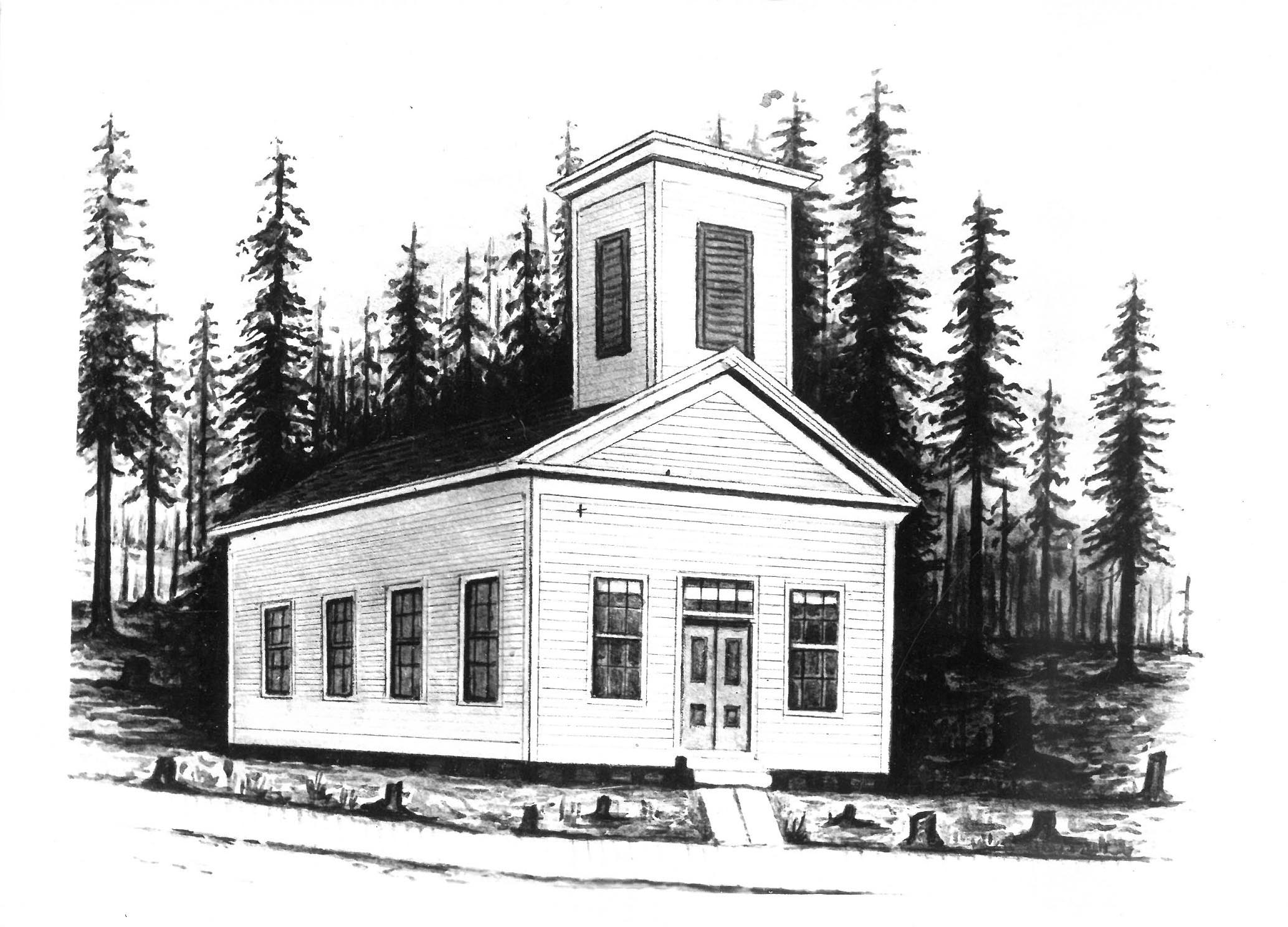
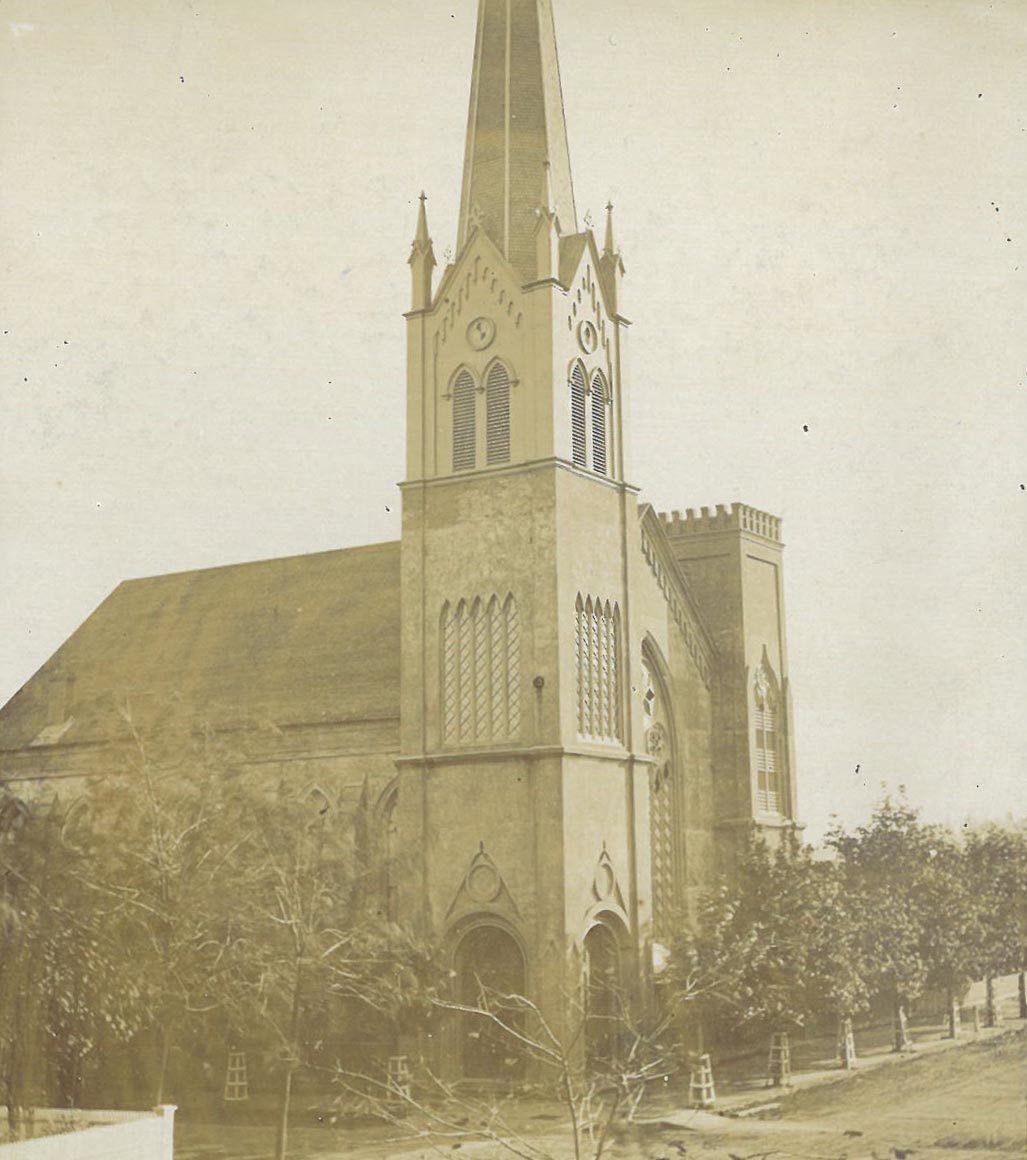
The church that was formally recognized as Centenary-Wilbur in 1916 traces its roots to the first Methodist church in Portland, First Methodist on Southwest Second and Taylor. Under the direction of Rev. James H. Wilbur, the congregation built a simple frame structure in 1850 on land deeded by Daniel H. Lownsdale; they constructed a second, larger structure on Third and Taylor in 1869. The church became popular in the region for its sermons, music, and Sunday School.
In 1912, Grace Methodist Episcopal Church, a First Methodist spin-off congregation at Twelfth and Taylor, joined with First Methodist to consolidate resources. Disagreements about the future of the church, however, complicated the consolidation. The Grace congregation wanted to abandon the older Taylor building on Third, but some members resisted. In 1914, the churches' joint pastor, Rev. F. L. Loveland, made the decision to cease services in the Third Street location, and the newly formed First Methodist Episcopal occupied the much newer Twelfth Street church.
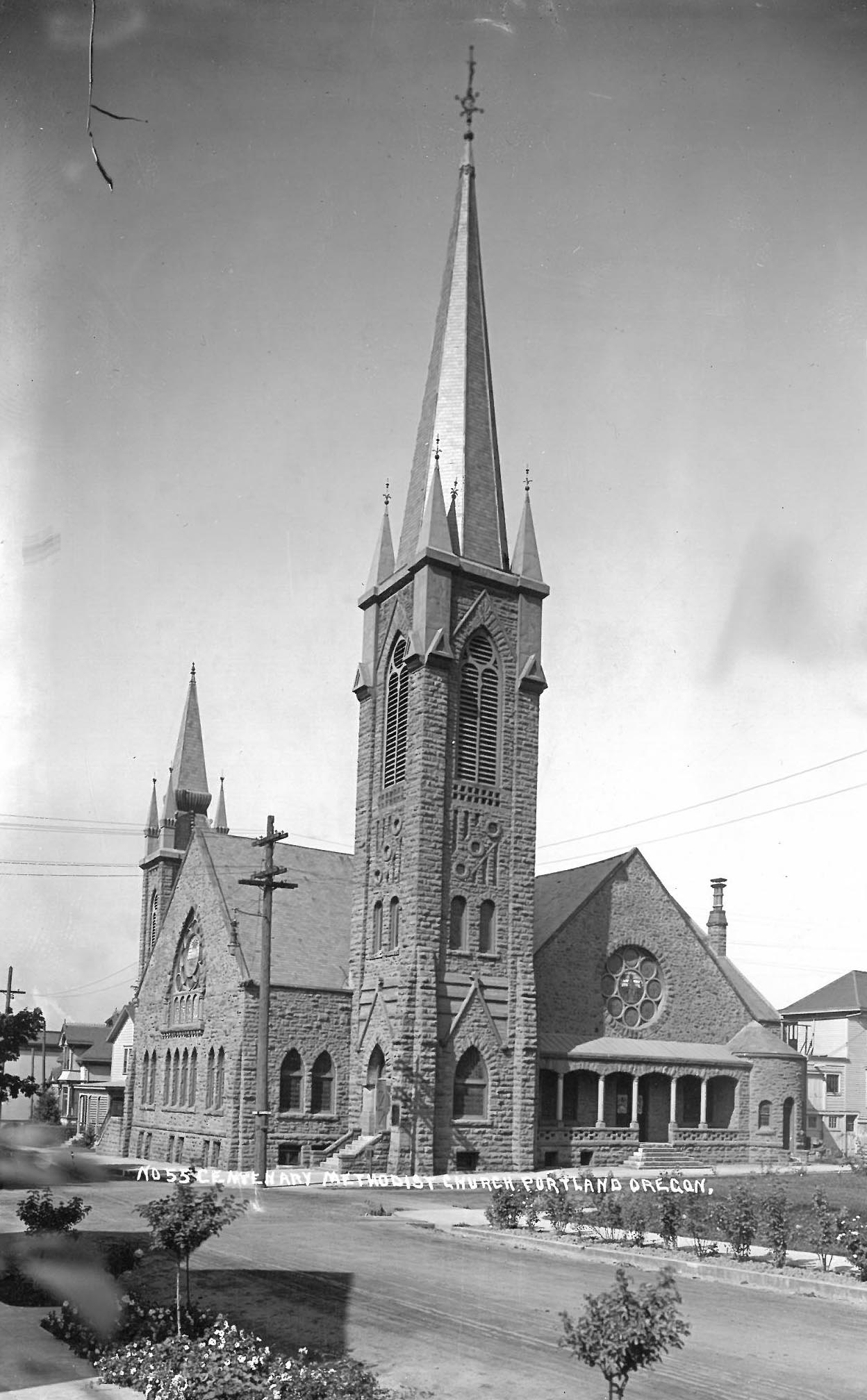
But a faction of the Third and Taylor congregants united under the name of founding reverend, J. H. Wilbur, and referred to themselves as the “Taylor Streeters.” They persisted in holding services on the sidewalk outside the abandoned church and at times in the newly built Circle Theater. In 1916, the Wilbur-identified Taylor Streeters joined the congregation of Centenary Church, which had been holding services across the Willamette River at Southeast Ninth and Ash since 1864 (the first church in East Portland). Together, they formed the Centenary-Wilbur Methodist Church. The church on Third and Taylor was demolished in 1917.
The consolidation marked a short period of growth for the congregation. “The church tower,” M. G. Horowitz wrote, “grew to 150 feet, its membership expanded to over 1,000 people and its facilities to two buildings, the second being a three-story Sunday school added to the grounds in 1928. Then began the decline." Horowitz attributed the shrinking congregation, in part, to the expansion of Sandy Boulevard in 1930, which effectively cut off its connection to Buckman and Hawthorne Park residents. Post-World War II industrial activity along the Willamette changed the neighborhood's residential feel, and the white, middle-class flight to the suburbs in the 1950s further sequestered Centenary-Wilbur into what was described as an urban "poverty pocket."
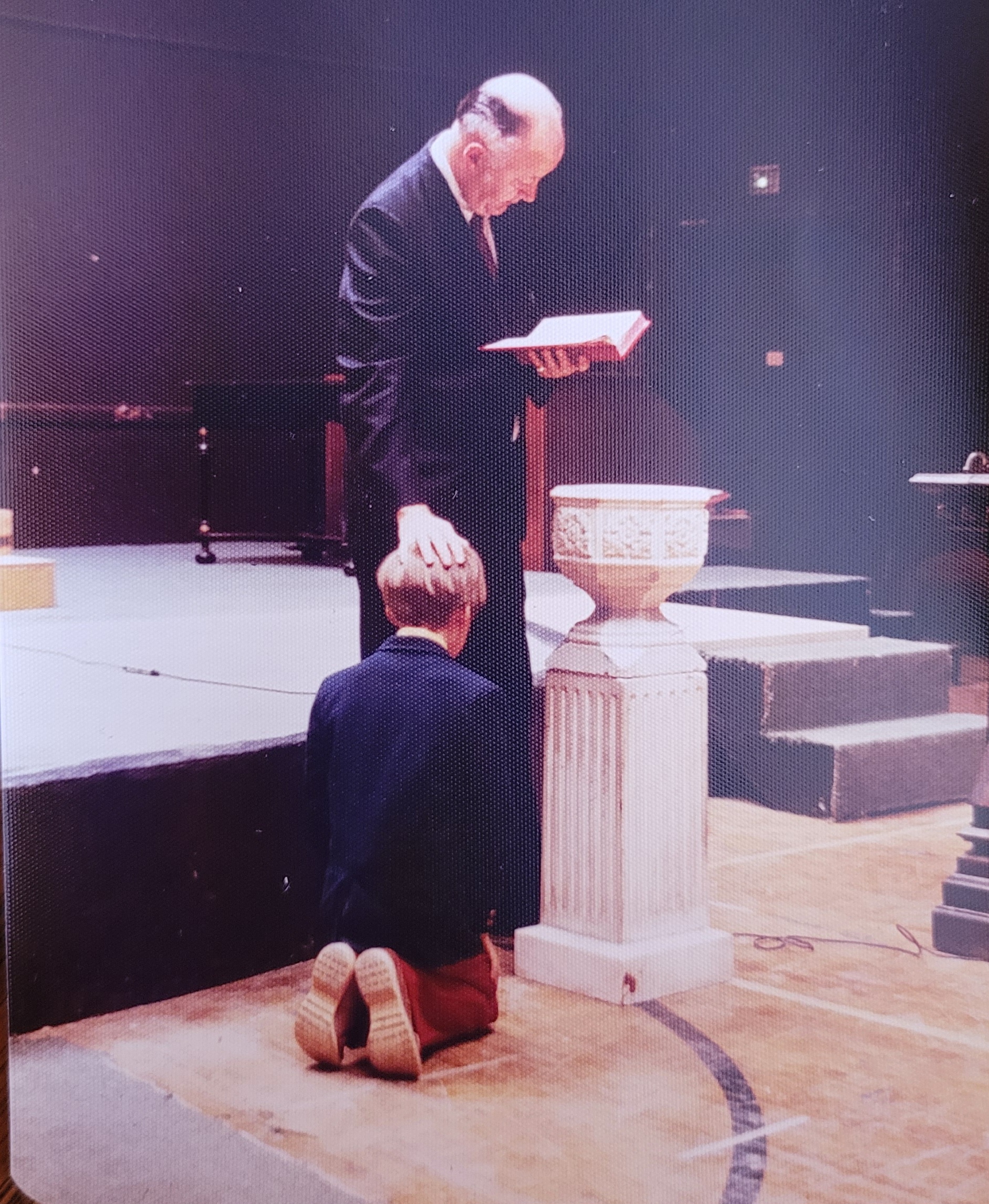
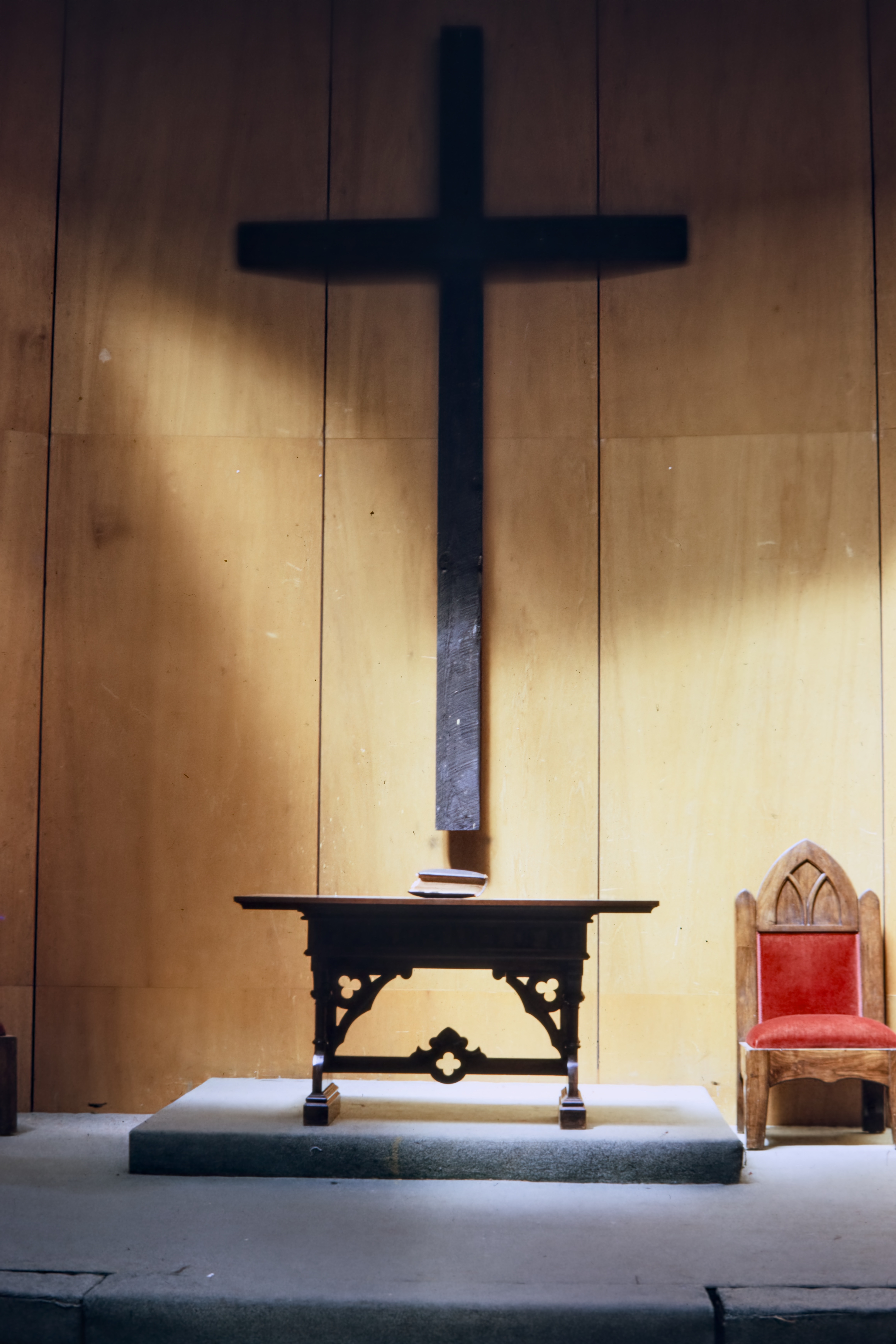
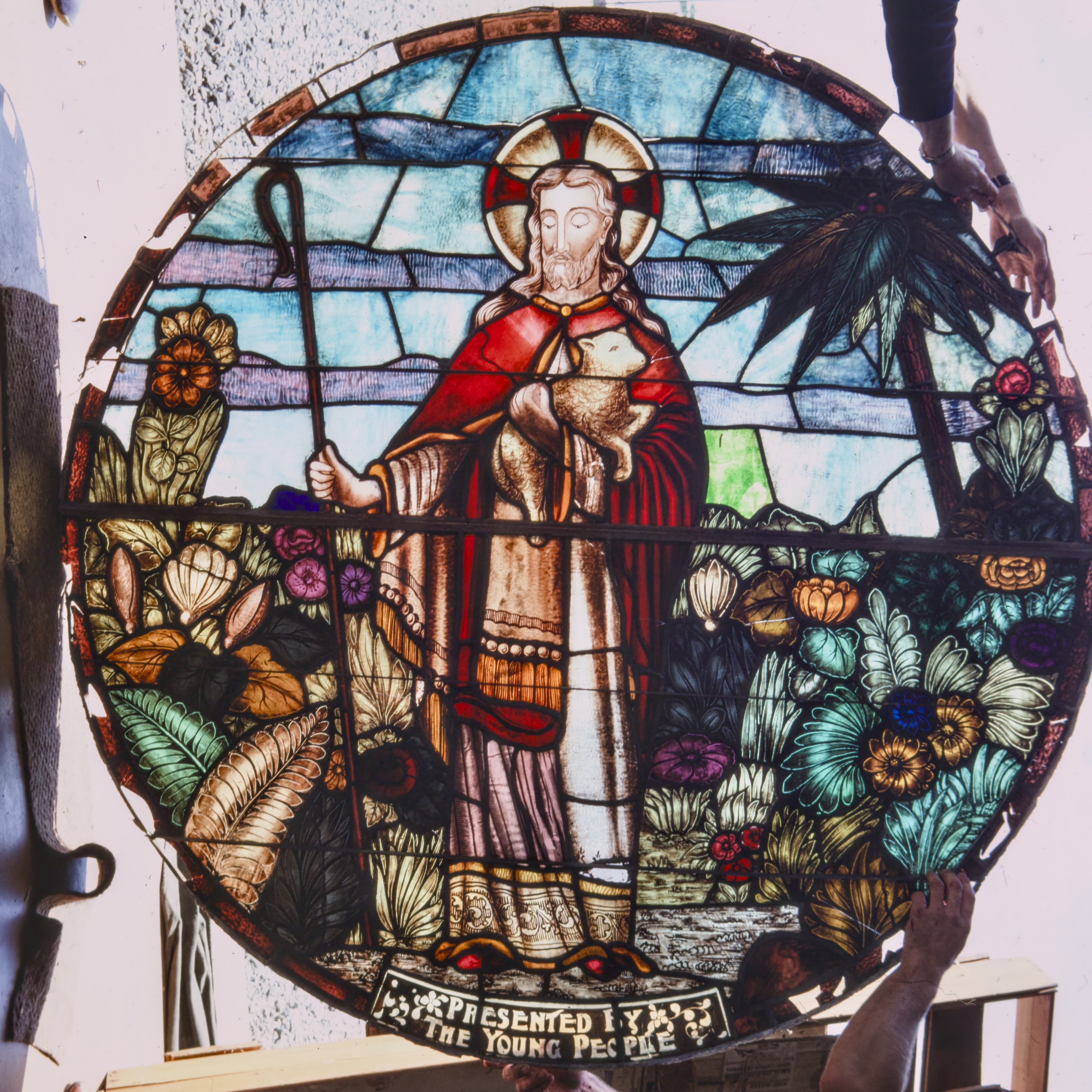
Still, the church maintained a loyal congregation of 500 members throughout the 1950s. When the church's steeple and sanctuary were destroyed by the 1962 Columbus Day storm, the spacious Sunday School building, with its office, kitchen, lounge, gymnasium, and twenty rooms, became the heart of Centenary-Wilbur. Services were held under more austere and unconventional circumstances—in the gym. The number of congregants eventually dwindled to sixty by the mid-1960s, and services were held atop the painted lines of a basketball court clearly visible beneath the stately pews.
It was under these conditions that, in 1965, Rev. Austin Harper Richardson took direction of Centenary-Wilbur. Richardson had developed a reputation for his political approach to the pulpit, prompting bishops to move him ever westward from Ohio to the Pacific Northwest, where he finally found a good fit. Richardson used the traditional tenets of Methodism to make social justice a Centenary-Wilbur signature.
Under Richardson’s pastorship, Centenary-Wilbur became a site of reconciling the tenets of Methodism with responsibility for and response to contemporary social issues, including the Vietnam War, racism, and poverty. The church opened its meeting rooms to anti-war and women’s groups, the Portland Tenants Union, the Oregon Solar Institute, and the Portland Nicaragua Support Committee, among many others. Richardson led the Ad Hoc Citizens’ Committee on Police-Community Relations, with representation from the League of Women Voters, Portland State University, the National Conference of Christians and Jews, the Greater Portland Council of Churches, and others. At weekly meetings held at Eve’s Restaurant, he organized conversations between the Ad Hoc Committee and stakeholders. The committee’s strategy put pressure on Governor Tom McCall, Mayor Terry Schrunk, and police chief Donald McNamara to respond to recommendations for police reform.
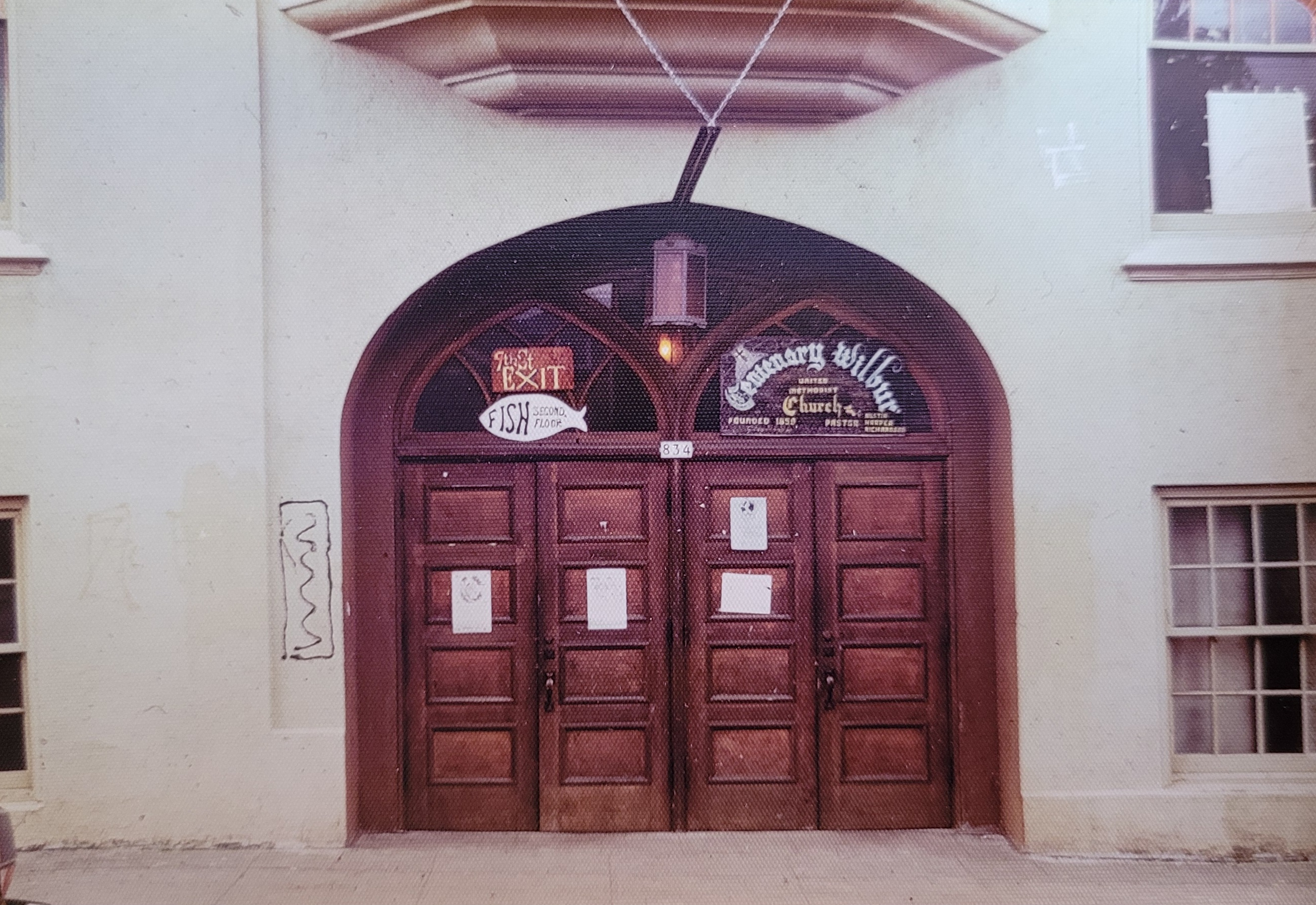
The church also hosted charitable, social, and educational activities of the FISH food pantry; the Ninth Street Exit, a counterculture music venue; the New Theater Acting Company; the Willamette Learning Center and an underground press, The Scribe. It served as a church-within-a-church as the first meeting place of what is now the LGBTQ-forward Metropolitan Community Church.
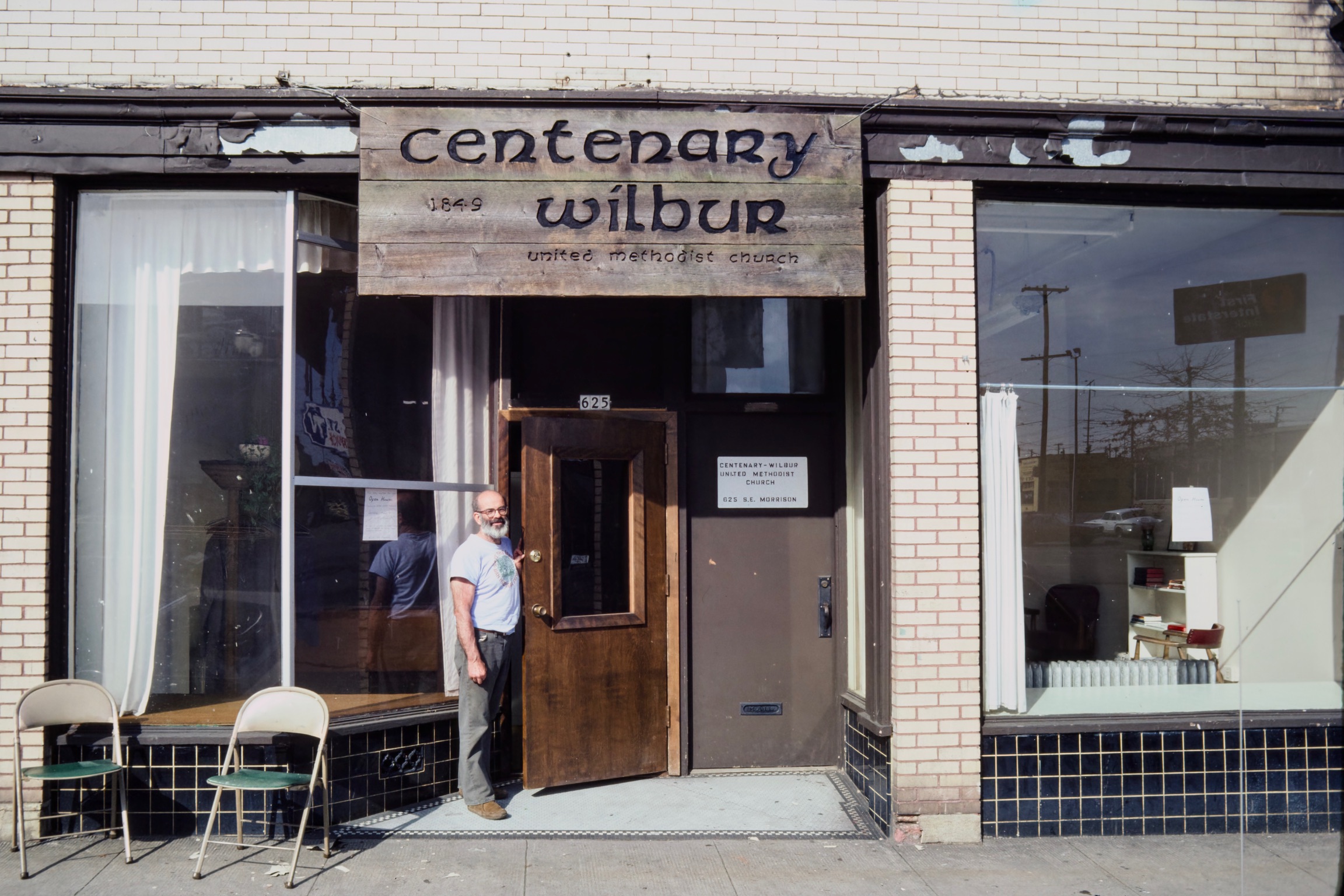
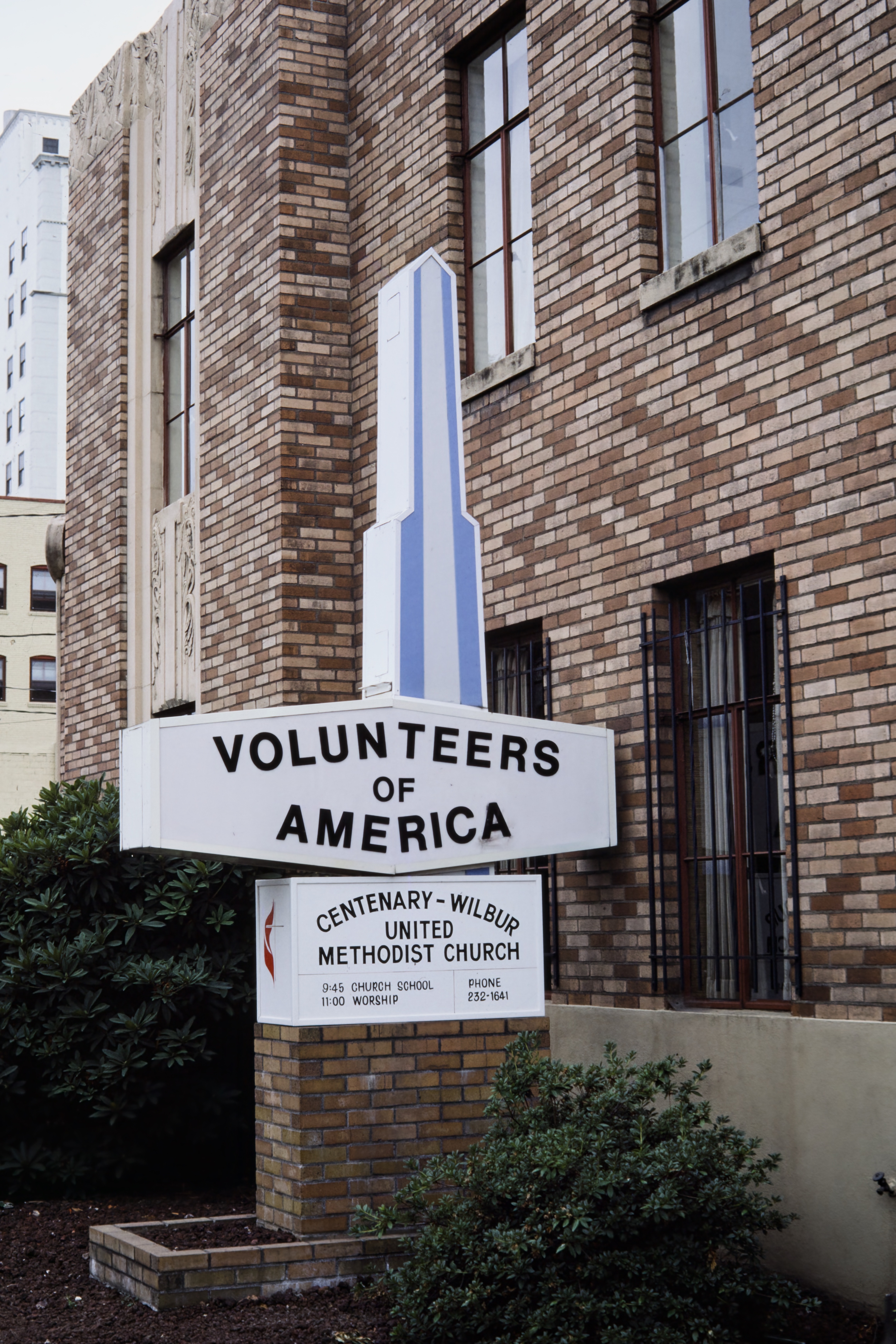
Richardson left Centenary-Wilbur in 1980 and Don Barnhart took over as pastor. Financial difficulties forced the congregation to vacate the ninth street building. The final service in the old building was in October 1980. In April 1981, the congregation began to worship in a renovated storefront at 625 SE Morrison, continuing the connection to the neighborhood. In Fall 1984, the church moved to a Volunteers of America facility located in a former funeral home on 537 SE Alder. The last worship service as Centenary-Wilbur was held at that VOA facility in May 1988, and the church’s assets were transferred to Sunnyside United Methodist Church, which became Sunnyside-Centenary. Sunnyside-Centenary’s congregation disbanded in 2015.
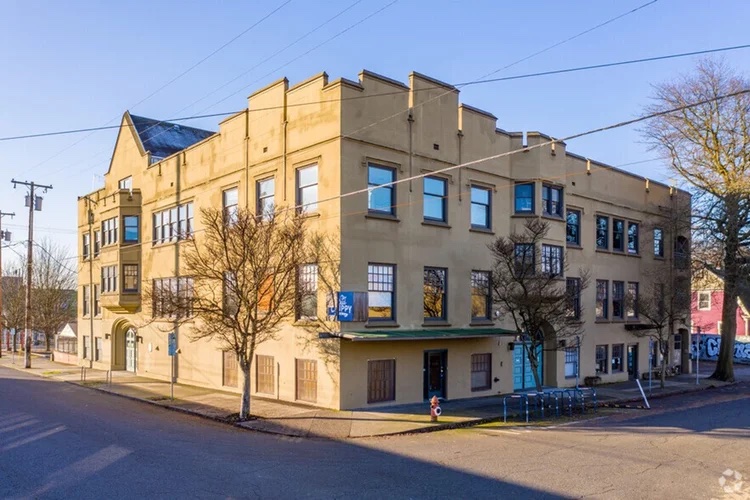
The former Centenary-Wilbur building has remained in use by music venues and restaurants, including Pine Street Theater, La Luna (1992-1999) and, in 2026, Pine Street Studios and the Scotch Lodge Whiskey Bar.
-
![]()
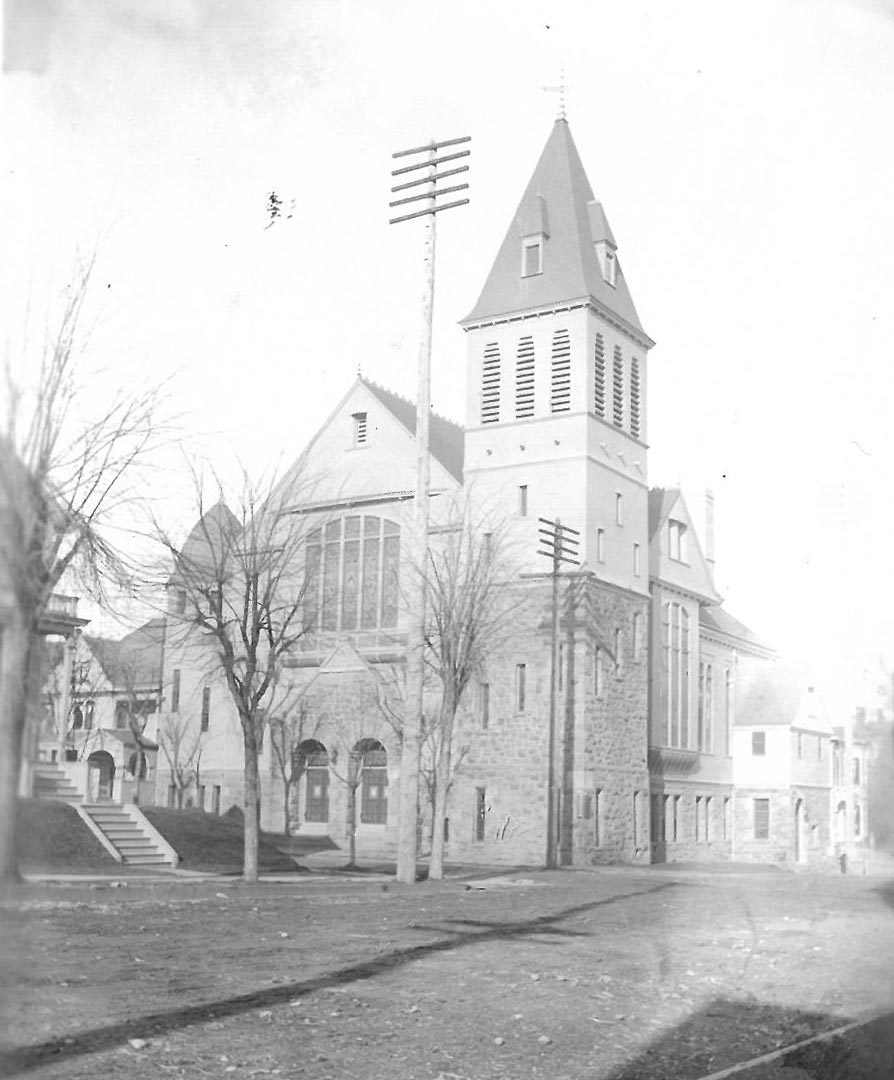
Centenary Methodist Church at SE Ninth and Ash.
Oregon Historical Society Research Library, Neg. No. 17568, Photo File #1776
-
![John W. Allison, photographer.]()
Side doors to Centenary-Wilbur Methodist Church.
John W. Allison, photographer. Courtesy Steven Allison-Bunnell
-
![]()
First Methodist Church in Portland, located at SW Second & Taylor, c.1850.
Oregon Historical Society Research Library, Neg. No. 25642, Photo File #1776
-
![]()
The second First Methodist church constructed in 1869 at SW Third and Taylor.
Oregon Historical Society Research Library, Neg. No. 73539, Photo File #1776
-
![]()
Grace Methodist Episcopal Church, located at Twelfth and Taylor, c.1900.
Oregon Historical Society Research Library, Neg. No. 38737, Photo File #1776
-
![]()
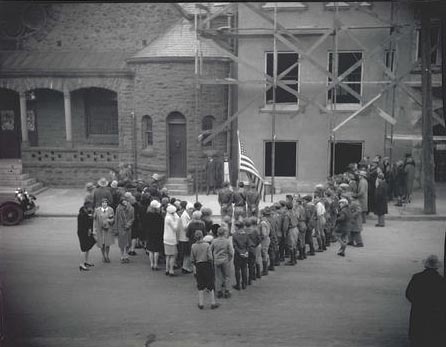
Cornerstone ceremony at Centenary-Wilbur Methodist Sunday School, December 11, 1927.
Oregon Historical Society Research Library, Digital Collections, Oregon Journal Negative Collection; Org. Lot 1368; Box 371; 0371N3008 -
![]()
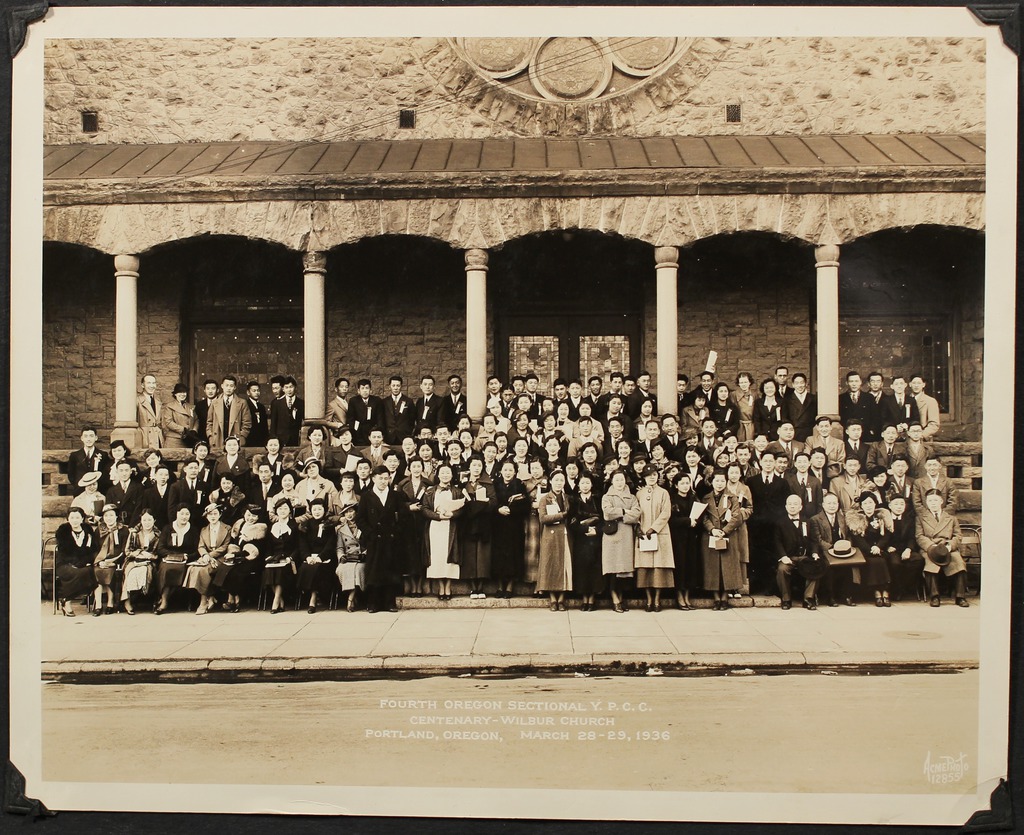
Young People's Christian Conference group at Centenary-Wilbur Church, March 28-29, 1936.
Courtesy Yasui Family Collection, Densho Digital Repository -
![]()
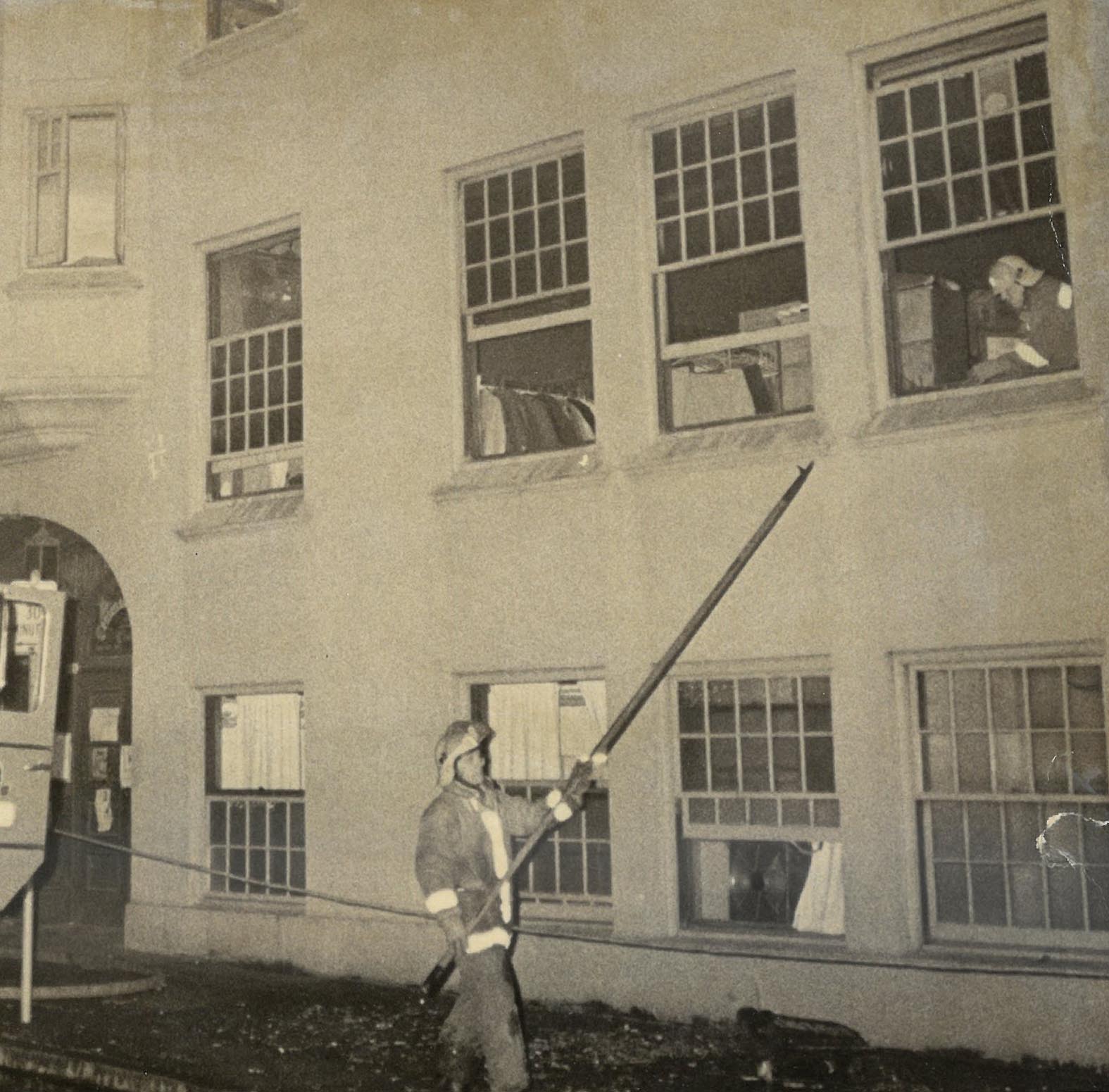
Firemen mop up after Centenary-Wilbur Church Fire, March 1977.
Oregon Historical Society Research Library, Photo File# 1776
-
![John W. Allison, photographer.]()
Rev. Austin Harper Richardson blessing a child at a church service. Basketball court floor visible.
John W. Allison, photographer. Courtesy Steven Allison-Bunnell
-
![John W. Allison, photographer.]()
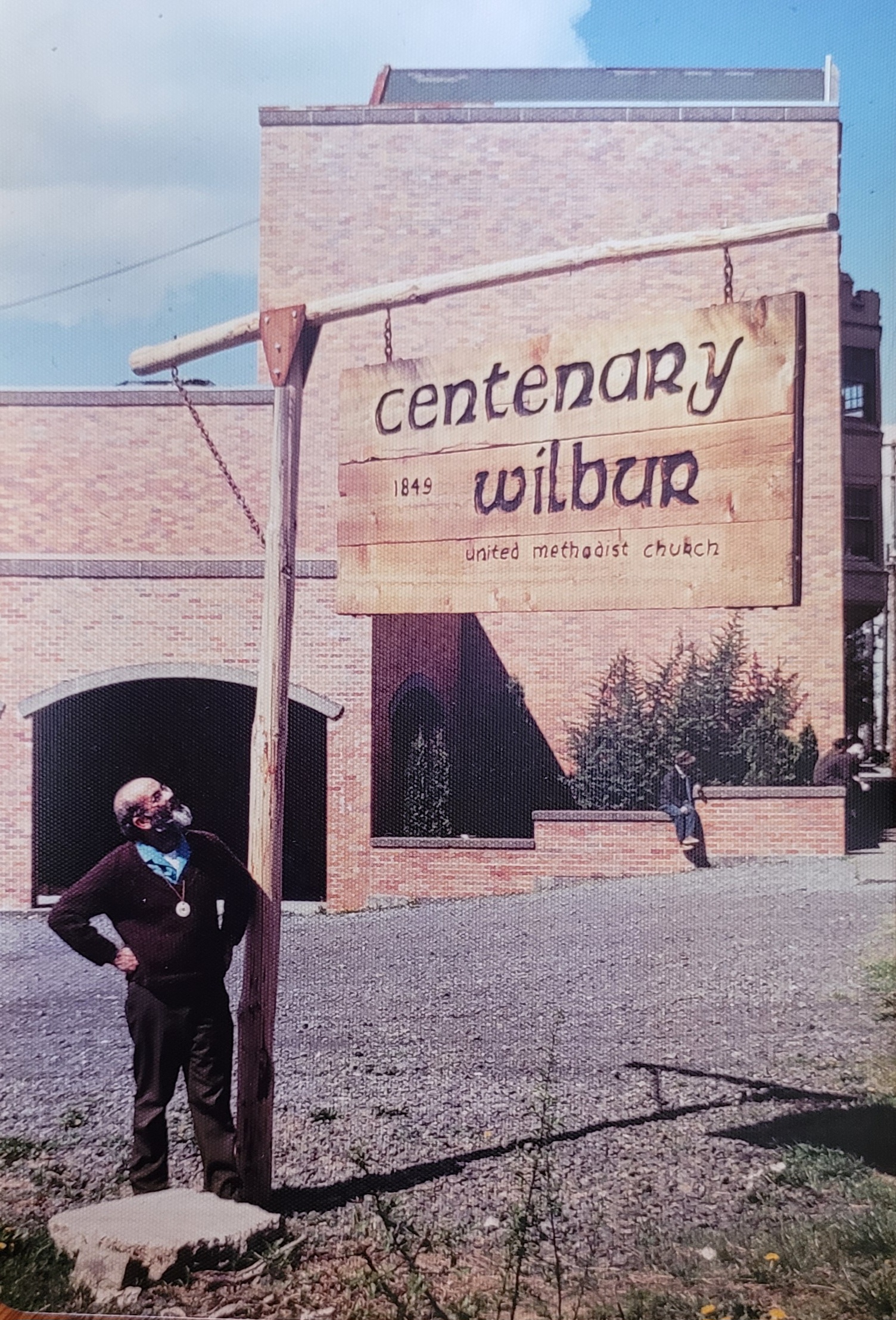
Congregant Paul Libby, and Ninth Street Exit Coffeehouse founder, in front of a new church sign.
John W. Allison, photographer. Courtesy Steven Allison-Bunnell
-
![John W. Allison, photographer.]()
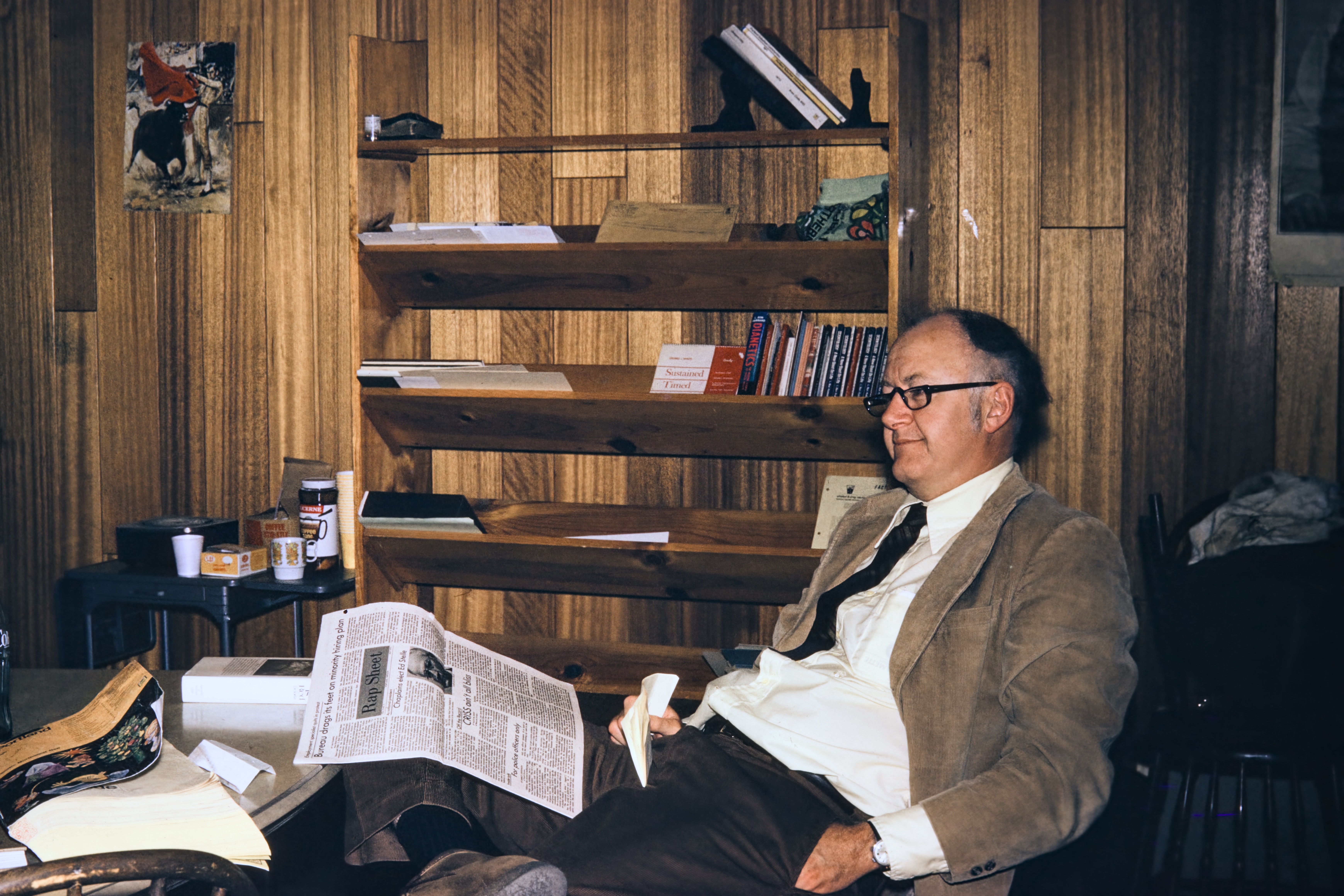
Rev. Austin Harper Richardson in his office, 1974.
John W. Allison, photographer. Courtesy Steven Allison-Bunnell
-
![John W. Allison, photographer.]()
Cross, pulpit, and chancel chair in the gymnasium, 1974.
John W. Allison, photographer. Courtesy Steven Allison-Bunnell
-
![John W. Allison, photographer.]()
Original stained glass window from the original sanctuary destroyed in the 1962 Columbus Day storm.
John W. Allison, photographer. Courtesy Steven Allison-Bunnell
-
![John W. Allison, photographer.]()
In 1980, the congregation relocated to a storefront at 625 SE Morrison Steet. This photo was takin in 1981.
John W. Allison, photographer. Courtesy Steven Allison-Bunnell
-
![John W. Allison, photographer.]()
The Centenary-Wilbur congregation worshipped at the Volunteers of American building from 1984 to 1988.
John W. Allison, photographer. Courtesy Steven Allison-Bunnell
-
![]()
Centenary-Wilbur Church building, current day.
Courtesy The Umbrella Project
Related Entries
-
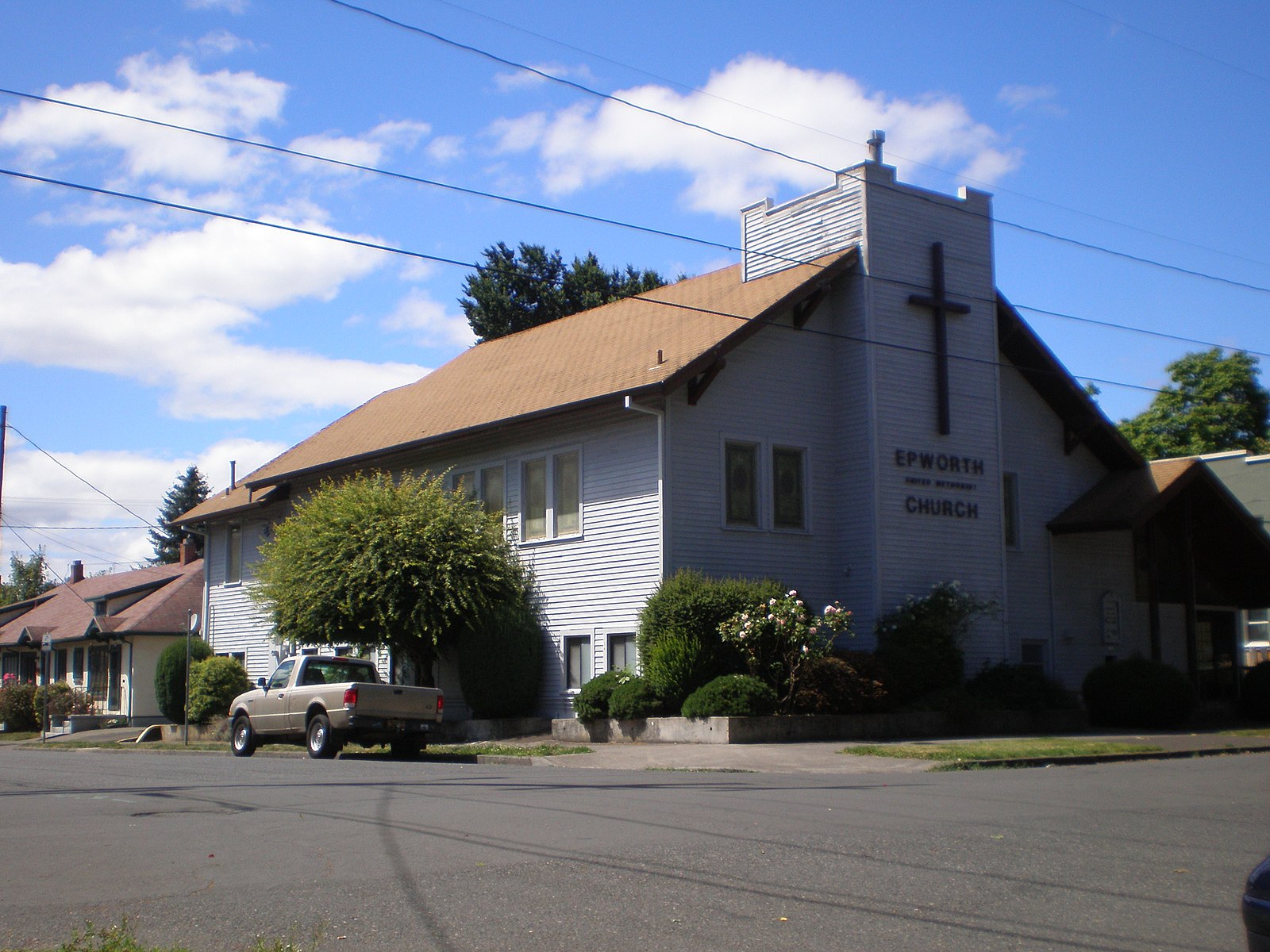
![Epworth United Methodist Church (Portland)]()
Epworth United Methodist Church (Portland)
From its beginnings as a mission in the late 1890s, Epworth United Meth…
-
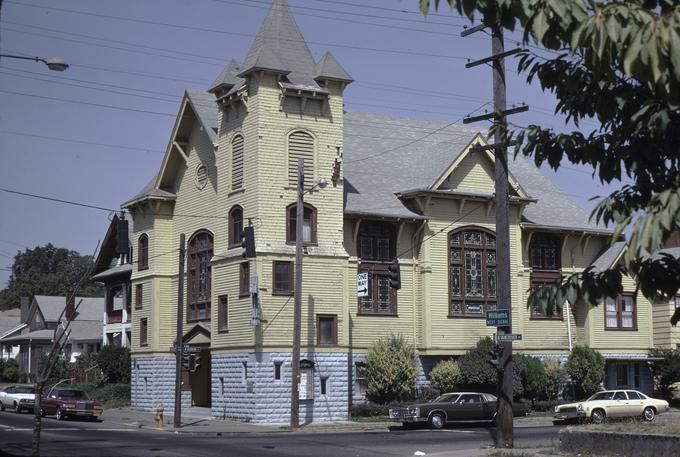
![First African Methodist Episcopal Zion Church]()
First African Methodist Episcopal Zion Church
First African Methodist Episcopal Zion is Portland's oldest African Ame…
-
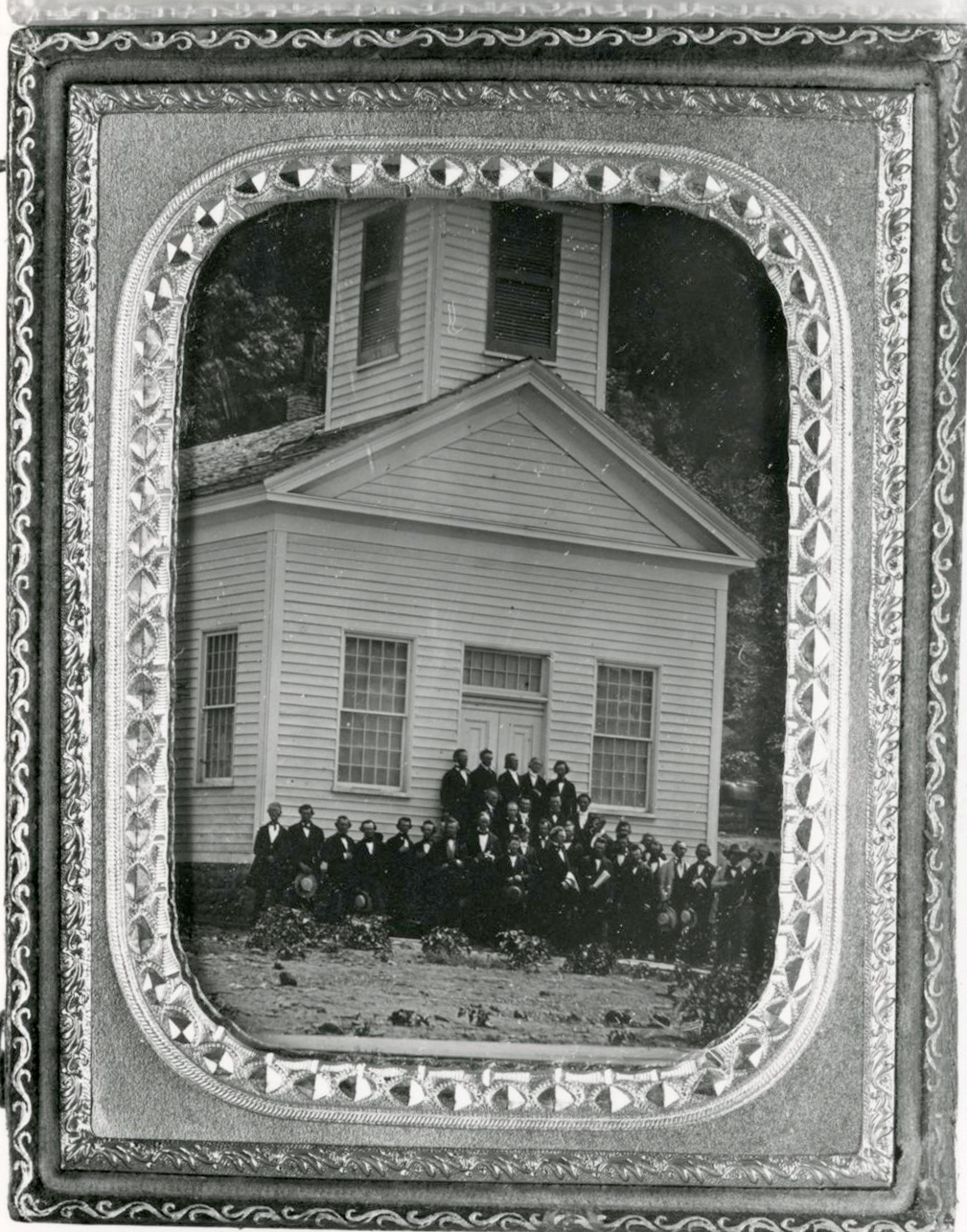
![First Methodist Church (Portland)]()
First Methodist Church (Portland)
Methodist Episcopal Church, Portland's first church, began with seven m…
-
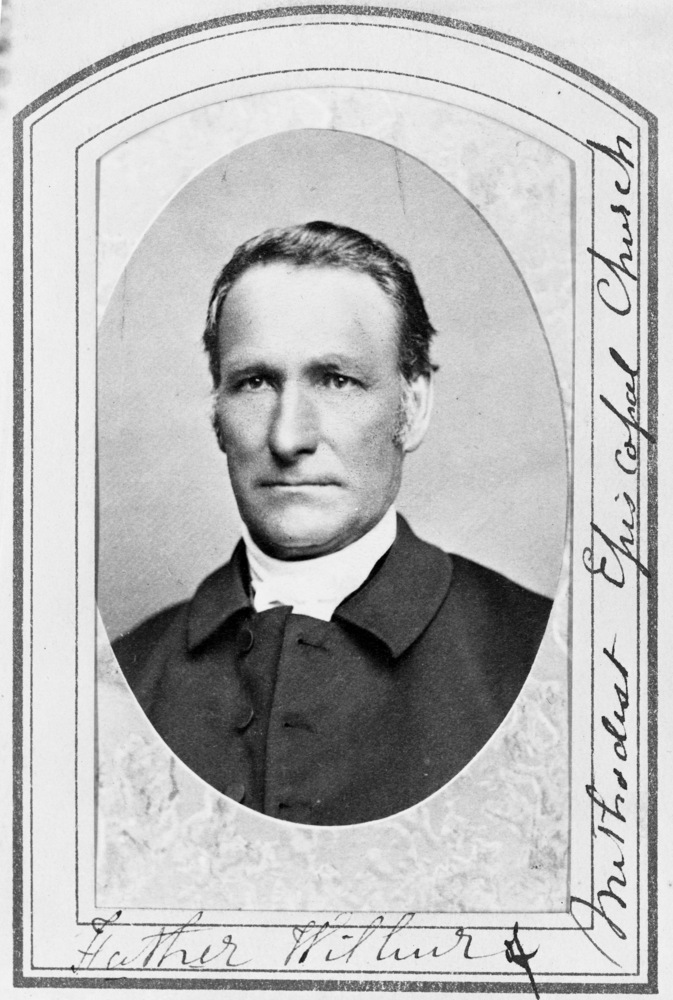
![James H. Wilbur (1811-1887)]()
James H. Wilbur (1811-1887)
Known as Father Wilbur, the energetic and determined Rev. James Harvey …
Map This on the Oregon History WayFinder
The Oregon History Wayfinder is an interactive map that identifies significant places, people, and events in Oregon history.
Further Reading
Horowitz, M.G. "Richardson remembers: Church plays catalyst for activists." Willamette Week, 1974, p. 12.
Idleman, H.L. "Long continued influences of Methodism in Oregon." Oregon Historical Quarterly 43 .3 (September 1942): 210-214.
Kohl, David G. A Curious and Peculiar People. Portland, Ore.: Spirit Press, 2006.
Munk, Michael. The Portland Red Guide, 2nd ed. Portland, Ore.: Ooligan Press, 2011.
Olson, Polina, and Joe Uris. Portland in the 1960s: Stories from the Counterculture. Cheltenham, U.K.: The History Press, 2012.
Richardson Bruna, K. “'We Know We Have a Difficult Time Ahead of Us': Activities of the Ad Hoc Citizen’s Committee on Police-Community Relations, 1968-70." Presentation at the Pacific Northwest History Conference, Portland, Oregon, 2024.
Brown, Valerie. "Music on the Cusp: From folk to acid rock in Portland coffeehouses, 1967-70." Oregon Historical Quarterly 108.2 (Summer 2007): 246-77.