


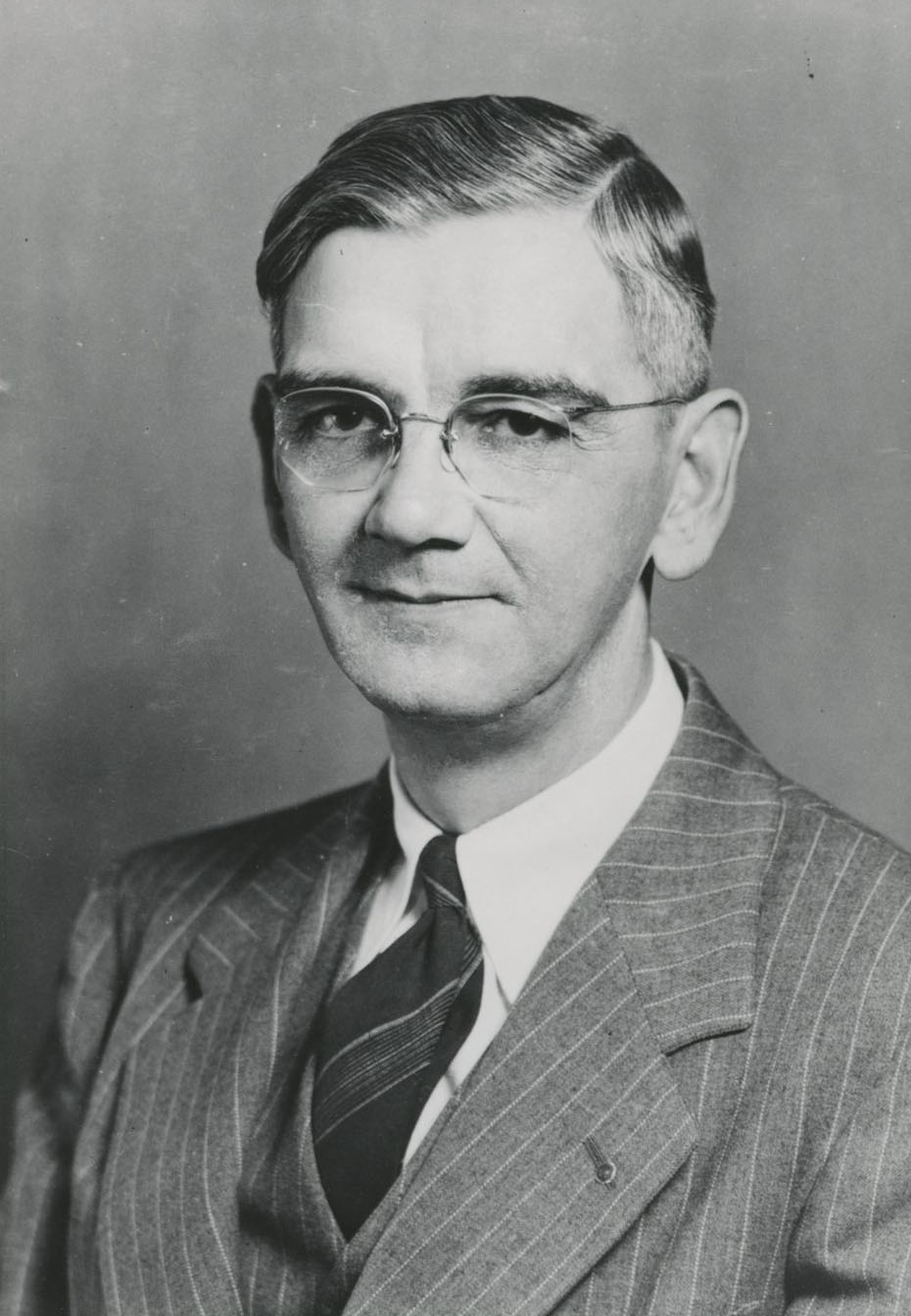
Elmo Smith was relatively unknown to the general public when he became the governor of Oregon in 1956 following the sudden death of Gov. Paul Patterson. He served for a little under a year—the second shortest time served by a governor in Oregon—before losing the special election in 1956. He was elected mayor of Ontario, Oregon, five times, where he advocated for Japanese American farm labor during WWII, and served as a state senator and chairman of the Oregon Republican Party. In his lifetime, Smith owned and published seven newspapers, often using the editorial pages as a voice for his political interests.
Elmo Everett Smith was born on November 19, 1909, in a log cabin on the outskirts of Grand Junction, Colorado. His mother died when he was ten, followed by his father three years later. Smith then went to live with his aunt and uncle on a cattle ranch in Caldwell, Idaho. In 1932, he earned a BA in history at the College of Idaho and moved with his future wife, Dorothy Leininger, to Ontario, where they started a mimeographed penny saver. The couple married in 1933 and had two children (their son Dennis "Denny" Smith served as Oregon's U.S. representative from 1981-1991). Smith briefly worked at the Ontario Argus before launching a rival newspaper in 1936 called the Eastern Oregon Observer.
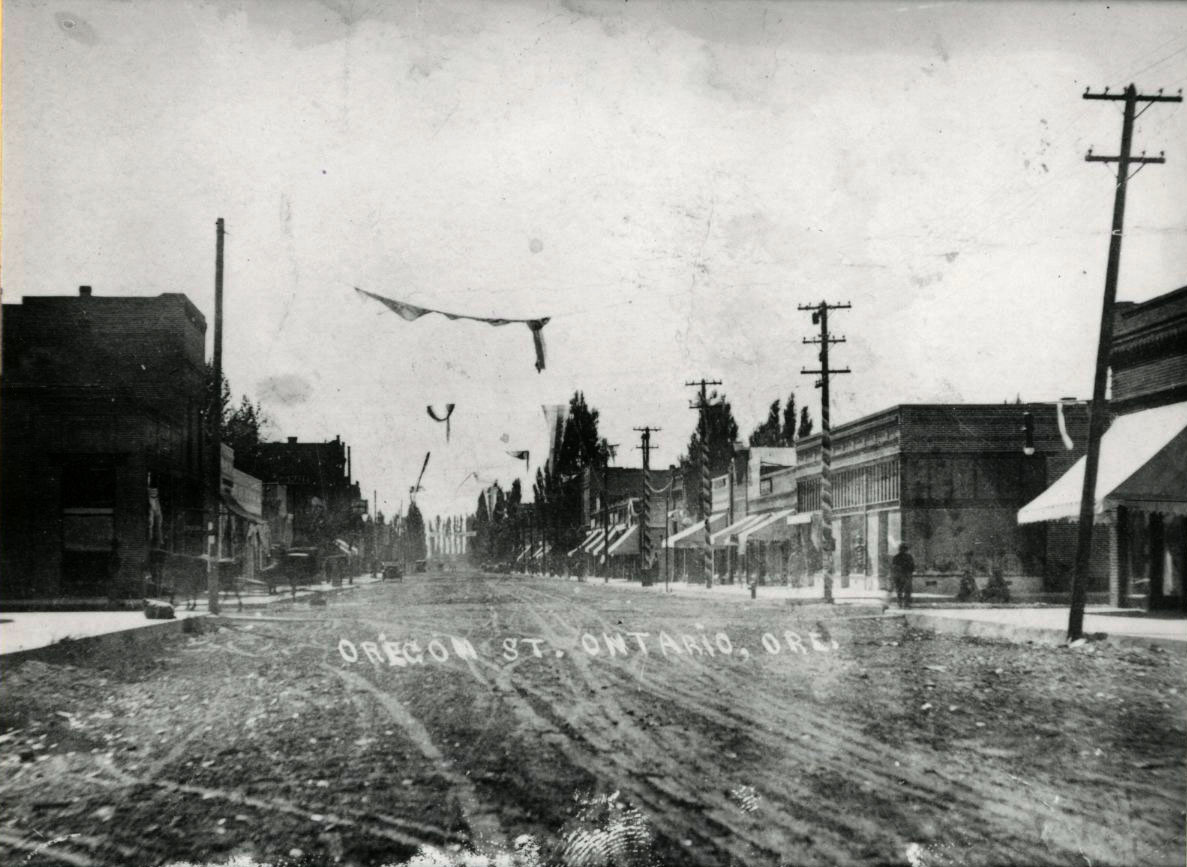
Smith was elected president of the town’s chamber of commerce at age twenty-six and became mayor in 1940 at age thirty after winning by 44 votes against the seven-term incumbent. Smith was considered young for the job, but soon after taking office, the national magazine Coronet rated Smith as one of five outstanding mayors of small U.S. cities. As mayor, Smith helped secure federal government funding to develop the Ontario Municipal Airport, making it one of the first rural airfields in the country to have a civilian training program. At the time, Ontario was considered one of the most active private flying centers for its size in the West.
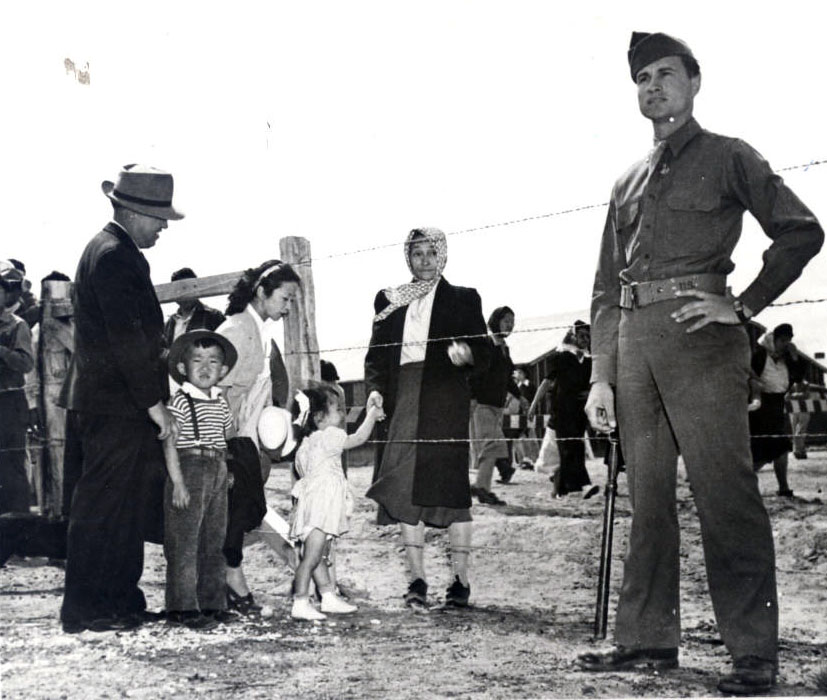
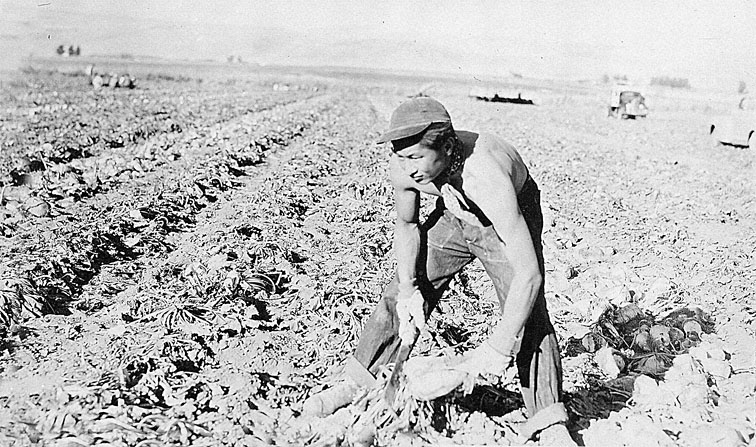
After the bombing of Pearl Harbor, President Franklin D. Roosevelt signed Executive Order 9066, which led to the incarceration of Japanese immigrants and Japanese Americans. Smith responded by advocating for the Oregon Plan, a federal program to offset wartime labor shortages with incarcerated Japanese Americans, who were released during the day to work on farms. He wrote editorials encouraging the Plan in the Observer. The Japanese population in Ontario during the war jumped from 134 to around a thousand.
Smith, an experienced pilot, was nicknamed the "Flying Mayor." In 1942, he became commander of the eastern Oregon units of the Civil Air Patrol, which searched for missing ships and delivered mail from Pendleton to Boise, Idaho, on a route called the “coffin mail run,” named for the hazards faced by pilots flying light-powered planes over the Blue Mountains. In 1943, Smith resigned as mayor during his second term and leased his newspaper so he could enlist in the U.S. Navy. He earned the rank of lieutenant and served overseas for eighteen months, where he flew transport planes in the Pacific Theater and commanded an air transport base. He won special commendation for leadership on a mission to rescue five survivors from a crash. After the war, Smith resumed work on the Observer and was re-elected Ontario mayor. In 1946, he sold the paper, which was acquired a year later by the Ontario Argus to become the Argus-Observer. Smith used the proceeds of the sale to purchase the Blue Mountain Eagle in John Day and to co-purchase the Madras Pioneer with W.C. Robinson in 1948.
In 1948, Smith was elected to represent Grant, Malheur, and Harney Counties in the Oregon State Senate, where he became chairman of the Roads and Highways Committee in 1951. In that role, he pushed for legislation to issue bonds to fix the state's aging roads and lobbied voters to approve a weight-mile tax on trucks. The long-haul trucking industry pushed a competing ballot measure that would have amended the state constitution to prohibit the weight-mile tax. Smith wrote editorials and campaigned all over the state. The trucking industry bombarded his phone with angry calls and pressured businesses to pull their ads from Smith’s newspaper, but in the end, voters passed the tax in 1952 and rejected the truckers' measure.
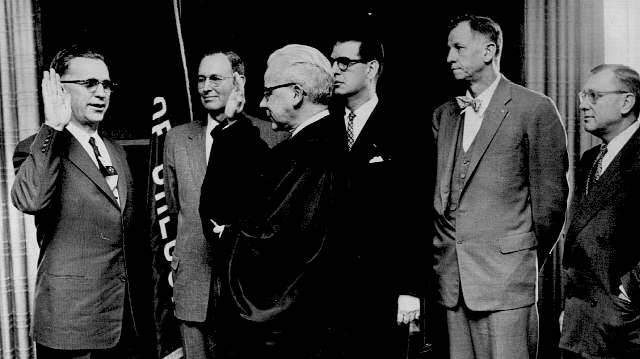
Smith was elected president of the state senate in 1955 and in that position was supposed to inherit the role of Oregon governor in the event that Paul L. Patterson was elected to the U.S. Senate. But a few days after announcing his candidacy, Patterson suffered a heart attack at a campaign event and died. The next morning, Smith was driven from John Day to Salem and sworn in as the 27th governor of Oregon at 9:36 a.m. on February 1, 1956.
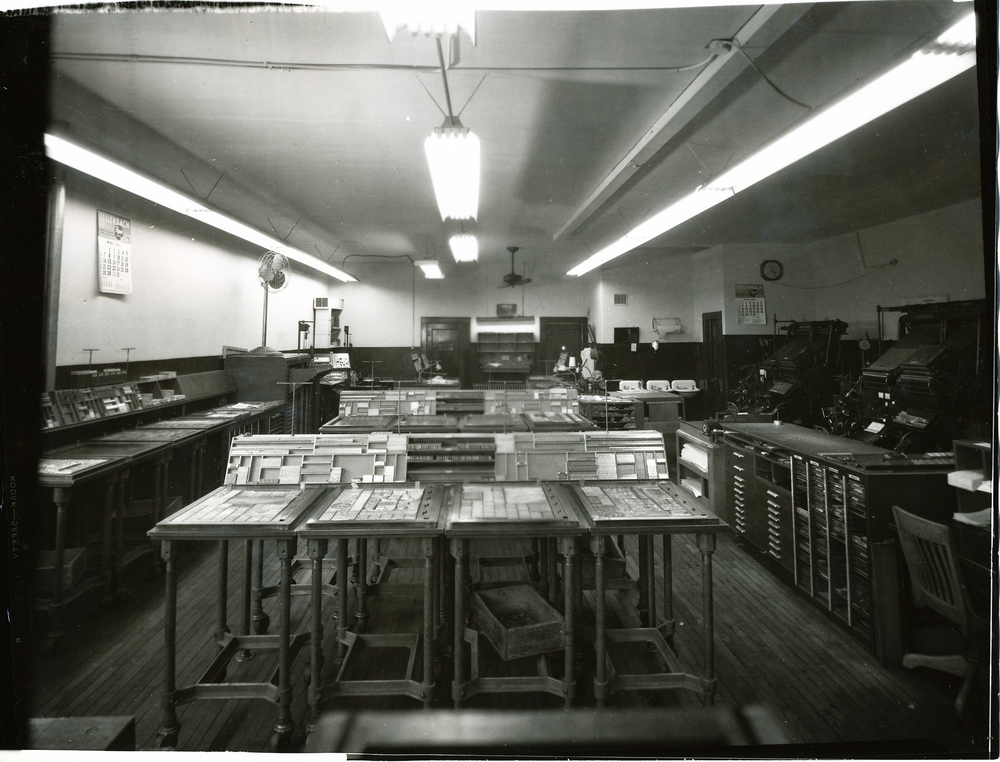
Smith ran to keep his governorship in the 1956 special election and won the Republican primary; but he lost to Democratic challenger Robert D. Holmes in the general election. Smith temporarily left government and became co-owner and publisher of the Albany Democrat-Herald. He then ran to replace Richard Neuberger in the U.S. Senate, but lost the 1960 race to Neuberger’s widow, Maurine Neuberger. A year later, Smith purchased the Hood River News, followed by the Cottage Grove Sentinel. In 1962, Smith was elected president of the Oregon Newspaper Publishers Association.
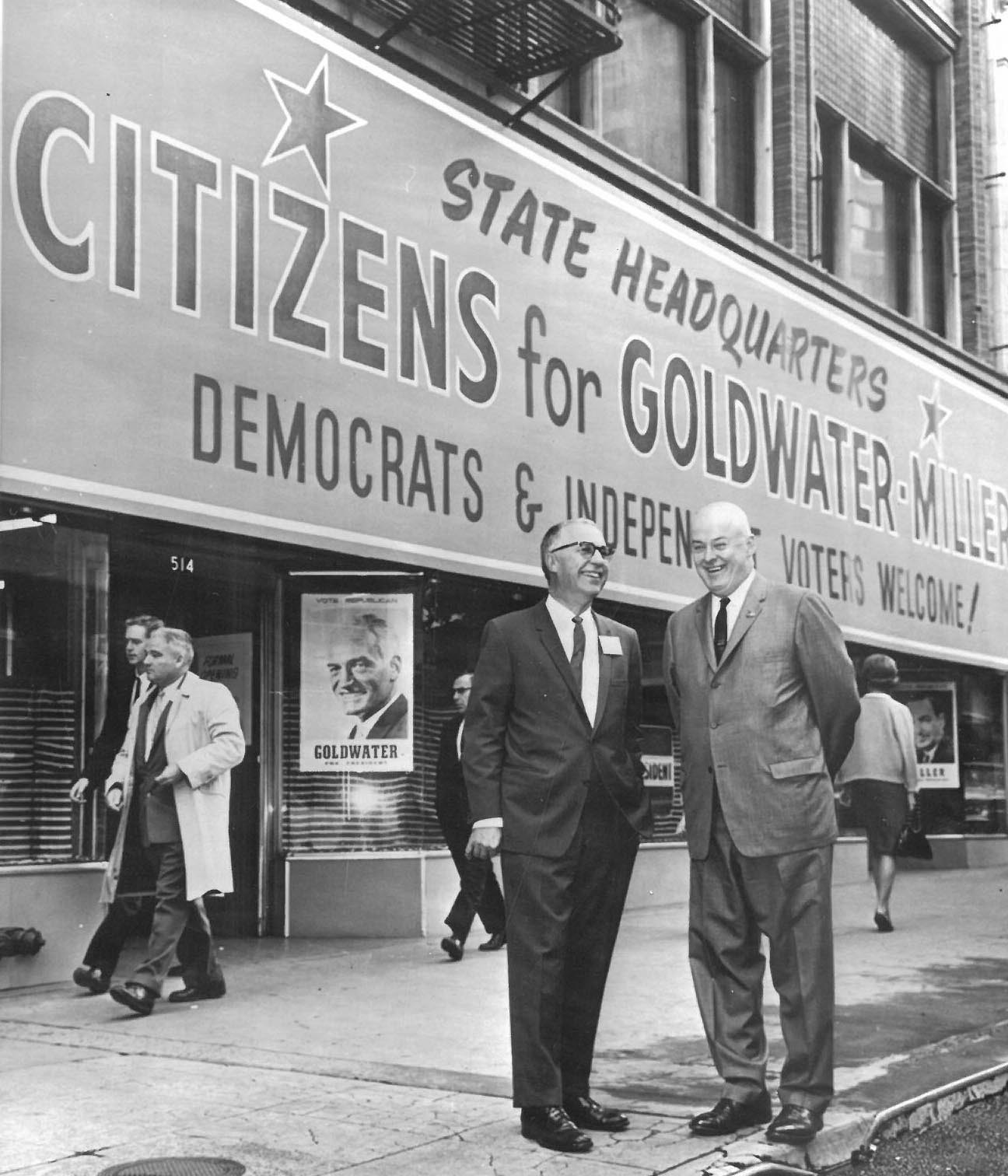
In 1964, Smith ran for a seat on the Republican National Committee but withdrew his candidacy after party members urged him to accept the chairmanship of the Oregon Republican Party. He purchased the Polk County Itemizer-Observer and spent the last years of his life traveling the world with his wife, writing about their adventures in his newspapers. Smith sold the Blue Mountain Eagle right before he died in Albany, Oregon, on July 15, 1968. Posthumously, the Oregon Newspaper Publishers Association named an award in his honor and inducted him into the Oregon Newspaper Hall of Fame.
-
![]()
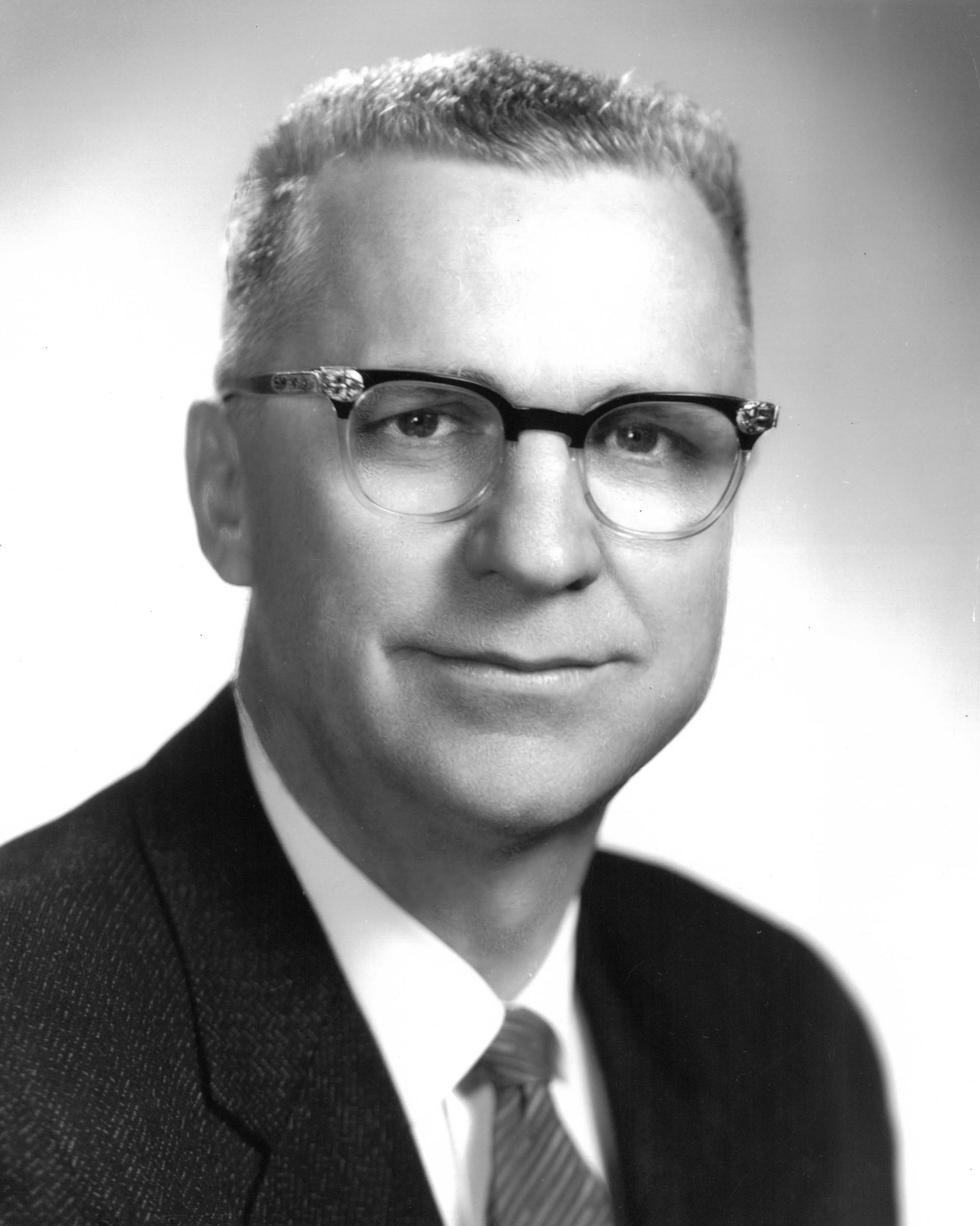
Elmo Smith.
Oregon Historical Society Research Library, Photo File #979, 289574
-
![]()
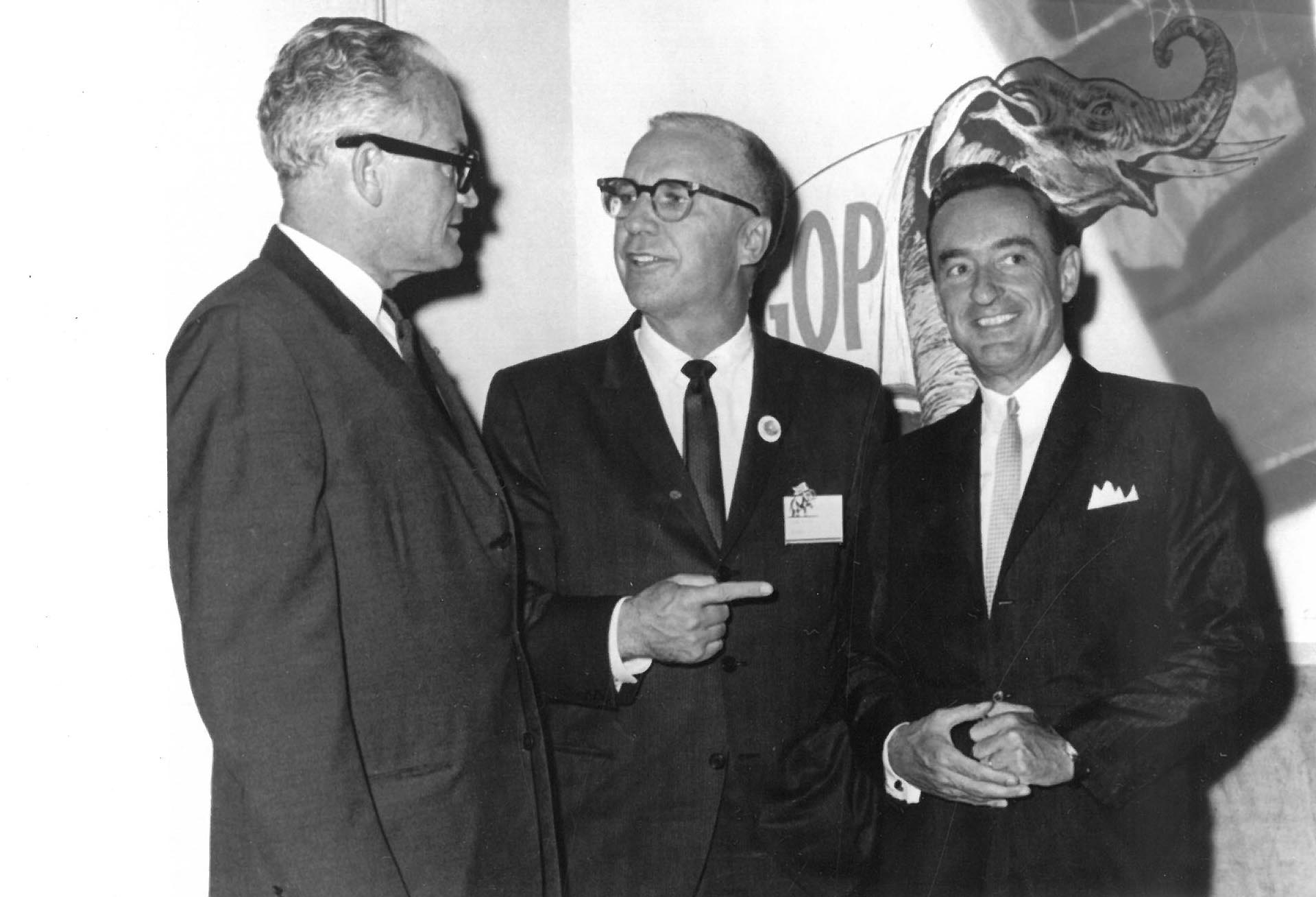
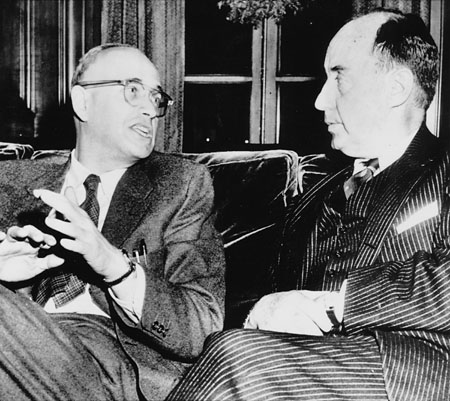
Gov. Elmo Smith (middle).
Oregon Historical Society Research Library, Photo File#979, ORHI78208
-
![]()
Swearing in of Governor Elmo Smith in Salem, Oregon, 1956.
Courtesy City of Salem, Oregon Historic Photograph Collections, Statesman Journal Newspaper photo, SJ90 -
![]()
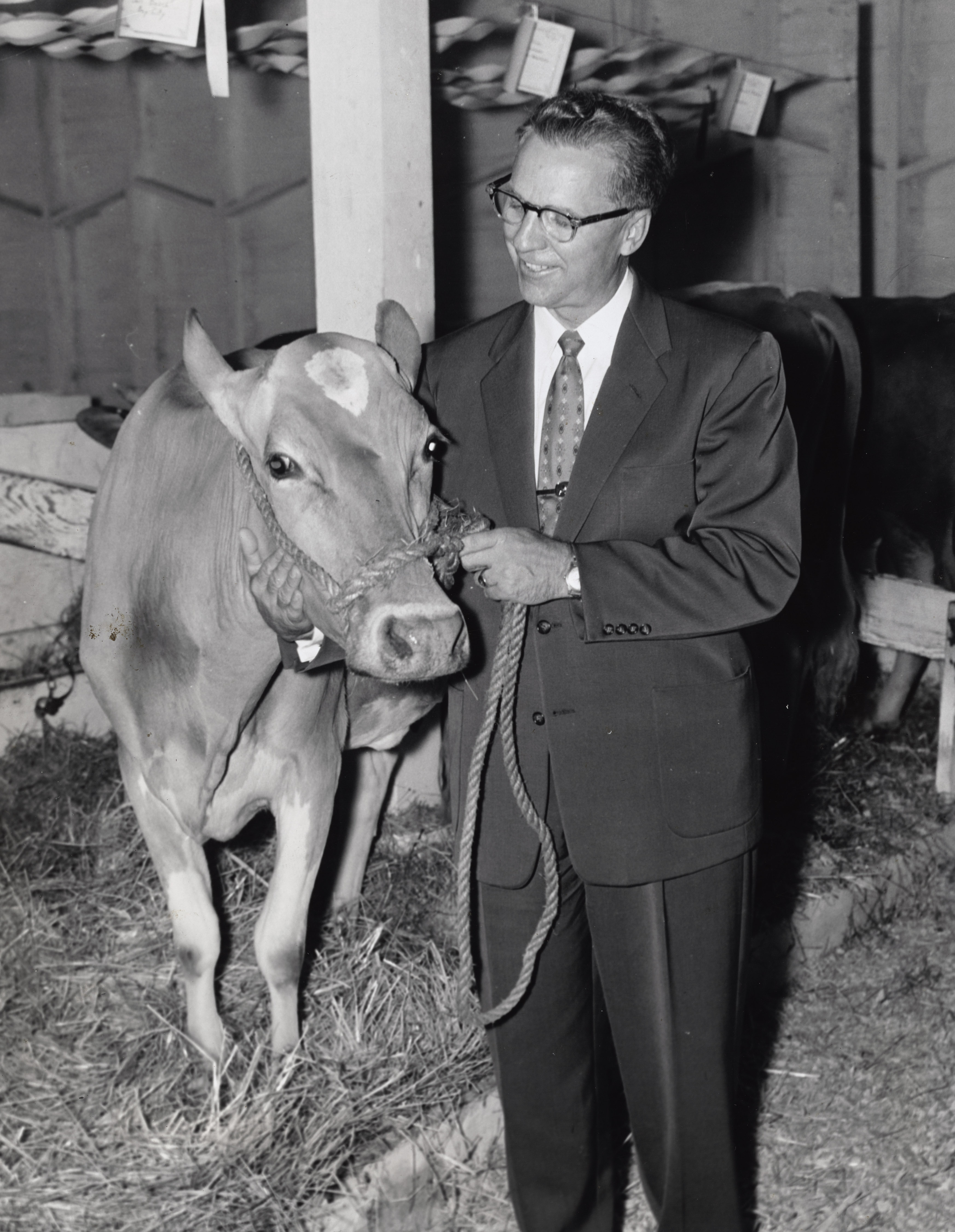
Gov. Elmo Smith with Dairy Cow at Tillamook County Fair, August 17, 1956.
Oregon Historical Society Research Library, 0098P344 -
![]()
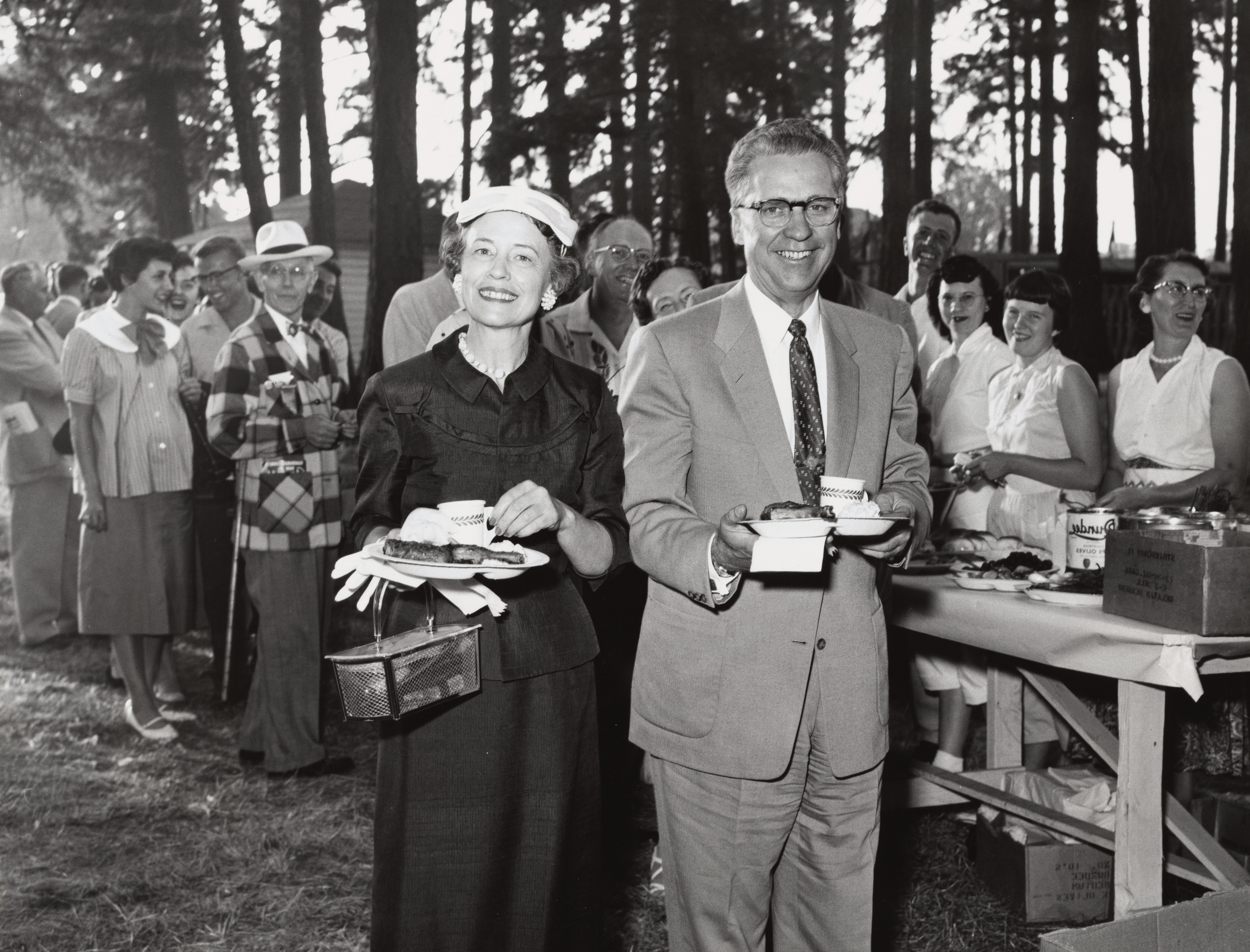
Governor and Mrs. Elmo Smith attend chicken barbecue sponsored by Oregon City Chamber of Commerce at Fair, August 1956.
Oregon Historical Society Research Library, Oregon Journal Collection, 0098P345 -
![Frank Olsen, photo.]()
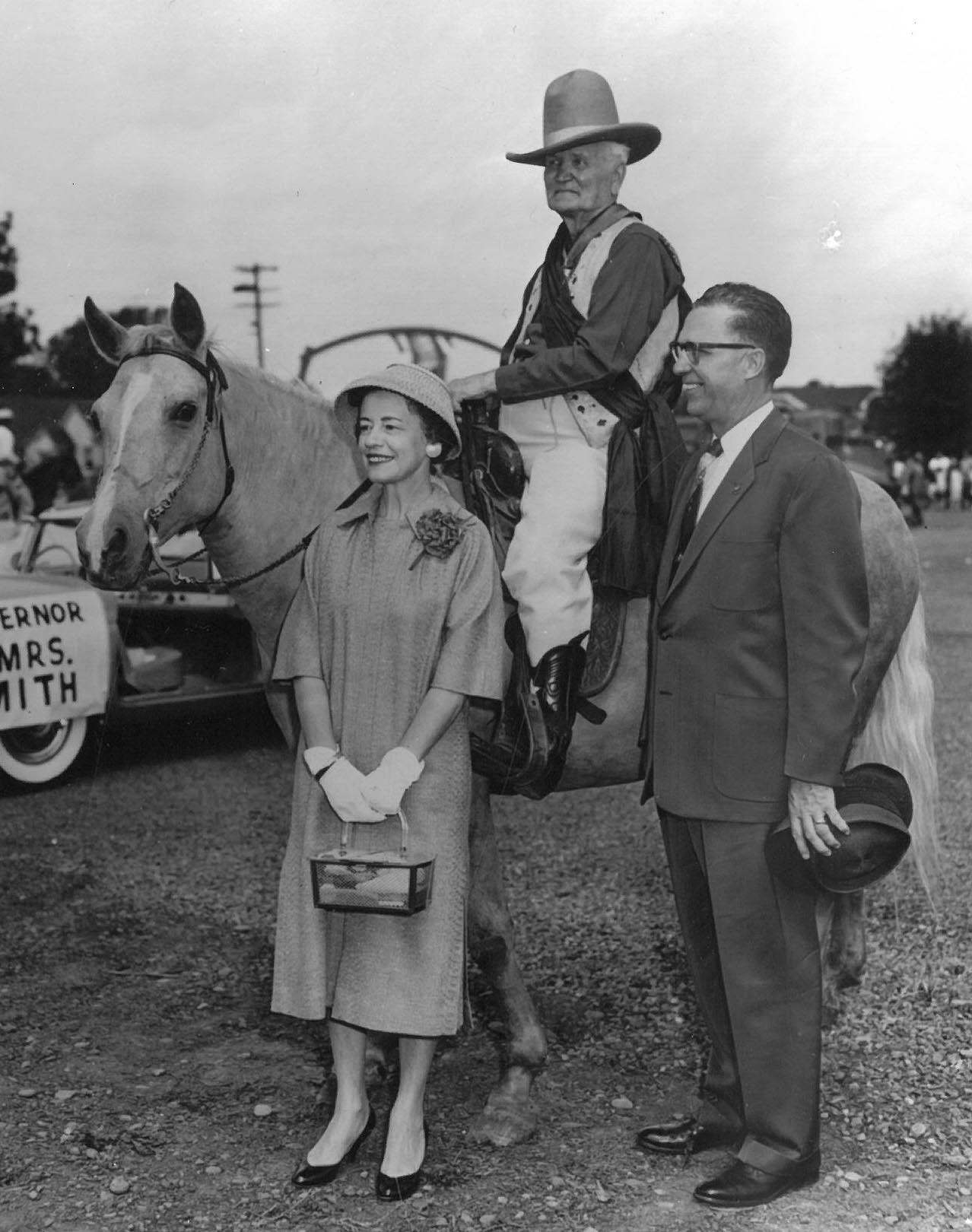
Gov. Elmo and Dorothy Smith at Emerald Empire Roundup, Eugene, Aug. 1956.
Frank Olsen, photo. Oregon Historical Society Research Library, Photo File #979, ORHI 78206
-
![]()
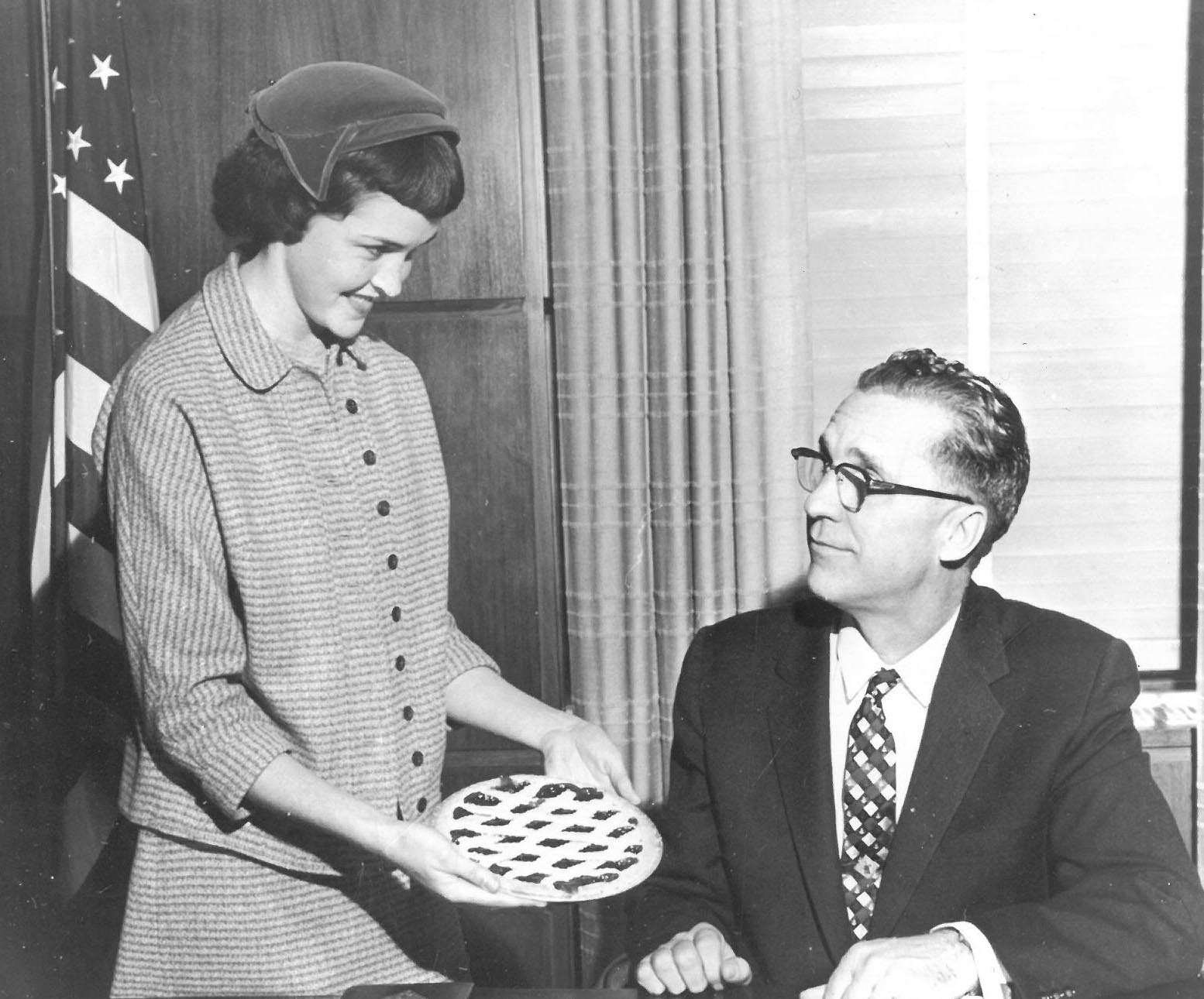
Miss Z. Calhoun, State Cherry Pie Baking Champion of Brownsville, OR and Elmo Smith, 1957.
Oregon Historical Society Research Library, Photo File#979, ORHI 78204
-
![Allan J deLay, Oregonian photo.]()
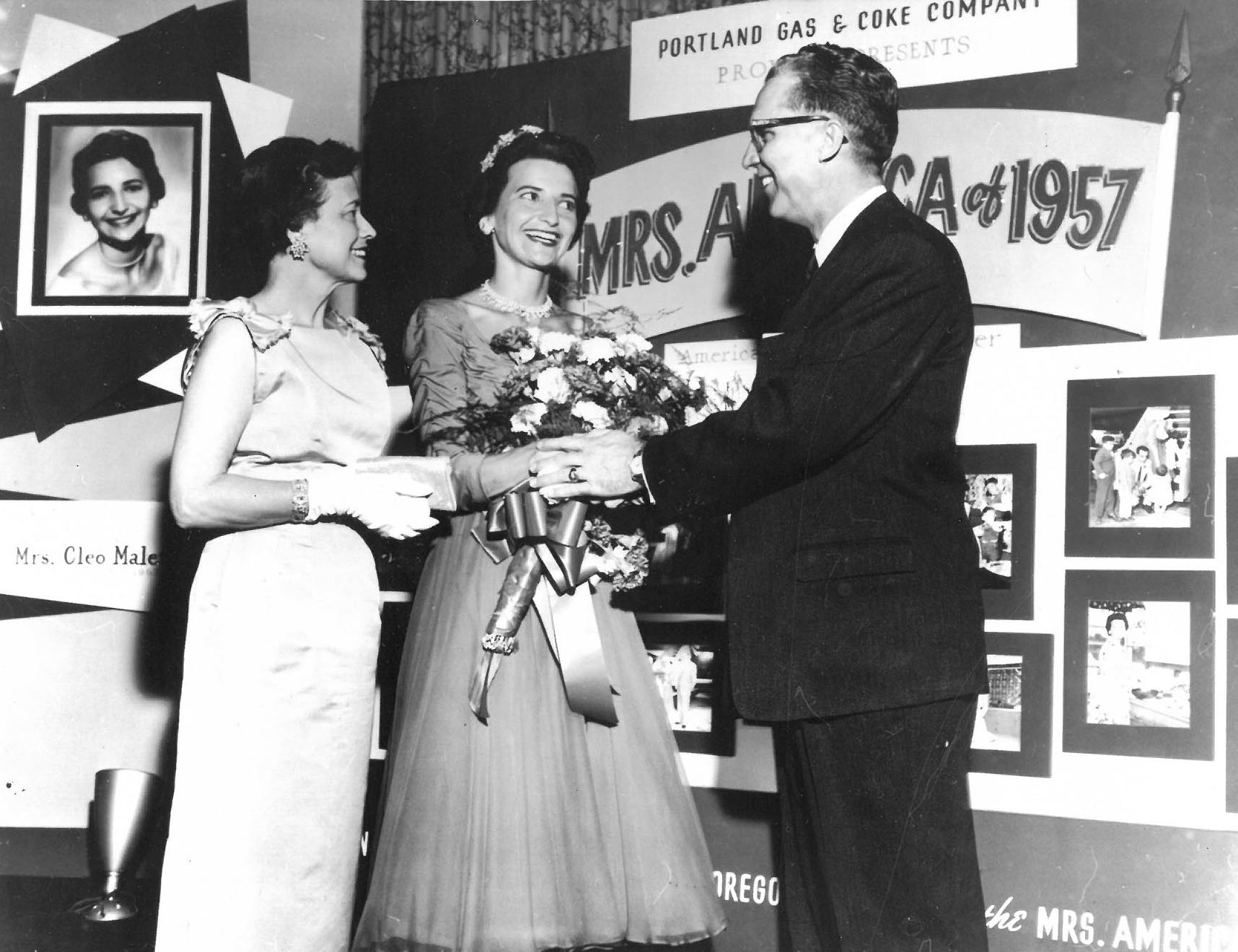
Gov. Elmo and Dorothy Smith welcoming Mrs. America at the Portland Gas & Coke Company, 1957.
Allan J deLay, Oregonian photo. Oregon Historical Society Research Library, Photo File #979, ORHI 78209
-
![]()
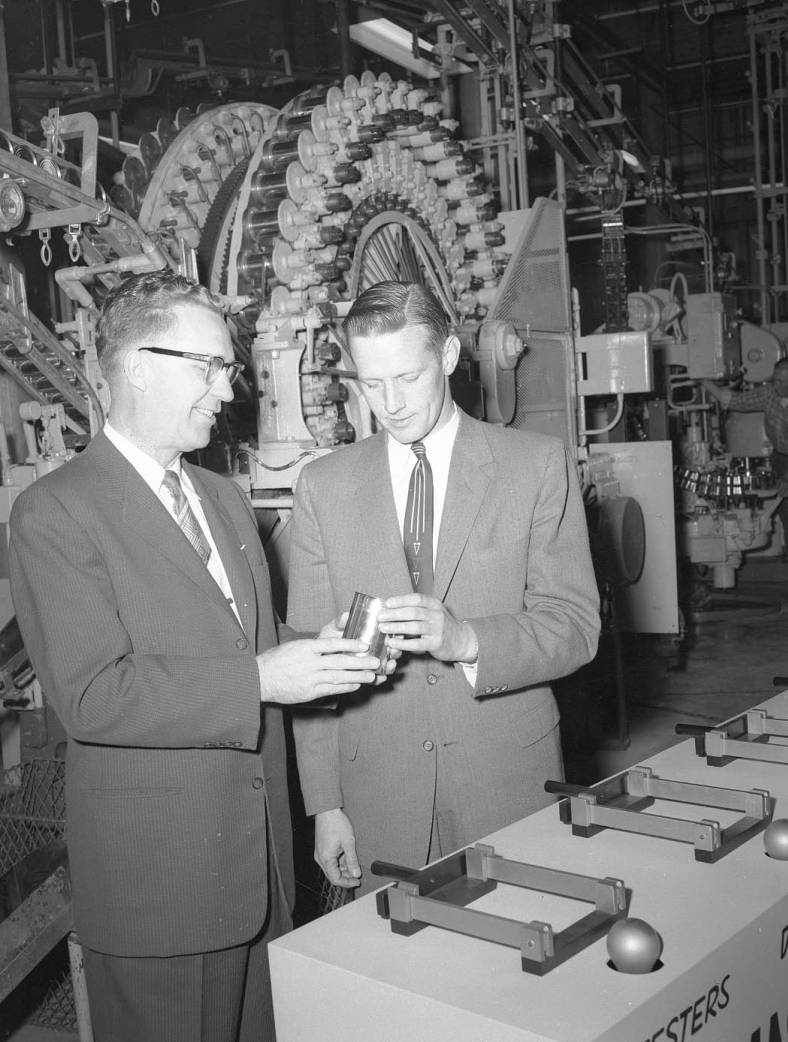
Governor Elmo Smith inside American Can Company plant opening in Salem, Oregon, 1956.
Courtesy City of Salem, Oregon Historic Photograph Collections, Ben Maxwell collection, 869 -
![Eddie Hoff, photo.]()
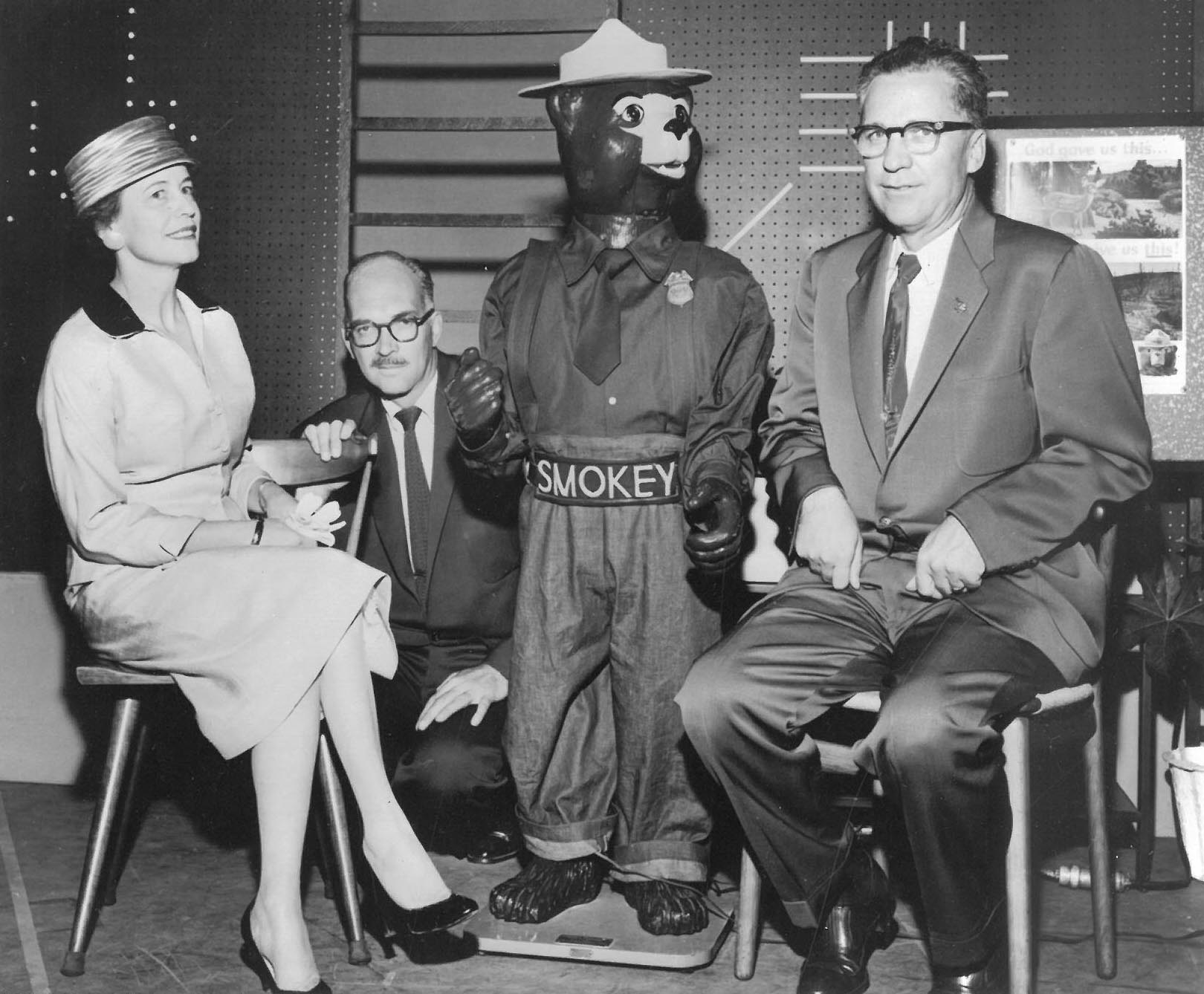
Gov. Elmo Smith to the right of Smokey Bear.
Eddie Hoff, photo. Oregon Historical Society Research Library, Photo File# 979, ORHI 78199
-
![]()
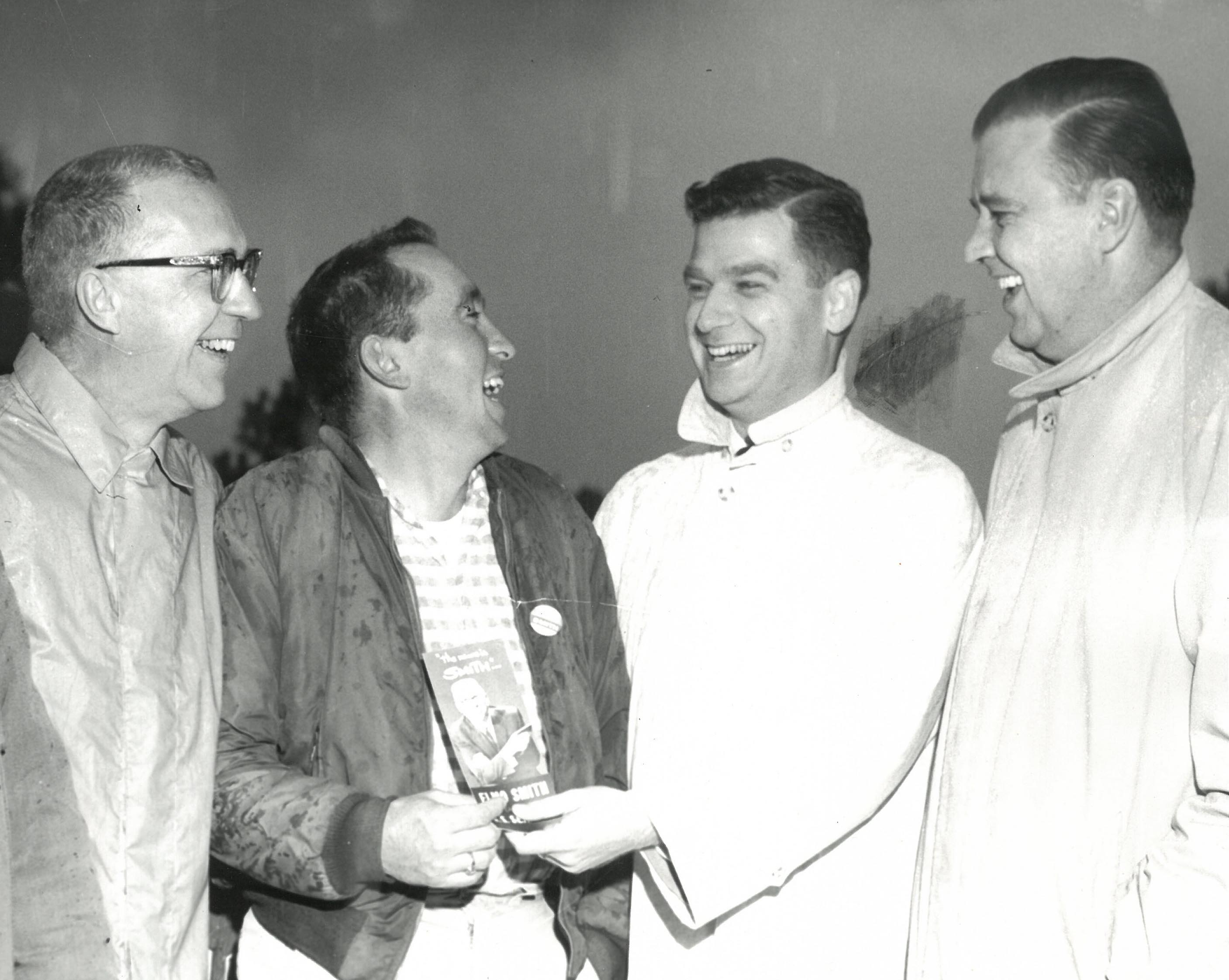
Elmo Smith, Fred Koos Jr., Mark Hatfield, and John Roosevelt, October 1960.
Oregon Historical Society Research Library, Photo File#979,
-
![]()
Gov. Elmo Smith.
Oregon Historical Society Research Library, Photo File#979, ORHI 78198
-
![]()
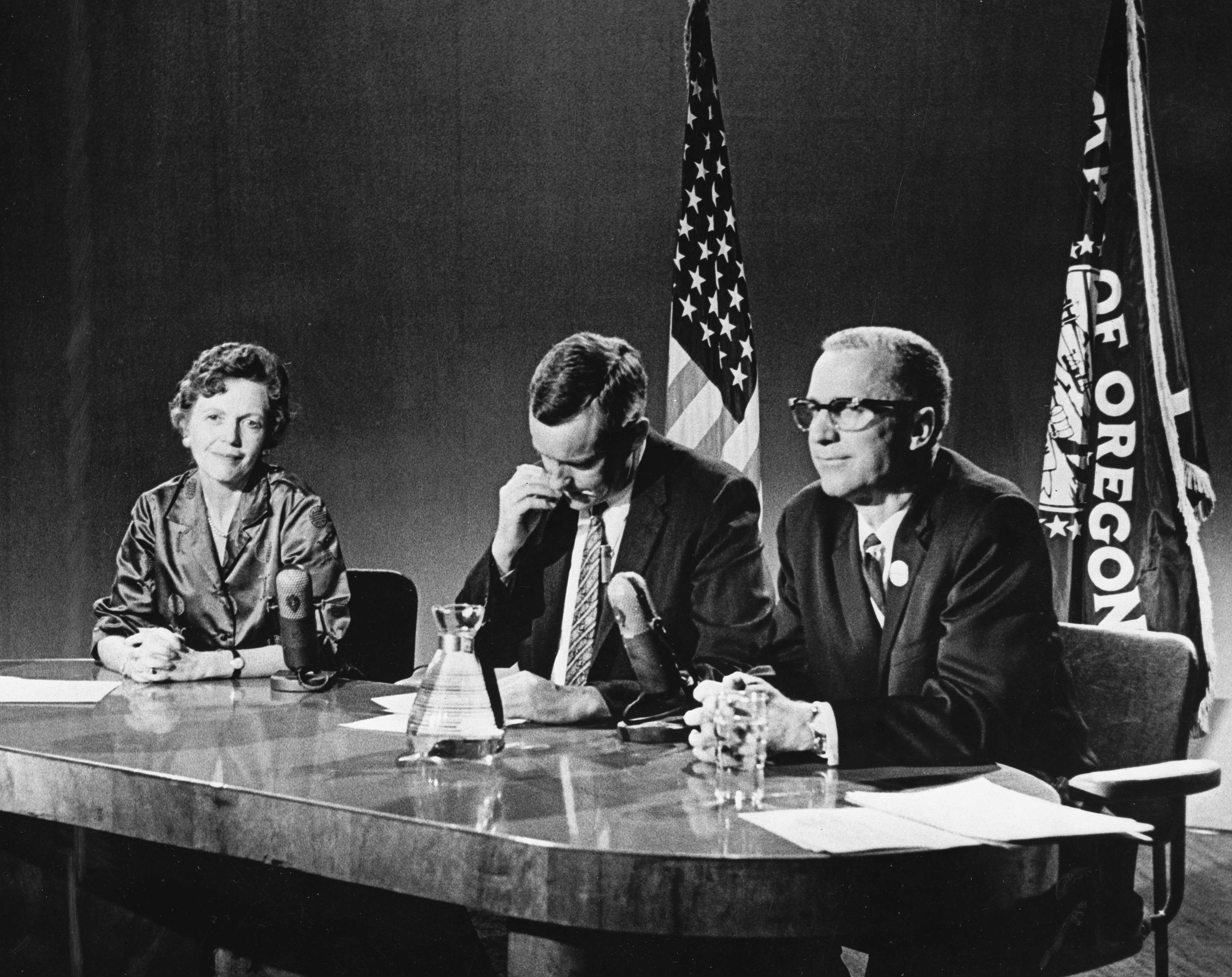
Maurine Neuberger and Elmo Smith ready to debate on Tom McCall's KGW-TV Telecast, Nov. 3, 1960.
Oregon Historical Society Research Library, Oregon Journal Collection, CN_013010 -
![]()
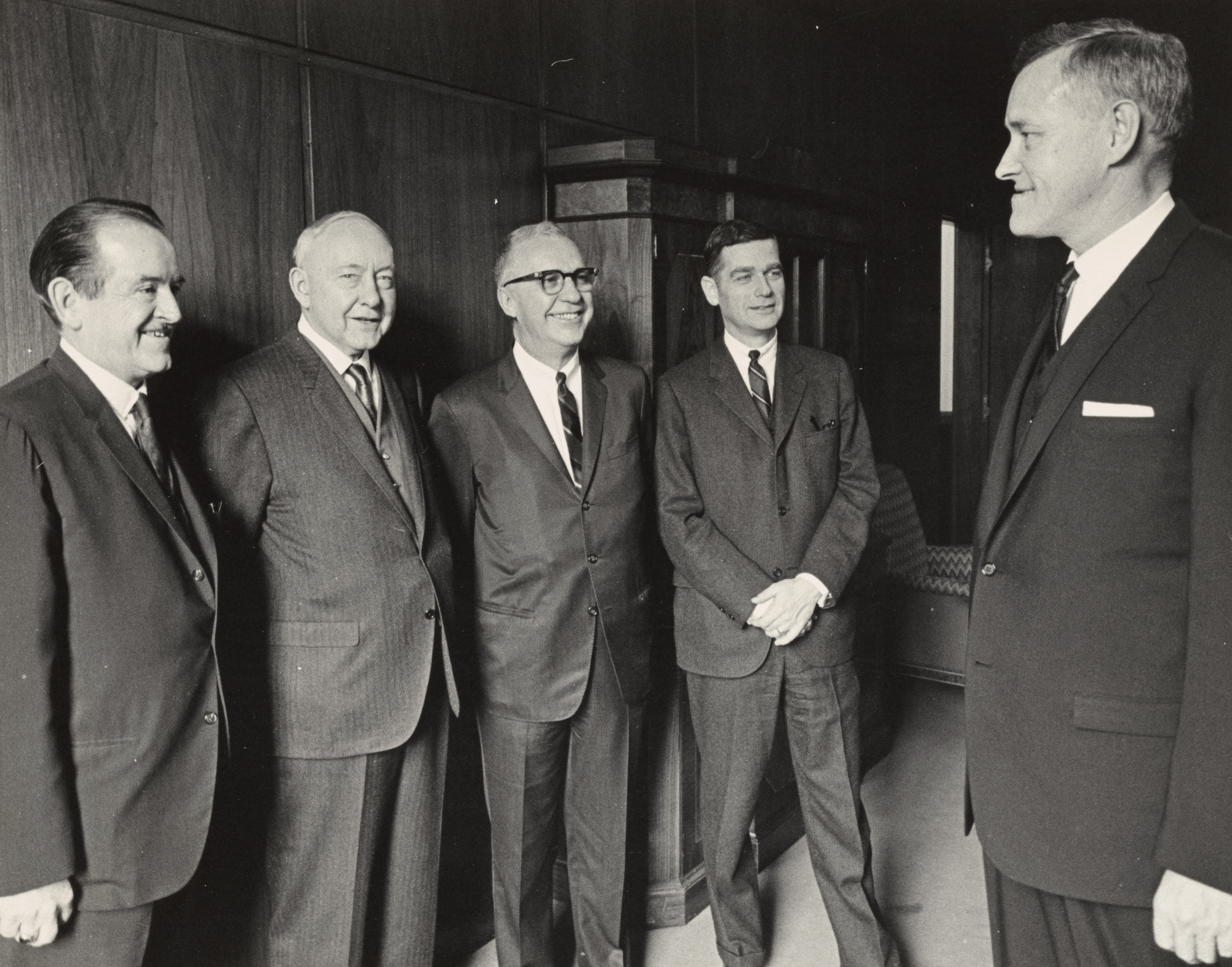
A "Gathering of Governors:" Robert Holmes, Charles Sprague, Elmo Smith, Mark Hatfield and Tom McCall, c. 1967.
Oregon Historical Society Research Library, 0348P026
Related Entries
-
![Albany Democrat-Herald]()
Albany Democrat-Herald
Newspapers on the western frontier were partisan and frequently flaunte…
-
![Japanese American Wartime Incarceration in Oregon]()
Japanese American Wartime Incarceration in Oregon
Masuo Yasui, together with many members of Hood River’s Japanese commun…
-
![Maurine Neuberger (1906-2000)]()
Maurine Neuberger (1906-2000)
Maurine Brown Neuberger entered politics as an Oregon state legislator …
-
![Ontario]()
Ontario
Ontario, the largest city in Malheur County, is on the Snake River near…
-
![Oregon Plan]()
Oregon Plan
The Oregon Plan, implemented in May 1942, led to the organization of th…
-
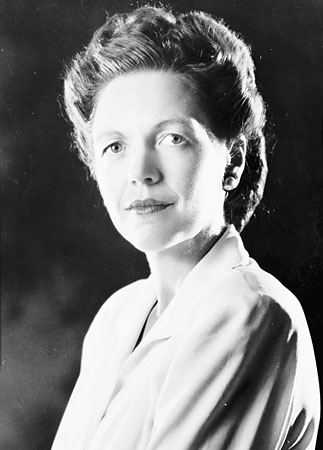
![Paul L. Patterson (1900-1956)]()
Paul L. Patterson (1900-1956)
Governor Paul Linton Patterson began his career in state politics in th…
-
![Richard Neuberger (1912-1960)]()
Richard Neuberger (1912-1960)
When he was elected to the United States Senate in 1954, Richard Neuber…
Related Historical Records
Map This on the Oregon History WayFinder
The Oregon History Wayfinder is an interactive map that identifies significant places, people, and events in Oregon history.
Further Reading
"Elmo Smith Named Mayor of Ontario." The Idaho Statesman, November 7, 1940, p. 1.
"Youngest Mayor?" The Idaho Statesman, November 10, 1940, p. 3.
Fish, Edmond S. "Keepers of the City Keys: Elmo Smith." Coronet 15.13 (January 1944): 86.
Hauser, Paul. "Elmo Smith's Ontario Puts Postwar Plans in Planes." The Sunday Oregonian, May 14, 1944, p. 46.
"Pair Purchase Ontario Newspaper." The Idaho Statesman, August 30, 1947, p. 5.
"Senator Talks of Pressure: Neuberger Article Accuses Truckers." The Sunday Oregonian, July 1, 1951, p. 16.
Lynch, Don. "Ontario Editor Appraises Gov. Smith." La Grande Observer, February 10, 1956, p. 4.
Wright, Thomas G., Jr. "Role of Governor Steers Elmo Smith to Party Leadership." Salem Statesman Journal, October 24, 1956, p. 14.
"Elmo Smith Able Successor To Gov. Paul Patterson." The Oregonian, October 12, 1956, p. 28.
"Elmo Smith Takes Oath as Governor." The Eugene Guard, February 1, 1956, p. 1.
Turnbull, George S. "Governors of Oregon - No. 27: Elmo E. Smith; He Backed Good Roads in Senate." The Oregonian, February 27, 1959, p.10.
"Elmo Smith Elected President of ONPA." The Oregon Daily Journal, June 16, 1962, p. 4.
"Smith Set To Accept GOP Helm: Ex-Governor Out of Race For Part Post." The Oregonian, March 10, 1964, p. 1.
"Elmo Smith, 58, Coast Publisher; Oregon Governor for Brief Period in 1956 Is Dead." The New York Times, July 17, 1968, p. 43.
"Former Governor Elmo Smith Dies." Albany Democrat-Herald, May 2, 1964, p. 1.
Kinoshita, Robert, Benjamin Tanaka, and Augustus Tanaka. "Resettlement and Return to the West Coast." In Silent Scars of Healing Hands, edited by Naomi Hirahara and Gwenn Jensen. Fullerton, Calif.: Center for Oral and Public History, California State University, 2004.