


The first wave of Afghans arrived in Oregon in the early 1980s, fleeing the Soviet invasion of Afghanistan on December 24, 1979. The Soviet occupation lasted almost ten years, and while many Afghans fled to the neighboring countries including Pakistan and Iran, those who could get visas came to the United States. A few Afghans in this exodus came to Oregon where they had relatives or connections. While some moved on to other states, mostly California, some stayed in Oregon, creating a small Afghan community. The second influx of Afghans arrived as refugees after the Taliban takeover of Afghanistan in 2021. As of 2025, there are now about 2,500 Afghans in Oregon, primarily living in the Portland area.
Afghanistan is a country of several ethnic, religious, and tribal groups and that diversity is reflected in the Afghan community in Oregon. The largest group of Afghans in Oregon is from the Pushtun tribe, sometimes spelled as Pashtun or Pakhtun. This is the same tribal ethnicity as the Taliban. The Pushtun are a powerful tribe and have dominated Afghanistan since its beginning in 1747. Also among the Afghan community in Oregon are Tajiks, Hazaras, Uzbeks and other smaller ethnic groups. These various ethnic and tribal groups reflect the diversity of Afghanistan and the influence of various historical and cultural events.
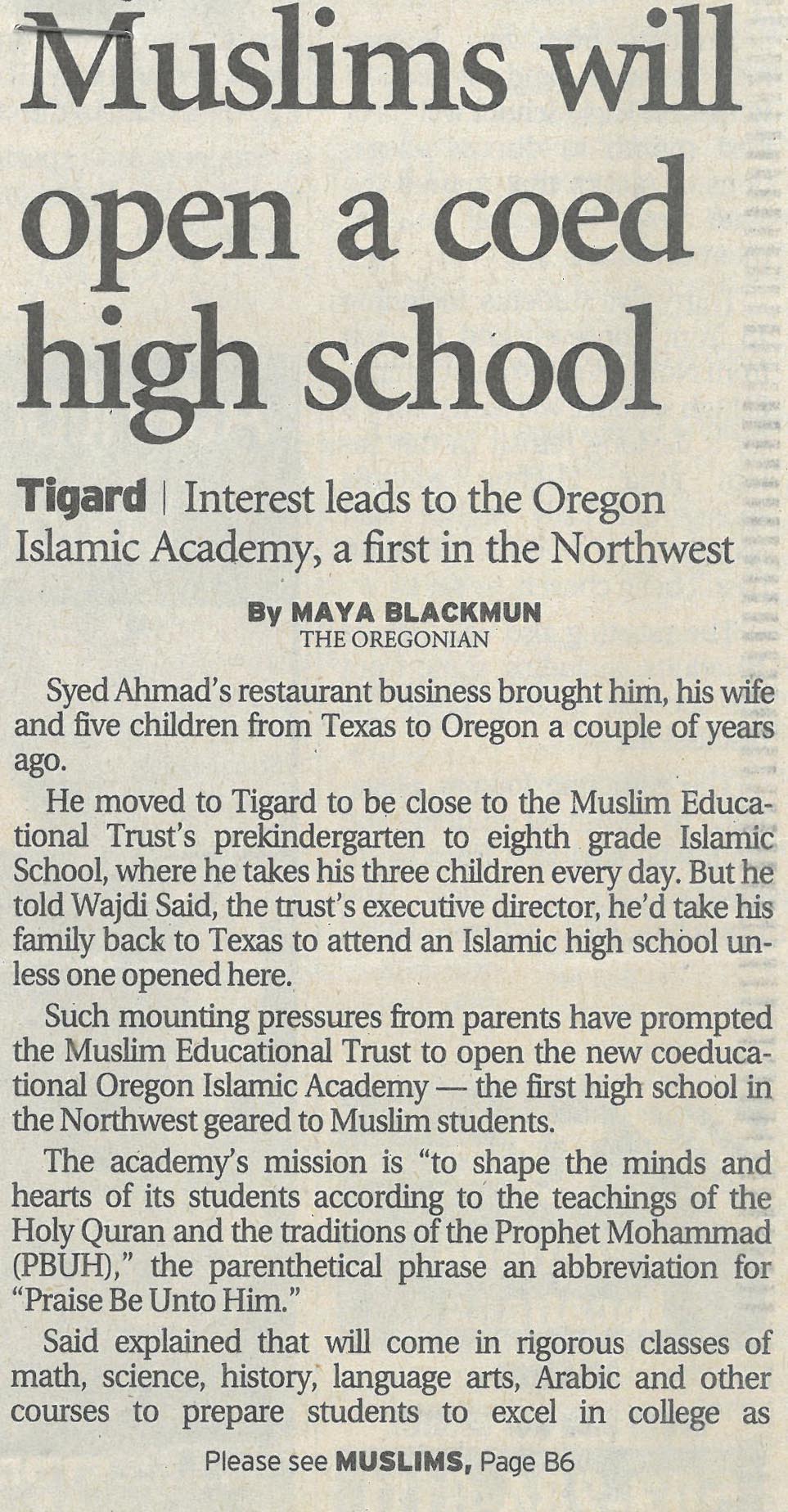
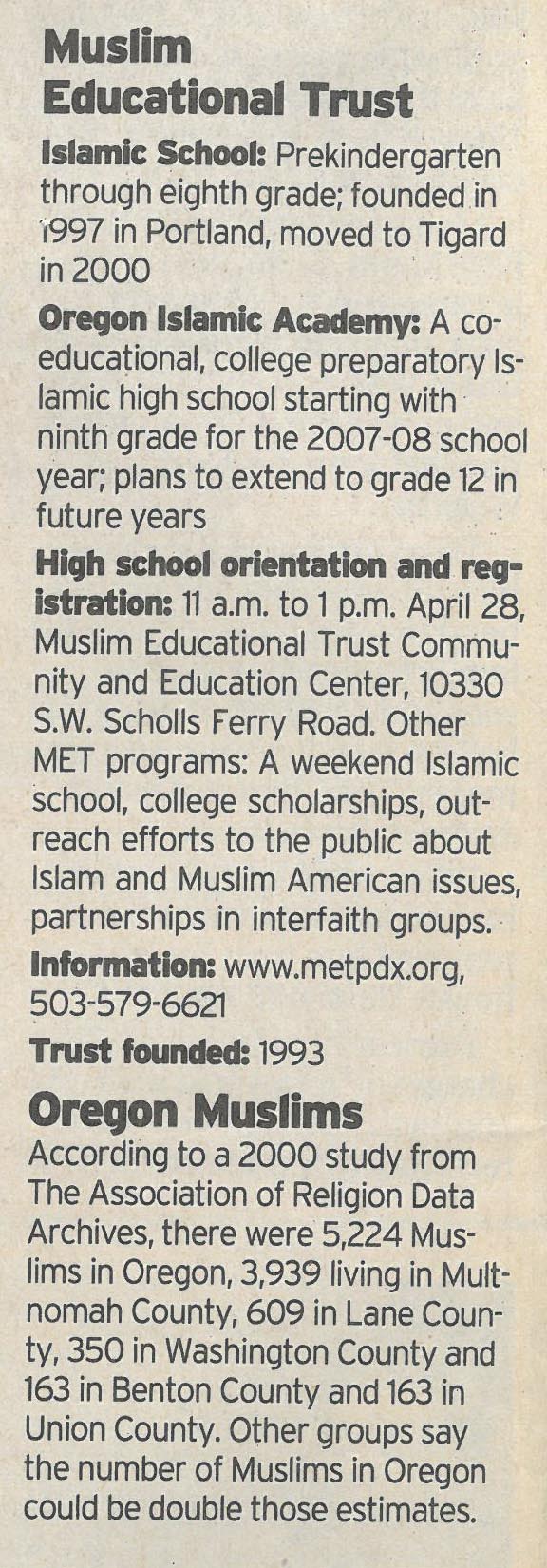
Most Afghans are Sunni Muslims, although there are a number of Afghans in Portland who are of the Shia sect of Islam. Religion plays an important role among the Afghans in Oregon. They celebrate the traditional Islamic holy days, including Eid al-Fitr and Eid al-Adha, and celebrate Nowruz, the Zoroastrian holiday that marks the beginning of the Persian New Year. Many Afghans in Oregon fast during the month of Ramadan and attend religious services on Islamic holy days at one of the approximately twenty local mosques (both Sunni and Shia) in the state. Afghans attend religious services with other Muslims and attend services at the Muslim Educational Trust in Beaverton, which has a religious school that offers classes on Islam.
Afghans prepare traditional food, influenced by Persian, Central Asian, and South Indian cuisines, for family celebrations and holy days. The main dishes are based on rice with mutton served with Afghan flat bread and yogurt. There are five restaurants or carts in the Portland area owned by Afghans that serve Afghan-style food, and several stores sell Afghan goods. The food is usually halal—food that is made of ingredients and prepared according to Islamic guidelines.
Although Afghan women in Oregon do not wear traditional burqas, which completely cover the head and body, Afghan women in Oregon generally dress conservatively and wear a head scarf when out in public or when attending religious ceremonies.
A number of community organizations support Afghans in Oregon. Lutheran Community Services has played a major role in supporting and serving Afghan refugees. Also, Catholic Charities Refugee Services has provided support for Afghans coming to Oregon. Over 1,400 Afghan refugees arrived in the Northwest during the 2021 Taliban takeover, and a few hundred remained in the Portland area.
In addition, to these organizations, Oregon Afghans have formed several organizations to assist the refugees. These include the Afghan Support Network and the Afghan Community and Cultural Organization. In addition, the Muslim Educational Trust in Beaverton has played an important role in supporting the Afghan community.
Prominent Afghans in Oregon include Salah Ansary, Regional Director at Lutheran Community Services; Darwish Zakhil, Executive Director of Afghan Support Network; Dr. Zaher Wahab, professor emeritus at Lewis & Clark College; and Sultan Aziz, former head of the Afghan Community and Culture Organization. Mohammed Khan Kharoti, M.D. who retired in 2011 from Kaiser Permanente, founded the Green Village School organization, based in Portland, to build schools and increase literacy in Afghanistan. Kharoti was one of the first members of his nomadic tribe in Afghanistan to receive an education in his homeland.
-
![]()
Muslim Educational Trust logo.
Courtesy Muslim Educational Trust, Tigard Oregon -
![]()
Afghan Support Network logo.
Courtesy Afghan Support Network, Beaverton Oregon -
![]()
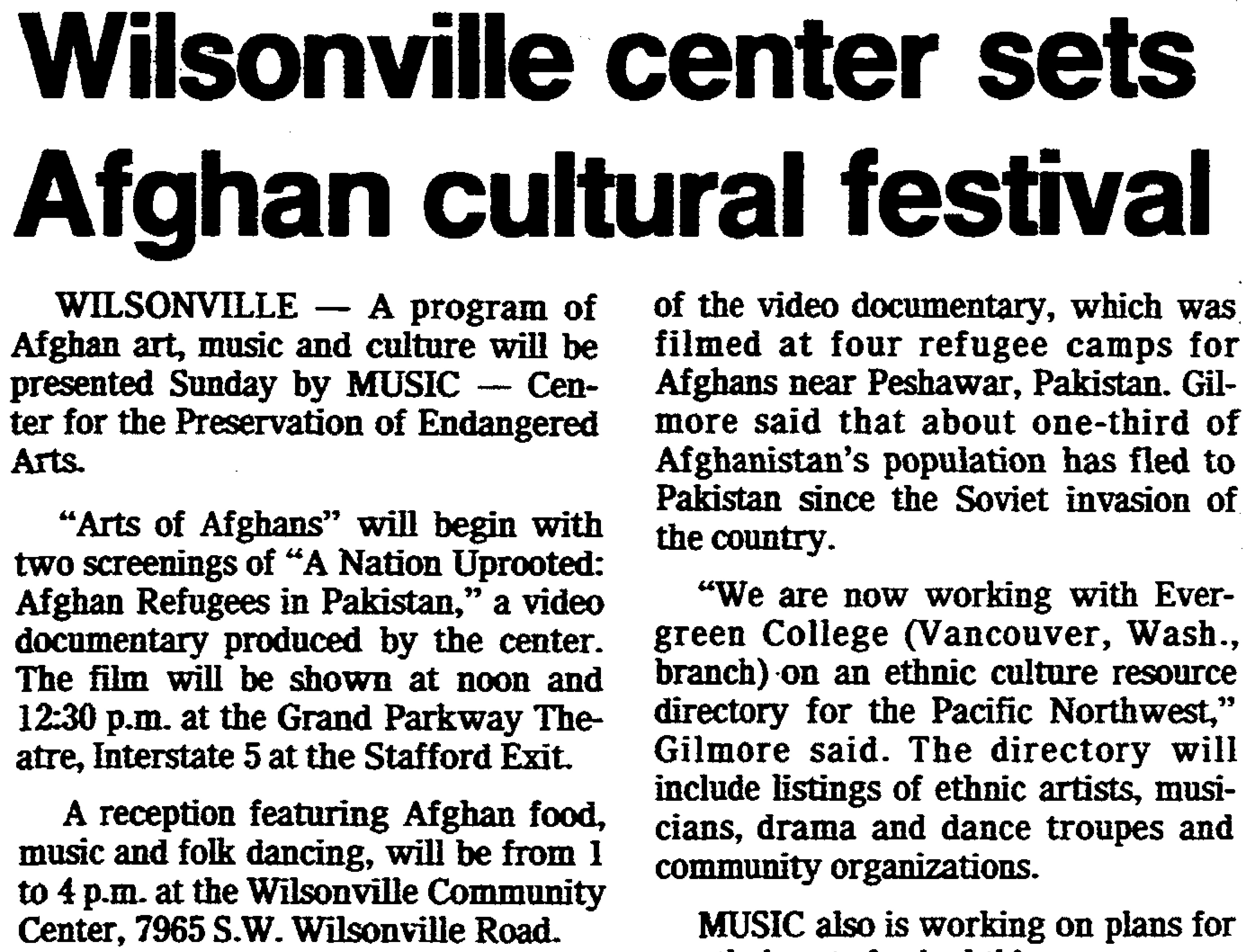
Oregonian article about an Afghan cultural festival in Wilsonville, March 14, 1986.
Courtesy The Oregonian
-
![]()
Oregonian article about the Muslim Educational Trust's new Oregon Islamic Academy, April 17, 2007.
Courtesy The Oregonian
-
![]()
Oregonian feature on the Muslim Educational Trust, April 17, 2007.
Courtesy The Oregonian
Related Entries
-
![Chinese Americans in Oregon]()
Chinese Americans in Oregon
The Pioneer Period, 1850-1860 The Cantonese-Chinese were the first Chi…
-
![East Indians of Oregon and the Ghadar Party]()
East Indians of Oregon and the Ghadar Party
In the early twentieth century, five to six hundred men and one family …
-
![Hmong Immigration]()
Hmong Immigration
During the 1960s, the Hmong in Laos aided the United States in the Viet…
-
![Iranians in Oregon]()
Iranians in Oregon
Between 10,000 and 15,000 people of Iranian heritage live in Oregon; of…
-
![Japanese Americans in Oregon]()
Japanese Americans in Oregon
Immigrants from the West Resting in the shade of the Gresham Pioneer C…
Map This on the Oregon History WayFinder
The Oregon History Wayfinder is an interactive map that identifies significant places, people, and events in Oregon history.
Further Reading
Asmatey, Yalda. "Unapologetically Afghan American," Oregon Humanites, April 17, 2023.
Crews, Robert. Afghan Modern: The History of a Global Nation. Cambridge, MA: Harvard Univ. Press, 2015.
Richards, Tori. "California and New York are hubs for Afghan resettlements." Washington Examiner, August 24, 2021.
"Mohammad Khan Kharoti." Green Village Schools.
Afghan Community and Cultural Organization. ACACO.org.