


Josiah Parrish played a central role in foundational activities at the Methodist Mission in the Willamette Valley as a circuit rider, as an Indian Agent on the Oregon Coast, and as a participant in the formation of the Oregon Provisional Government. He was also a successful farmer and was responsible for introducing white clover and Merino sheep to Oregon. His name is on the Oregon landscape in northeast Salem at the Josiah L. Parrish Middle School, located on his Oregon Donation Land Law claim.
Josiah L. Parrish was born on January 14, 1806, in Onondaga County, New York, where he trained to be a blacksmith and worked on the Erie Canal. The religious camp-meeting enthusiasm in the region, often styled the “Burned-Over-District” because of its many revivals, captured his attention and energy, and by the early 1830s he had become a Methodist preacher. In 1839, he responded to the church’s call for Christians to serve as missionaries to Native tribes in the American West. The next year the Board of Missions of the Methodist Church in New York selected him for missionary duty in Oregon, and he soon boarded the Lausanne in New York with his wife and three children, bound for Jason Lee’s Methodist mission in the Willamette Valley.
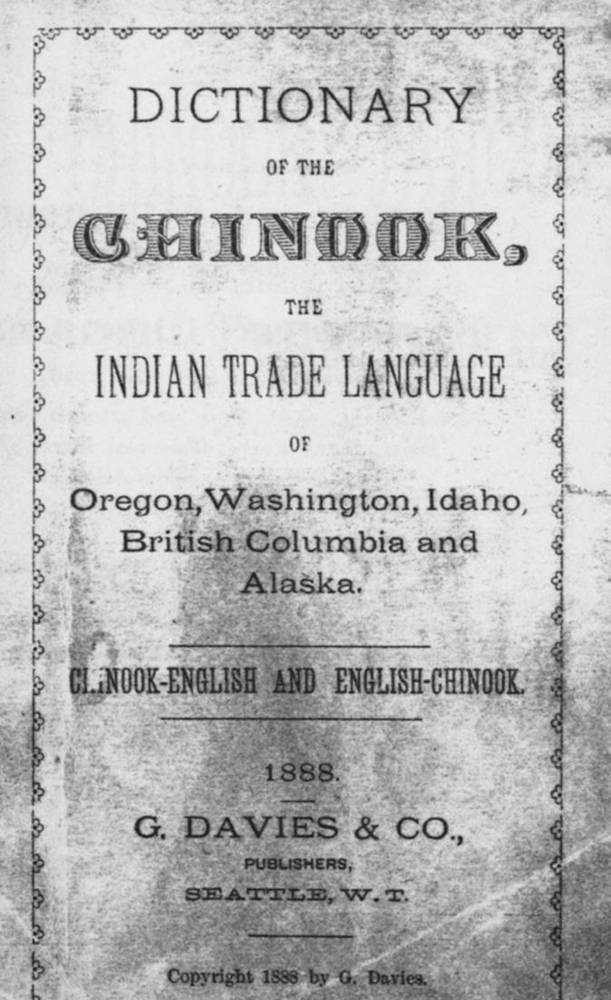
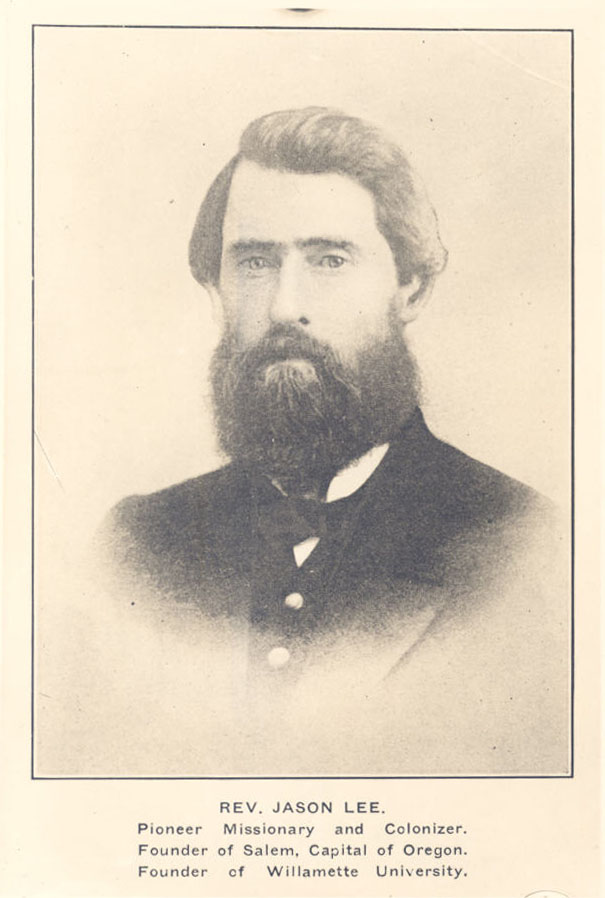
Initially laboring as a blacksmith, Parrish contributed to the 1842 relocation of the Methodist mission south up the Willamette River from Mission Bottom (today’s Willamette Mission State Park) to Salem. In 1843, Parrish participated in the meetings that created the Provisional Government of Oregon. He also was assigned to the Indian mission at Clatsop Plains on the lower Columbia River, where he immersed himself in learning Chinuk Wawa (also called Chinook Jargon). His knowledge of the regional trade language would be an asset when he was a federal Indian agent during the 1850s.
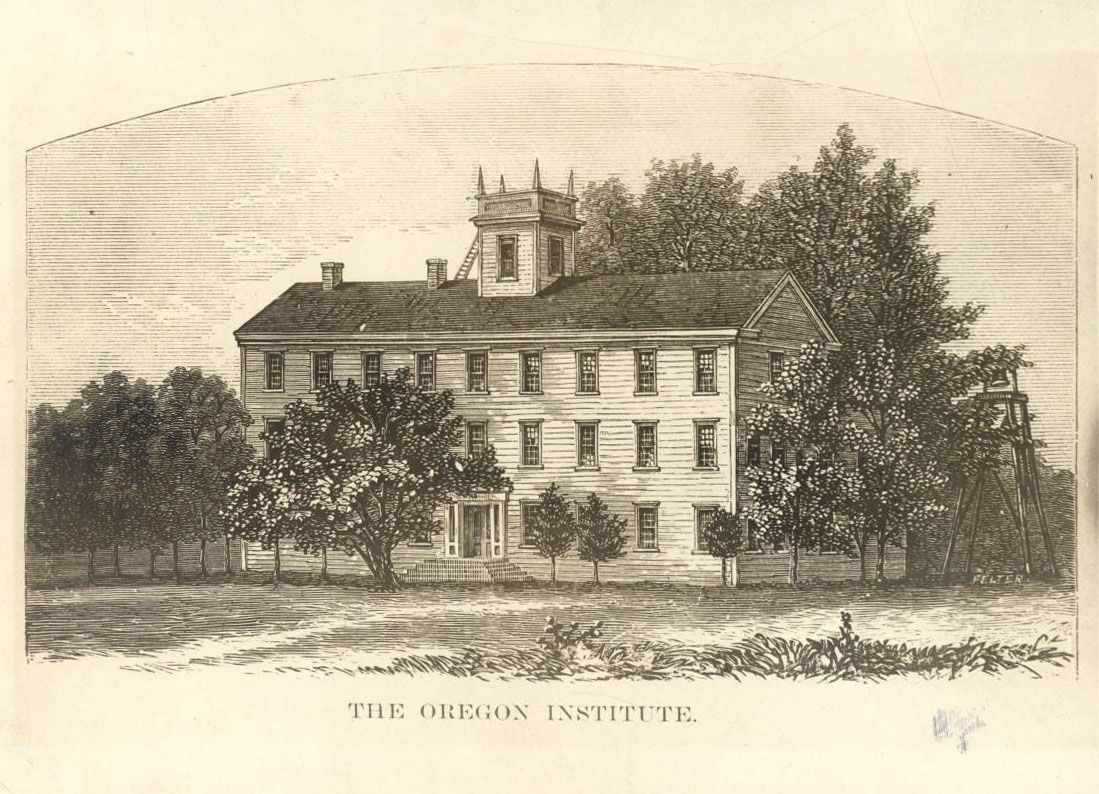
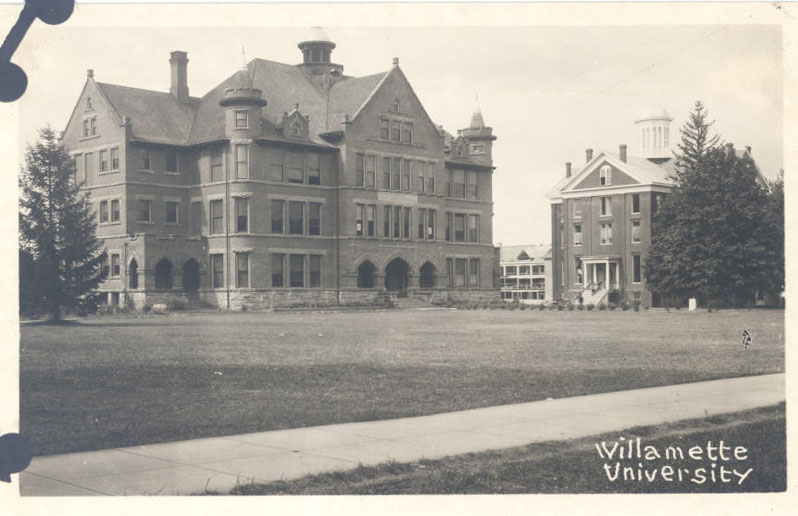
Willamette Mission closed in 1846, and the next year Parrish took up work as a preacher on the Yamhill Circuit on the west side of the Willamette River from Portland to Marysville (present-day Corvallis). “It was hard,” Parrish told an interviewer later in life, “it was all horse trails. I preached to Indians and to the whites.” In 1848, he added to his responsibilities a second circuit on the east side of the Willamette, from Oregon City to the Santiam River. In 1853, Parrish was one of three missionaries who drew up a prospectus for the Oregon Institute, a school of higher education for white pupils. The school was renamed Willamette University in 1853, and he served several terms as president of the school’s board of trustees from 1869 to 1879.
In 1851, Parrish was hired as a sub-Indian agent under Anson Dart, Oregon’s territorial superintendent of Indian Affairs. He served as an interpreter for Dart’s treaty councils with Willamette Valley and coastal tribes. Parrish’s reputation for calm and honest engagement with Native headmen led Joel Palmer—Dart’s replacement as superintendent—to select him as a sub-Indian agent in spring 1853; he was promoted to primary agent status in 1854. Although Parrish was an agent for only seventeen months, Palmer sent him to two of the superintendency’s most difficult agencies—Port Orford on the south coast and The Dalles east of the Cascade Mountains—because of his ability to dampen combustible and dangerous situations between whites and tribes. He resigned in the fall of 1854 to care for his ailing wife.
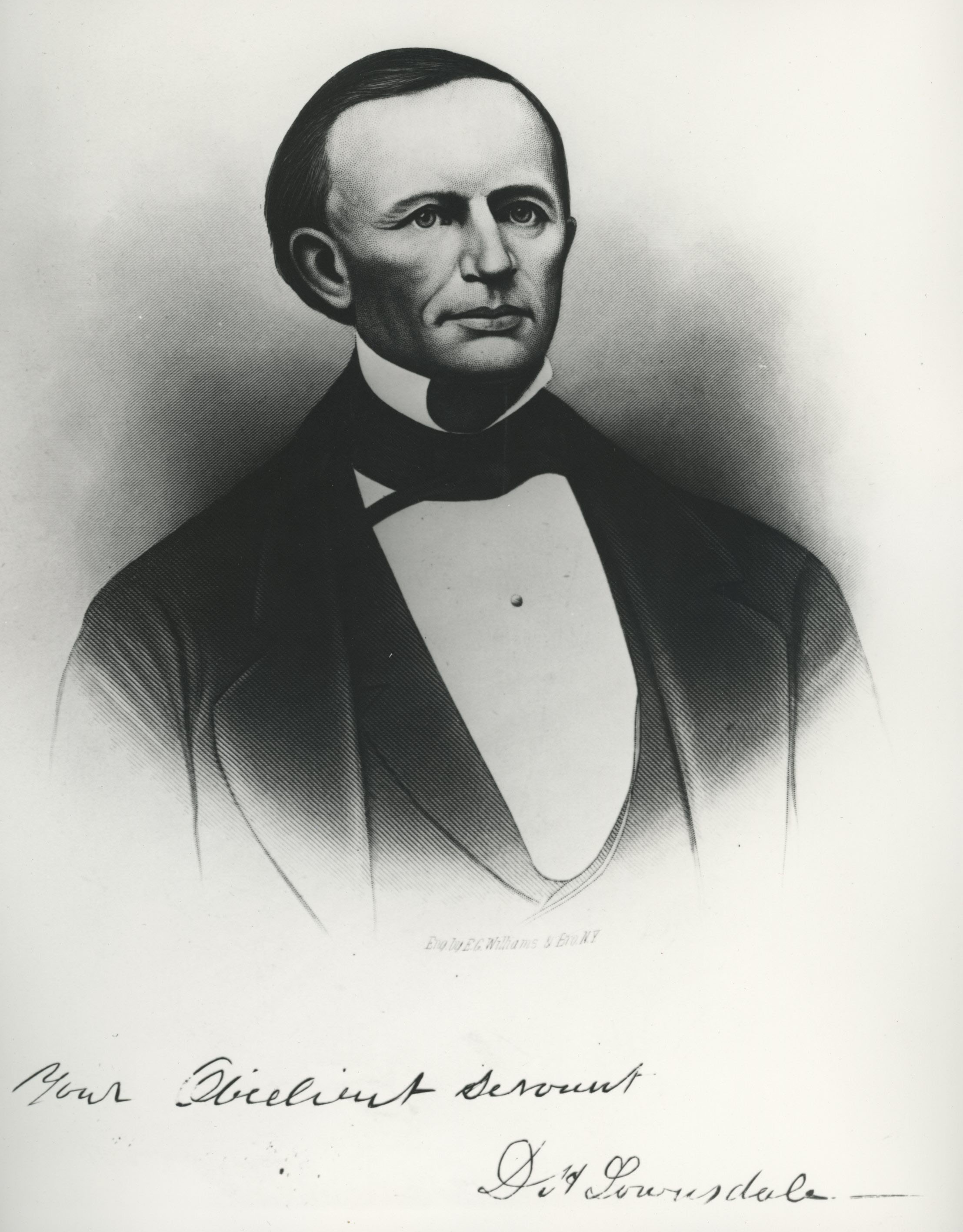
Parrish was also an entrepreneur. During the early 1860s, he owned a stationery and book store in Portland on a lot he had purchased from Francis Pettygrove in 1849. The river lot became the focus of a lawsuit Parrish brought in 1850 against Daniel Lownsdale, who had built on riverfront property that blocked Parrish’s view. The question was whether the riverfront should be considered public property, as Parrish maintained, or private property, as Lownsdale claimed. Parrish won the case, and Lownsdale appealed the decision to the Oregon Supreme Court—which ruled in Parrish’s favor—and then the U.S. Supreme Court, which dismissed the case on procedural grounds in 1858. In the end, Parrish had won his point in court only to lose the argument when Portland’s city council privatized the riverfront in 1861.
By 1864, Parrish had built a three-story building on the corner of Front Avenue and Washington Street that featured a cast iron front. In 1867, he made his twenty-nine year-old son, Samuel B. Parrish, a partner in the enterprise. Parrish continued in his business activities until retirement in 1879 and remained close to Willamette University. For the next sixteen years he was chaplain to the Oregon Penitentiary.
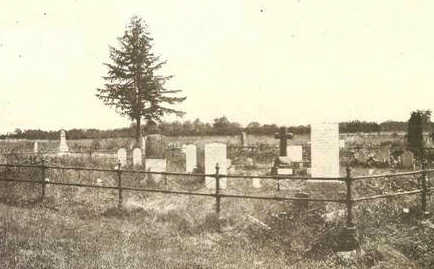
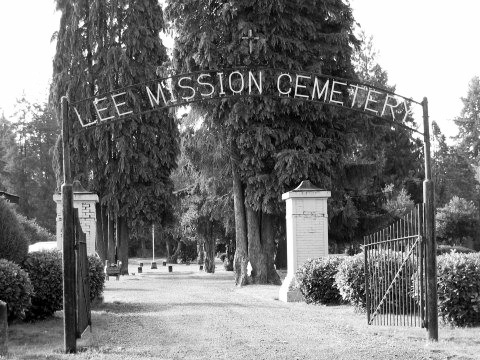
Parrish married Elizabeth Winn in 1833 and had four sons (the oldest died in 1840); she died in 1869. In 1870, he married Jane Lichenthaler, and they had two daughters; she died in 1877. He married Martha Hiatt in 1888; she died in 1933. Josiah Parrish died in Salem on May 31, 1895. He was buried in the Lee Mission Cemetery in Salem, a Methodist cemetery built on land donated by Josiah and Elizabeth Parrish in 1869.
-
![]()
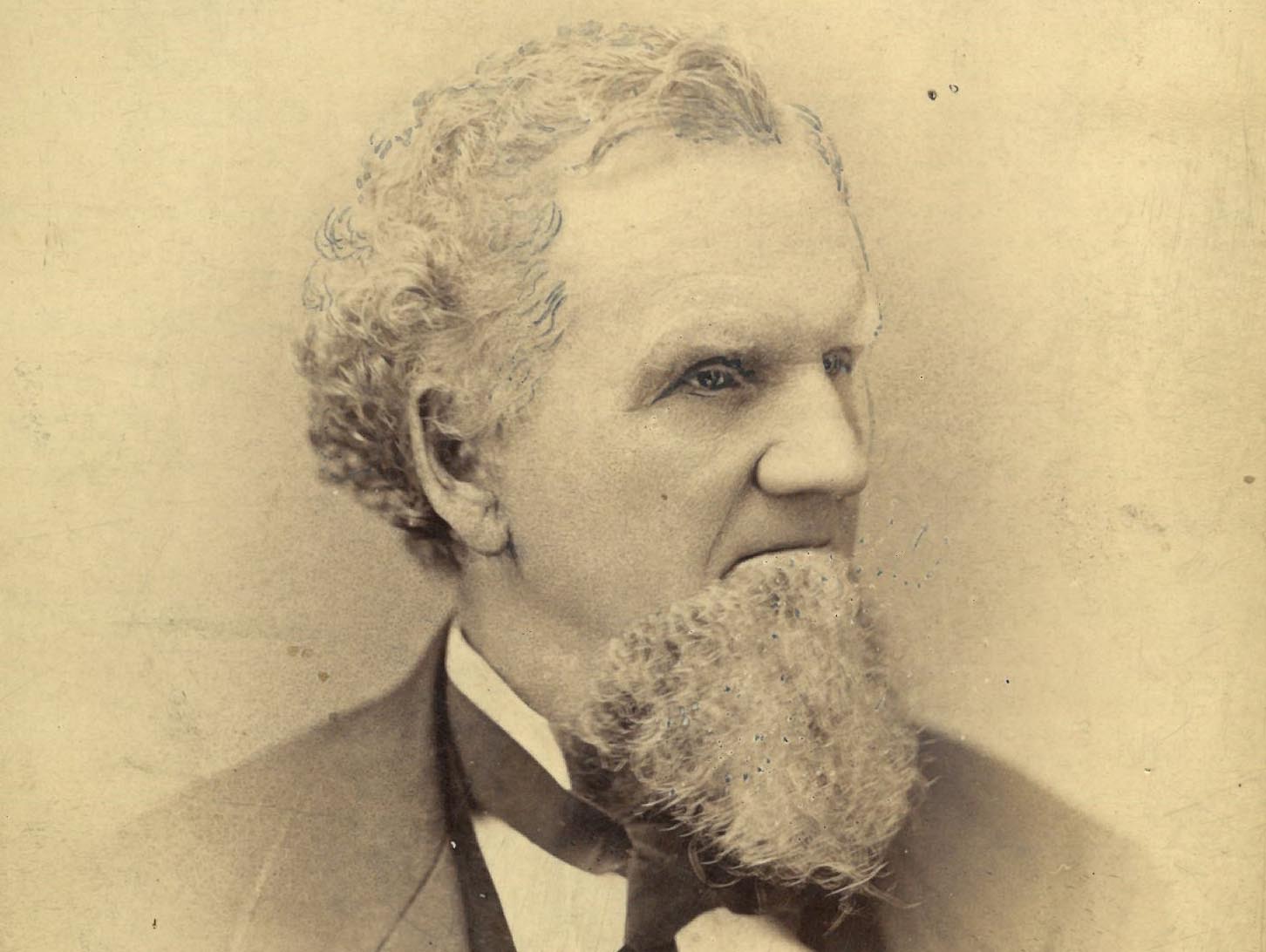
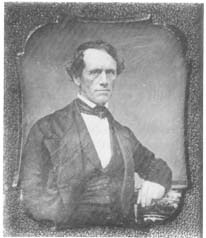
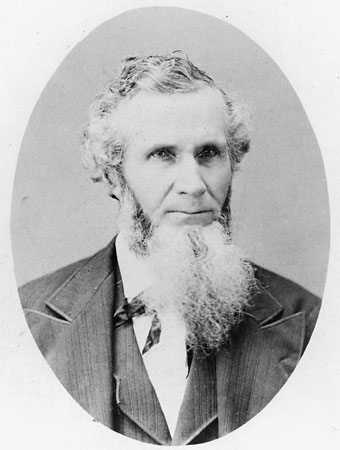
Rev. Josiah L. Parrish.
Oregon Historical Society Research Library, Photo File #846
-
![From the estate of Eva Emery Dye. Illustration from the book "Stories of Oregon" by Eva Emery Dye. Used on page 93.]()
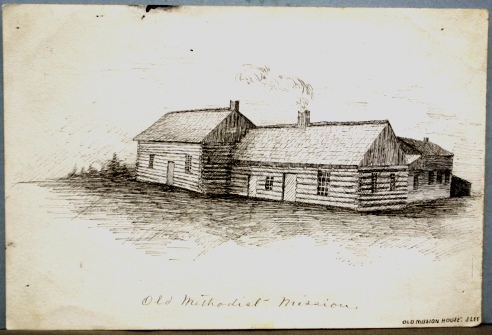
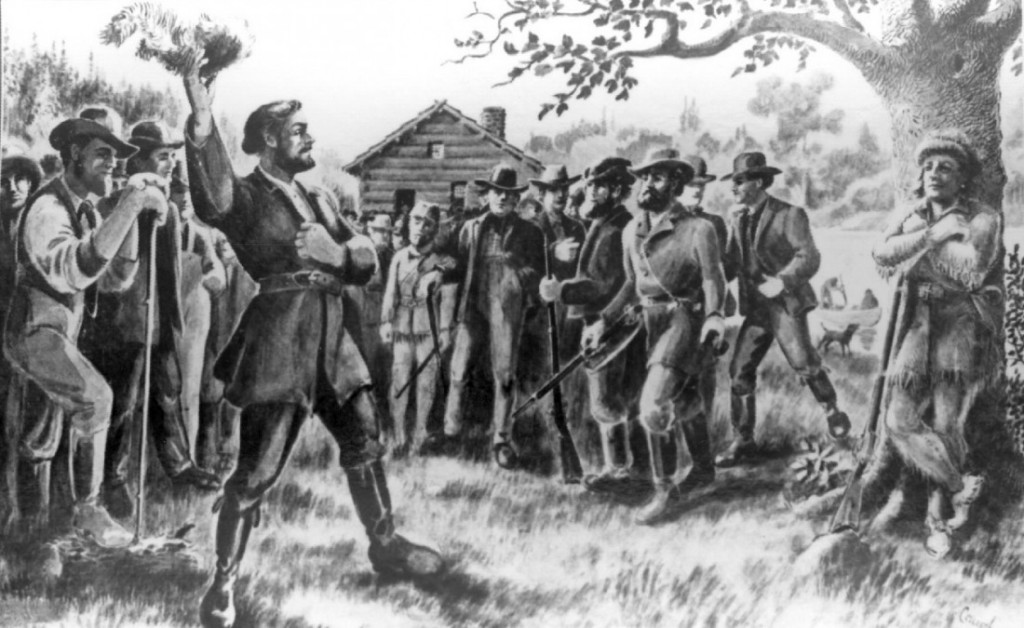
Pen and black ink drawing of "Old Methodist Mission/Old Mission House. J. Lee, c. 1900.
From the estate of Eva Emery Dye. Illustration from the book "Stories of Oregon" by Eva Emery Dye. Used on page 93. Oregon Historical Society Museum Collection, 2016-12.10
-
![]()
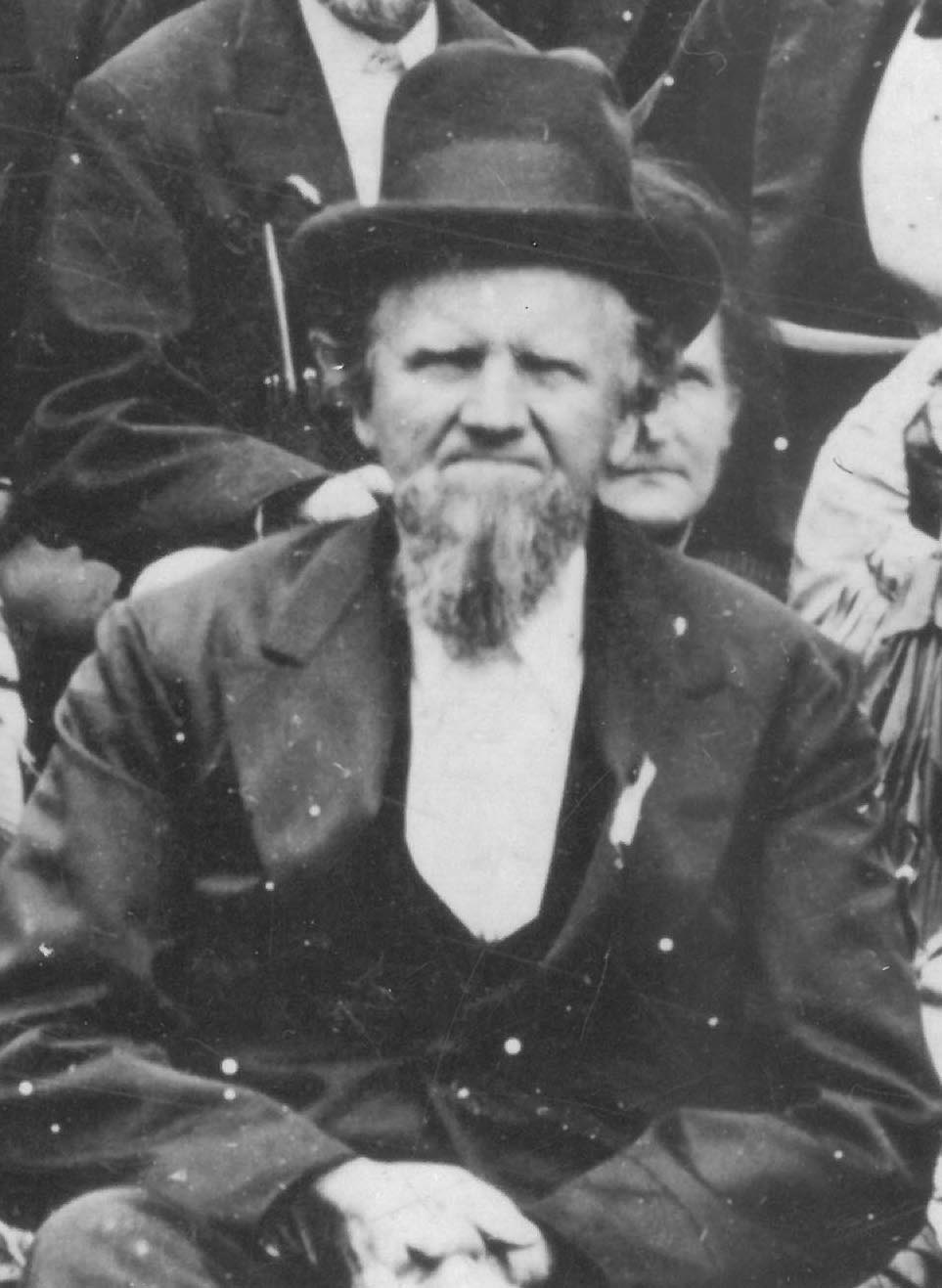
Josiah L. Parrish, 1872.
Oregon Historical Society Research Library, Photo File#846, Neg # 13000
-
![]()
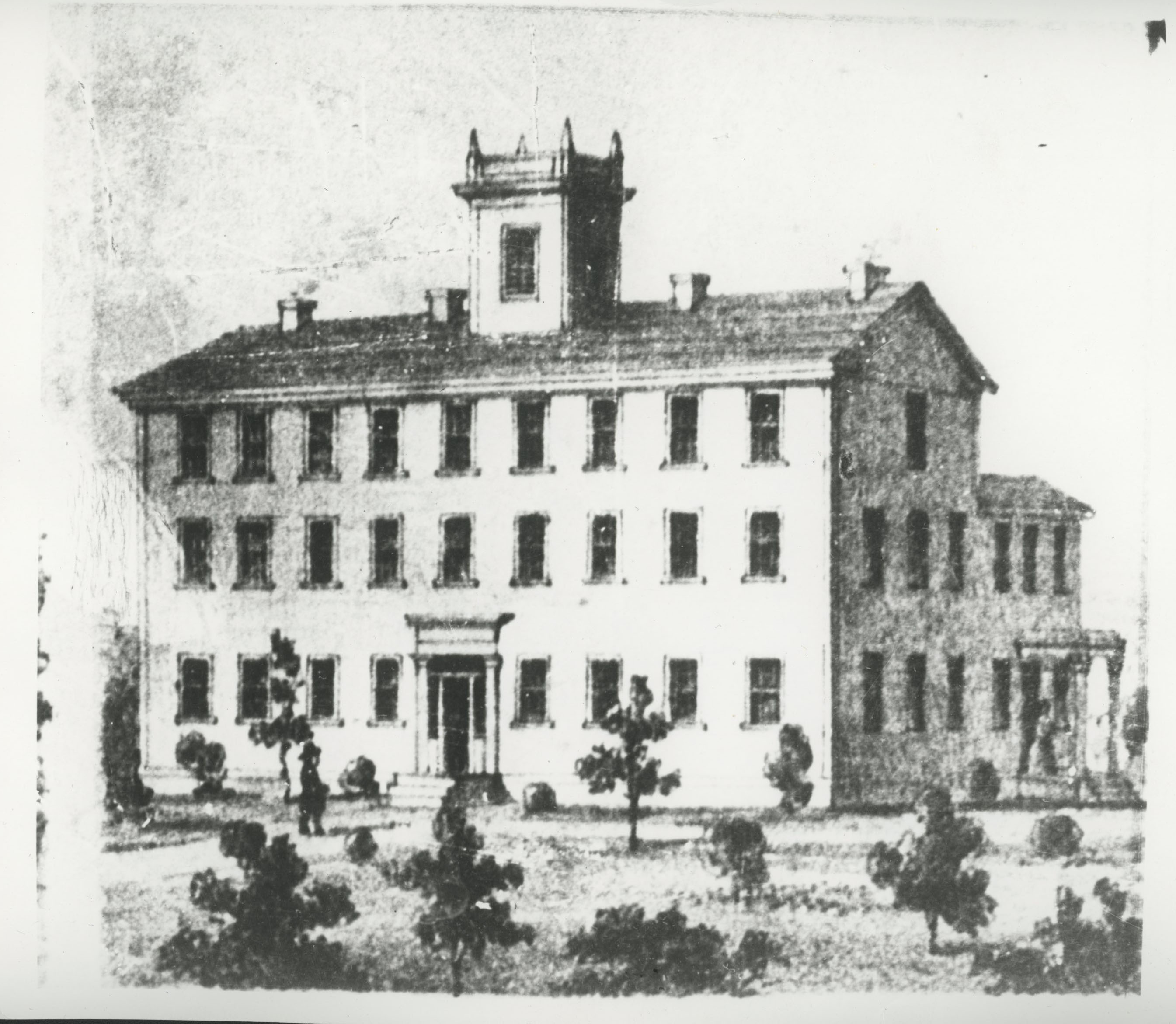
Oregon Institute, or "Wallamet University," 1858.
Courtesy Oregon Hist. Soc. Research Lib., Orhi76255
-
![A sketch of the Oregon Institute]()
Oregon Institute.
A sketch of the Oregon Institute Courtesy Oreg. Hist. Soc. Research Library, OrHi564
-
![Graves of Jason Lee and Methodist mission members in Diamond Square, about 1906.]()
Lee Mission Cemetery, Jason Lee grave, ca. 1906.
Graves of Jason Lee and Methodist mission members in Diamond Square, about 1906. In Francis H. Grubbs, comp., Memorial Services at Reinterment of Remains of Rev. Jason Lee, Salem, Oregon, June 15, 1906
-
![Main entrance gateway at 2104 D Street NE, Salem.]()
Lee Mission Cemetery, gate.
Main entrance gateway at 2104 D Street NE, Salem. Photo James Momyer, copyright Lee Mission Cemetery
Related Entries
-
![Anson Dart (1797-1879)]()
Anson Dart (1797-1879)
In 1850, Anson Dart (1797-1879), of Wisconsin, was appointed as the fir…
-
![Chinook Jargon (Chinuk Wawa)]()
Chinook Jargon (Chinuk Wawa)
According to our best information, the name "Chinook" (pronounced with …
-
![City of Salem]()
City of Salem
Salem, the capital of Oregon, is located at a crossroads of trade and t…
-
![Daniel Lownsdale (1803–1862)]()
Daniel Lownsdale (1803–1862)
Daniel H. Lownsdale was an early Portland townsite settler who served i…
-
![Jason Lee (1803-1845)]()
Jason Lee (1803-1845)
Few names in the history of early nineteenth-century Oregon are better …
-
![Joel Palmer (1810–1881)]()
Joel Palmer (1810–1881)
Joel Palmer spent just over half of his life in Oregon. He first saw th…
-
![Lee Mission Cemetery (Salem)]()
Lee Mission Cemetery (Salem)
Lee Mission Cemetery on D Street in northeast Salem was formally consti…
-
![Provisional Government]()
Provisional Government
The Provisional Government, created in May-July 1843, was the first gov…
-
![Willamette Mission]()
Willamette Mission
Willamette Mission was the first noncommercial agricultural community e…
-
![Willamette University]()
Willamette University
Willamette University, the oldest university in the West, was founded i…
Related Historical Records
Map This on the Oregon History WayFinder
The Oregon History Wayfinder is an interactive map that identifies significant places, people, and events in Oregon history.
Further Reading
Gatke, Robert Moulton. Chronicles of Willamette: The Pioneer University of the West. Portland, Ore.: Binfords & Mort, 1943.
“Anecdotes of Intercourse with the Indians.” Josiah L. Parrish, interview by H.H. Bancroft, 1878. Hubert Howe Bancroft Collection, BANC MSS P-A 59, Bancroft Library, University of California, Berkeley.
MacColl, E. Kimbark Merchants, Money & Power: The Portland Establishment, 1843-1913. Portland, Ore.: Georgian Press, 1988.