

Digital Exhibits
Jack and the Blazers
From the Jack Ramsay Vault
An insider view of the Trail Blazers in 1977
Over a decade ago, The Oregon Encyclopedia asked former Blazers coach Jack Ramsay to write entries on the history of the Trail Blazers and biographies of key players from the 1976-1977 Championship season. An engaging and talented writer, he submitted a well-informed, insightful, and somewhat idiosyncratic history of Portland's NBA team. The entry is unlike any other entry on The OE. We fact checked as much as we could--statistics, dates, and names; but there are some elements in the entry that defy fact checking. OE editors determined, for example, that Ramsay's description of the 1977 defense as "bulldog tough" and his characterization of Johnny Davis as "rock-steady" were entirely credible. From the horse's mouth, as they say. Reading through the essay is quite a ride.
We did make one major adjustment to Ramsay's original entry. He submitted everything he wrote to us in first-person, and we put it in third person, as we must with any encyclopedia entry. (Readers may find it odd when the author refers to himself as "Ramsay," but that is our doing.) We also asked independent sports writer Michael Orr to update the entry, and you'll see his work in the post-2010 section of the entry.
In this digital exhibit, we are pleased to share with you some other wonderful pieces that Jack Ramsay wrote for us--biographies and memories of some of the great players who were on the Blazers Championship team in 1977. While these pieces will not be official entries in The OE, we wanted to find a way to share them with readers.
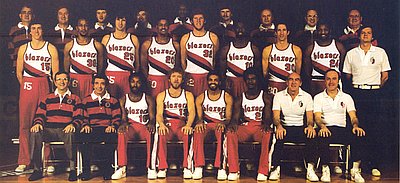
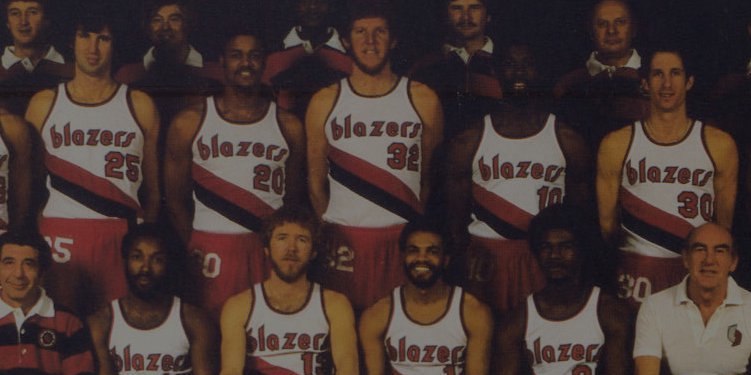
We have included Ramsay's player essays in their original first-person form. They are detailed and often funny, with stories that lived in Ramsay's head for over forty years. With Ramsay as narrator, it is clear that the profound effect the 1977 Championship has had on Portland and the fans may only be really understood by getting to know the men on the court. Ramsay's essays introduce us to seven of those players: Bill Walton, Maurice Lucas, Johnny Davis, Lionel Hollins, Lloyd Neal, Bob Gross, and David Twardzik.
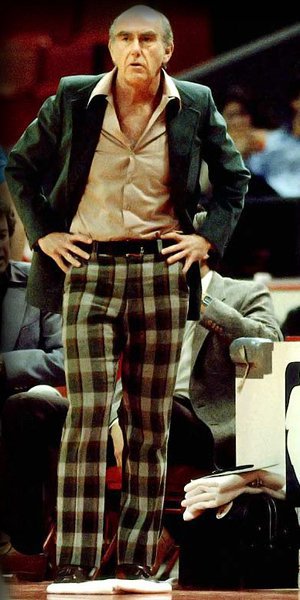
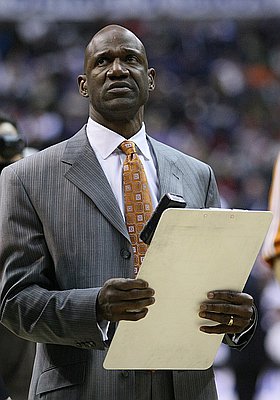
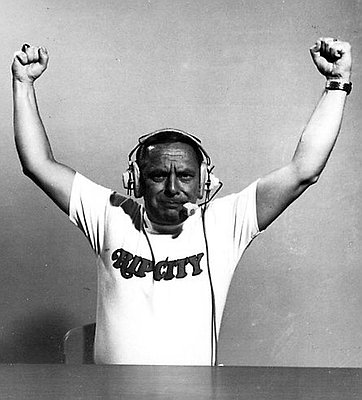
Jack Ramsay and his excellent 1970s fashion sense. Courtesy the National Basketball Coaches Association.
Team Timeline
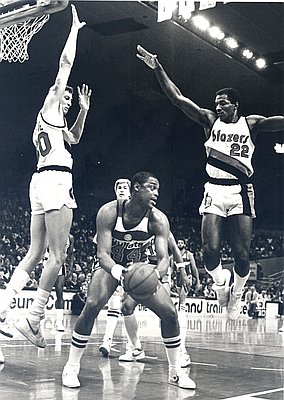
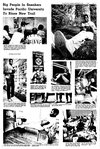
The very first professional basketball players in Oregon arrived in the fall of 1970 and folded their tall frames into the dorm rooms at Pacific University in Forest Grove for training camp. The Oregonian reported: "Big People In Sneakers Invade Pacific University to Blaze New Trail." Photos of players doing laundry, attending strategy sessions, and browsing the bookstore filled the page.
The state had an NBA franchise at last, and in a few short years, the Trail Blazers would bring home an NBA championship and inspire a new, permanent nickname for Portland: Rip City.
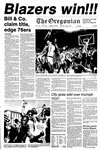
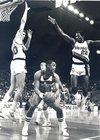
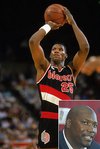
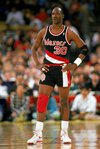
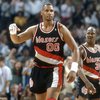

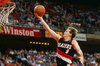
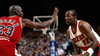
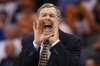
The Portland Trail Blazers
by Jack Ramsay
The Early Years
It was February 1970 when, at the last minute, sports promoter Harry Glickman pulled together the funding and Portland was awarded a National Basketball Association (NBA) franchise. The investors, who collectively contributed the necessary $3.8 million, were Herman Sarkowsky, Larry Weinberg, and Bob Schmertz. Portland joined Buffalo and Cleveland as new teams in the NBA that year.
Sarkowsky named Glickman the team’s executive vice president and general manager, and he quickly assembled a front-office staff that included Stu Inman, director of player personnel, and publicist John White. Rolland Todd, from University of Nevada, was hired as coach. White conducted a contest to find a name for the new team, and Trail Blazers received the most votes.
In forming the first Trail Blazers team, Inman made some quality selections from the NBA’s expansion pool, including Rick Adelman and Pat Riley, who would go on to have distinguished coaching careers in the NBA, and veteran players LeRoy Ellis, Ed Manning, Jim Barnett, Stan McKenzie, Dale Schlueter, and Gary Gregor. From the NBA College Draft, he selected Geoff Petrie, a highly regarded shooting guard from Princeton. The Blazers finished its first season with a respectable 29-53 record, and Petrie shared Rookie of the Year honors with Boston’s Dave Cowens.
Portland drafted Sidney Wicks, from UCLA, with the second pick in the 1971 NBA draft, anticipating a high-scoring tandem with him and Petrie. But Wicks became a disruptive force, and in February Inman stepped in as coach on a temporary basis. The team struggled to an 18-64 finish.
Jack McCloskey, a successful coach at Wake Forest, was hired as coach in April 1972, allowing Inman to return to his personnel duties. The Blazers wasted its first draft pick on seven-foot-tall LaRue Martin when future Hall-of-Famer Bob McAdoo was available, and the team’s struggles continued. They ended the 1972-1973 season with a record of 21-61. When the 1973-1974 season ended with only marginal improvement (27-55), McCloskey was released and the Blazers hired Lenny Wilkens. That spring, the team drafted Bill Walton to join Petrie and Wicks. The team entered the 1974-1975 season with high hopes.
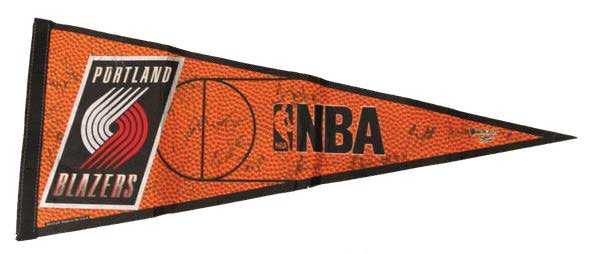
Trail Blazers pennant, signed, 2002-2003. OHS Museum, 2008-79.1
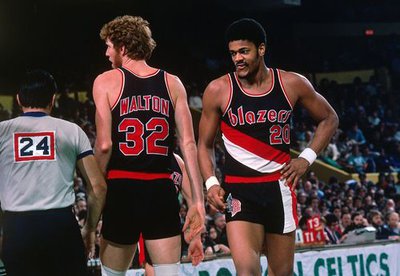
Maurice Lucas, according to Jack Ramsay
"Lucas was very effective at the low post, using pump fakes to get open jumpers and drives to the hoop— drawing fouls in the process. He was an excellent outlet passer—fired bullets to point guards Twardzik or Davis, or wingmen Hollins, Gilliam, Gross, or Steele. He and Walton were the best pair of rebounders in the NBA that season, and Lucas was acknowledged to be the league’s top power forward. But most important of all, Lucas was the Blazers’ intimidator. Nobody messed with him…or any other Blazer."
Johnny Davis
"Davis was also solid in the NBA Finals against the Philadelphia 76ers. He started every game, averaging 35 minutes, 10.5 points, and 3.3 assists. In the closing seconds of Game 6, it was Davis who chased down Walton’s tip toward the backcourt of a George McGinnis’s missed jumper, which saved the Blazers’ 109–107 victory and the NBA championship."
Lionel Hollins
"Hollins was a complete player—one who could pressure opposing guards full court, shut down the high-scoring 2-guards of the league, and be a consistent scorer on offense. He ran the floor on the fast break with excellent speed, drove hard to the basket, scored or made good passes to open teammates, and had unlimited stamina."
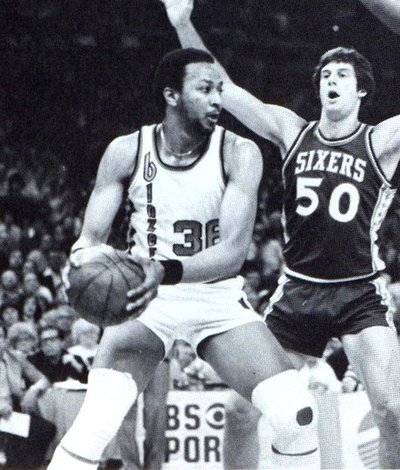
Lloyd Neal
"As the Blazers advanced in the playoffs, Neal remembers planning to be at his most effective coming off the bench. Every series demanded something a little different from him; and when it was determined that Philadelphia was the Blazers' opponent in the NBA Finals, he recalls saying to himself, “Bottom, you’ve got to do more than you’ve done yet.”"
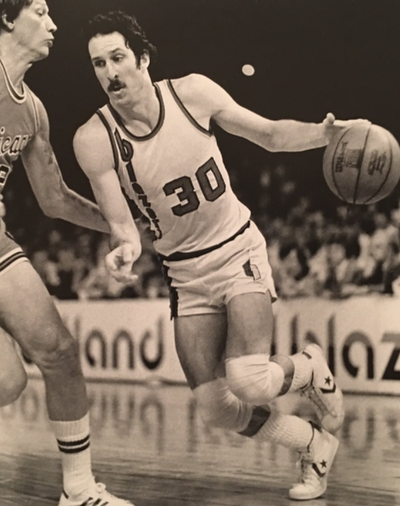
Bob Gross
"In drill work, he ran effortlessly and with very good speed, and he showed excellent floor vision and sound passing techniques. He had very good leaping ability, balance, and coordination. He moved easily without the ball, finished close-in shots above the rim, and had a feathery-soft touch with accurate jump shots."
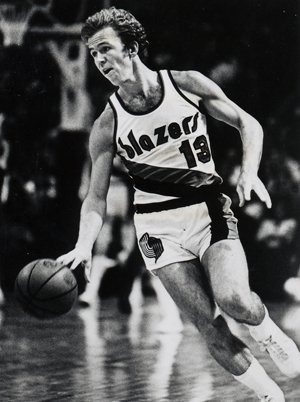
David Twardzik
"Twardzik also had a knack for scoring at the basket against the league’s big shot-blockers with a variety of twist-and-turn moves and under-control, spin-off-the-glass shot releases. Dave took special delight in driving right at the Lakers’ Kareem Abdul-Jabbar, taking the ball into Kareem’s chest and then extending his shooting hand into his face. Kareem didn’t like it."
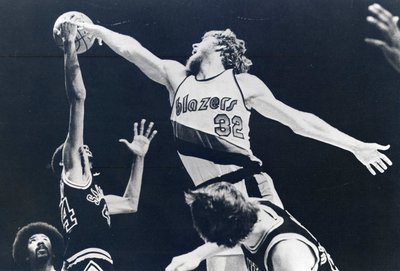
Bill Walton
"When I became the Blazers coach in June of 1976, Walton was the first player I visited. I looked on Bill as the team’s key player and knew that if the Blazers were to become a winner—something that hadn’t happened in their six-year history in the NBA—Bill and I had to be on the same page regarding the team’s style of play and his role in it."
Could history repeat itself?
We live in hope.