


Nancie Peacocke Fadeley’s life in Oregon was marked by three attributes: activism, education, and environmental protection. She served in the Oregon House of Representatives from 1971 to 1981, representing Springfield and parts of Eugene in Lane County as a Democrat. Informed by her lifelong relationship with the Methodist church, Fadeley’s legislative work helped to preserve Oregon’s environment and to protect women, especially older women.
Nancie Peacocke was born in Missouri on July 11, 1930, the daughter of Nannette Wood Peacocke and Charles Sidney Peacocke, a rural Methodist pastor. Her childhood as a “preacher’s kid,” she explained, taught her that people have a duty to care about and fix problems in their communities. Her father “really was a social worker….we knew that other people had very different lives than we did.”
Fadeley graduated from Central College (now Central Methodist University) in Fayette, Missouri, with high honors in English and modern education. She married Edward Norman Fadeley in 1953, and they moved to Eugene in 1954. Nancie taught school at Lincoln Elementary while Edward attended the University of Oregon law school. They had two children, Charles and Shira. They divorced in 1984.
When Edward was elected to the Oregon House in 1960 and then the Oregon Senate in 1962, Nancie Fadeley served as his legislative assistant. After ten years in that role, she recalled with a smile, “I could do better than them guys!” When she was elected to the Oregon House (originally House District 13; renumbered 42, then 47) in 1971, she arrived as a freshman legislator, but with ten years of experience navigating legislative committees and personalities.
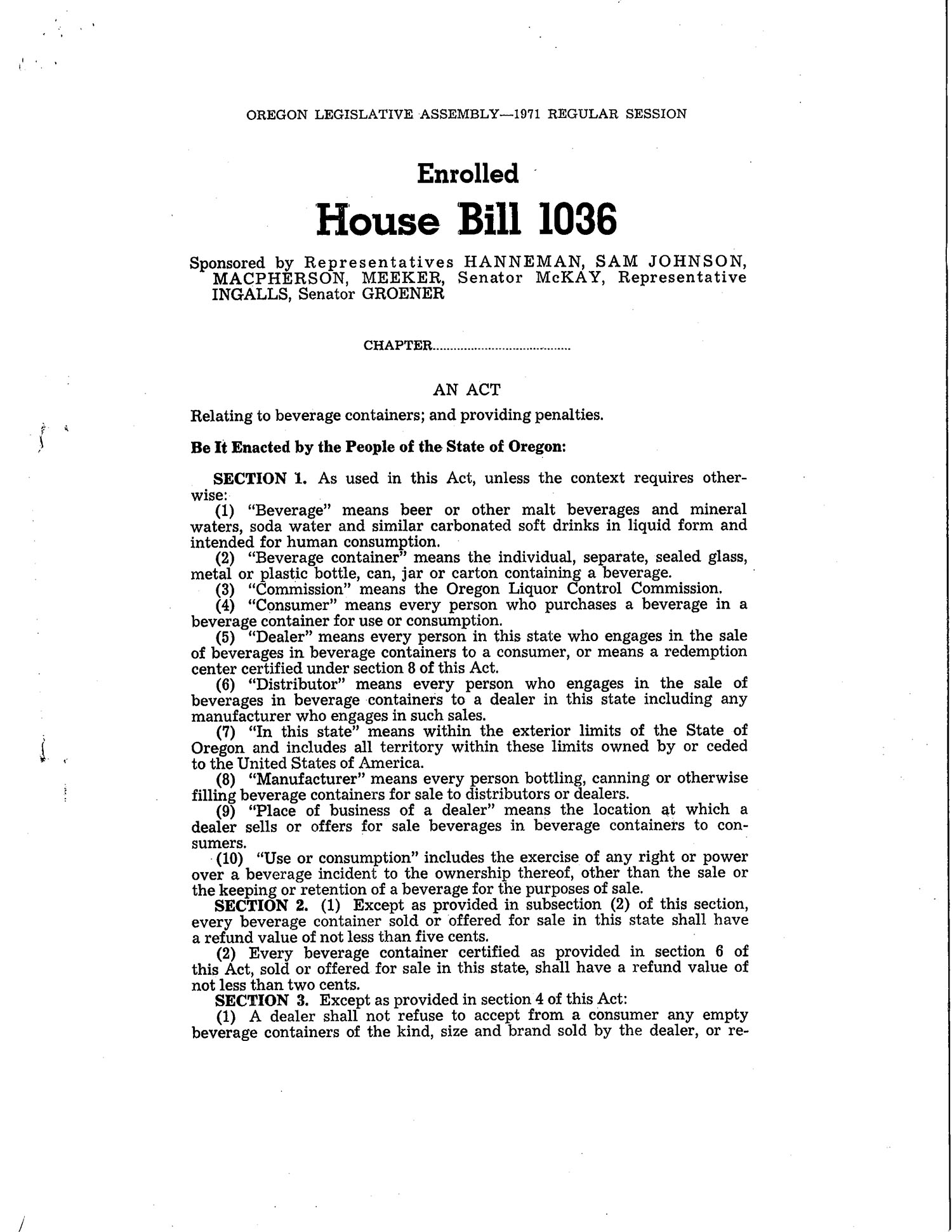
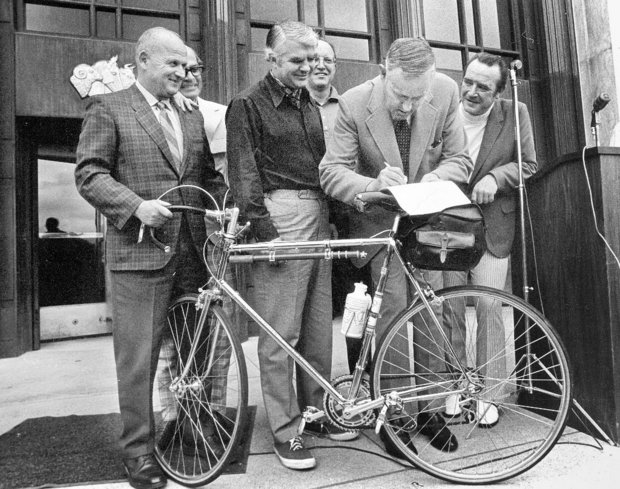
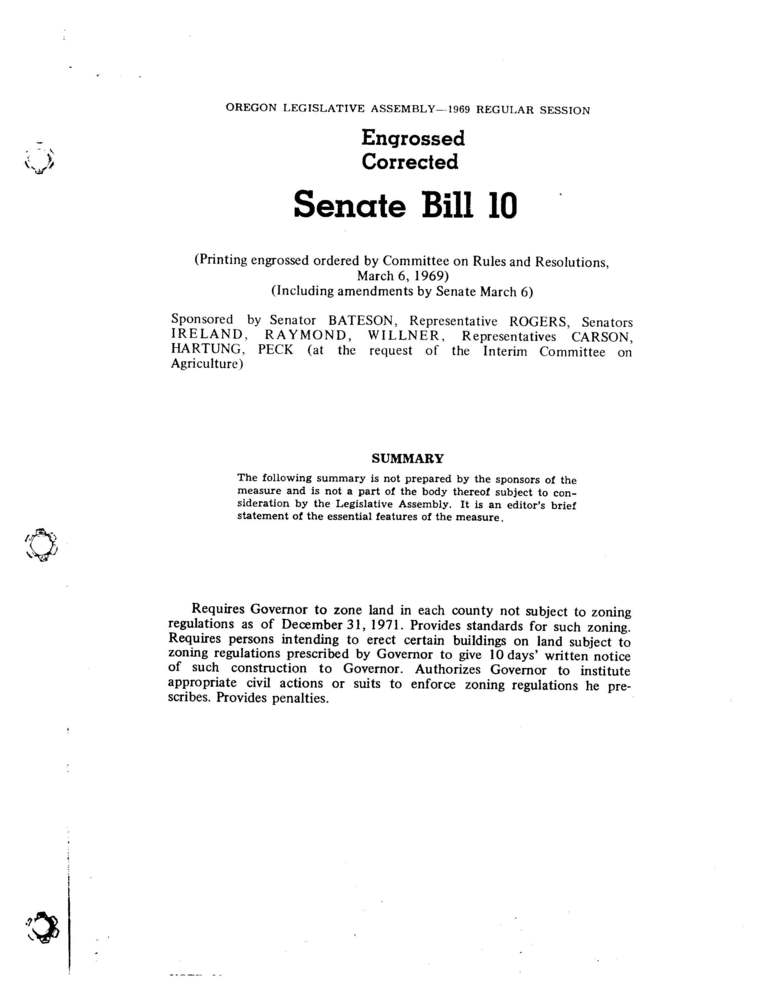
Fadeley believed in the Methodist principle of “stewardship for the earth” and dedicated much of her early legislative work to the environmental movement. Her time on the House Environment Committee involved co-crafting the original Beverage Container Act (Bottle Bill) and the prioritizing of road funds for bicycle lanes in the Oregon Bicycle Bill, both passed in 1971. Importantly, in 1973 she chaired the House Environment and Land Use Committee and championed Oregon’s statewide land-use planning law, Senate Bill 100.
In 1974, Fadeley requested that her committee be renamed the House Energy and Environment Committee to emphasize to the public the close connection between energy and environmental issues. The committee has since been modified to include the word “Climate.” She was also an early supporter of clean energy sources, such as solar and bioenergy.
Fadeley was a member of the League of Women Voters of Lane County for over fifty years, and her legislative advocacy for women led to several important laws. In 1977, a resolution to rescind Oregon’s passage of the federal Equal Rights Amendment inspired her to amend the resolution to change “rescind” to “reaffirm.” The bill passed, and Oregon’s ratification of the ERA in 1973 remains intact. (The ERA in 2026 has yet to win enough state ratifications to become federal law.)
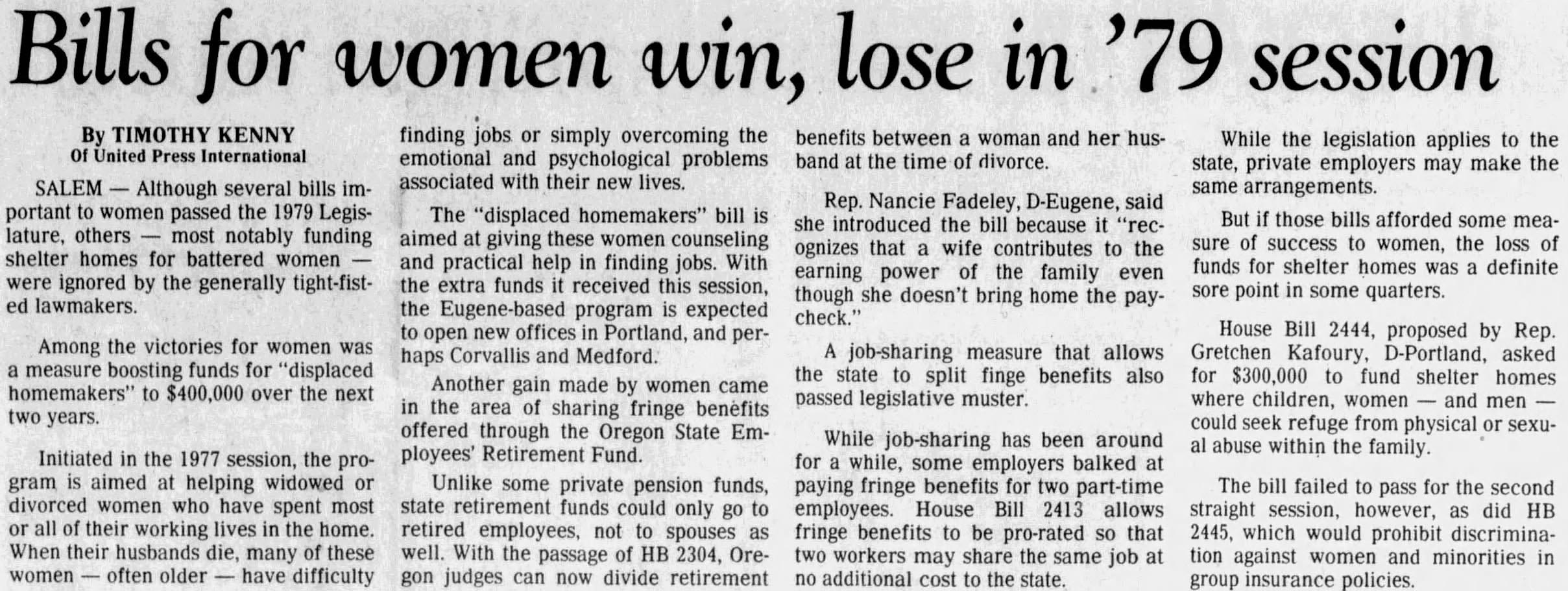
The women’s issue “closest to her heart” was the problem of displaced homemakers— “divorced or widowed women who were faced with supporting themselves, after years of not participating in the work force but staying at home raising children.” The National Organization of Women (NOW) had created a taskforce in the 1970s to address the issue, and Fadeley was among the first to create a local displaced homemaker services program. The program, based in Eugene, served as a model for similar services throughout the state and country. In the midst of this legislative activity, Fadeley earned a master’s degree in journalism from the University of Oregon in 1974.
Fadeley followed up with one of her most impactful accomplishments. In 1979, she helped change Oregon’s public employee pension system to allow benefits to be paid to someone other than the employee, such as a widow or divorced spouse. Prior to this reform, those benefits were paid only to the public employee, who was most often a man, which left many women financially unprotected.
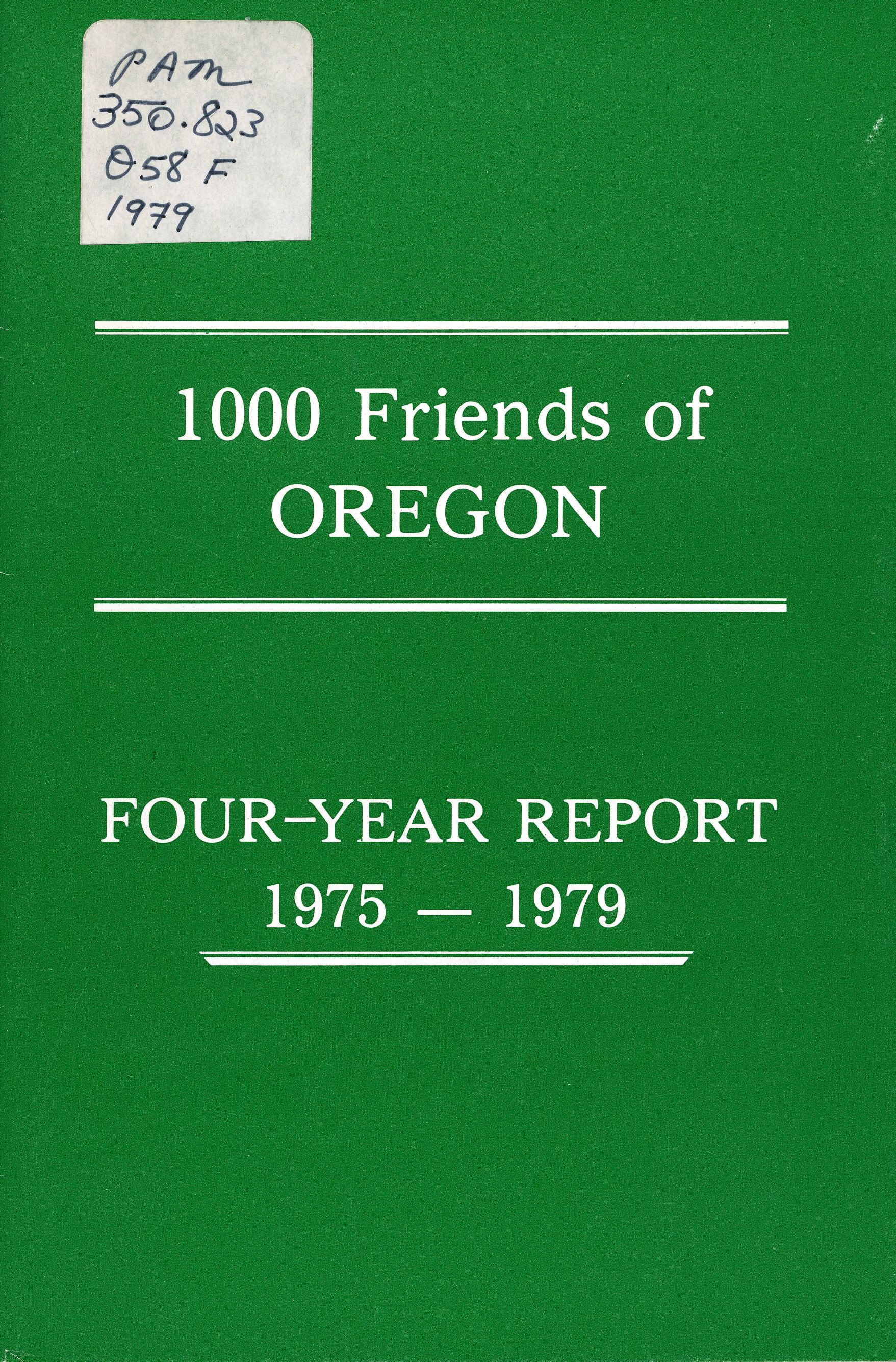
Fadeley lost her seat in the 1980 election, but she didn’t lose her activism, environmentalism, or educational bent. She was the director of public affairs for KWAX radio in Eugene (at the time an NPR affiliate) and assistant vice provost at the UO. She became a board member of 1,000 Friends of Oregon where it “was very important to keeping [Senate Bill] 100 alive and vital.” She was a charter member and national board member of the Older Women’s League, a national grassroots organization “focused on…poverty, health care and wage inequities, midlife career obstacles, and family care-taking.” Each Mother’s Day, Fadeley addressed one of those issues in the Eugene Register-Guard. She also served for many years on the National Board for Archives and History for the United Methodist Church.
For over twenty years, Fadeley identified and scheduled the speakers for the monthly luncheons of the League of Women Voters of Lane County, for which she received the Annabel Kitzhaber Education and Advocacy Award. The League noted in 2014 that, “as often as possible, she schedules female speakers.”
Nancie Fadeley died in April 2024. A family friend described the foundation for Fadeley’s many accomplishments: “She…never felt the need to get credit. Instead, it was more than enough for her to see the results for Oregon.”
-
![]()
-
![]()
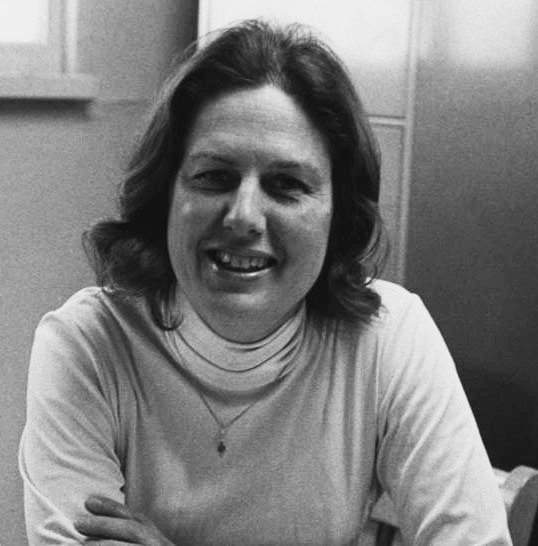
Rep. Nancie Peacocke Fadeley.
Courtesy Oregon State Capitol Foundation -
![]()
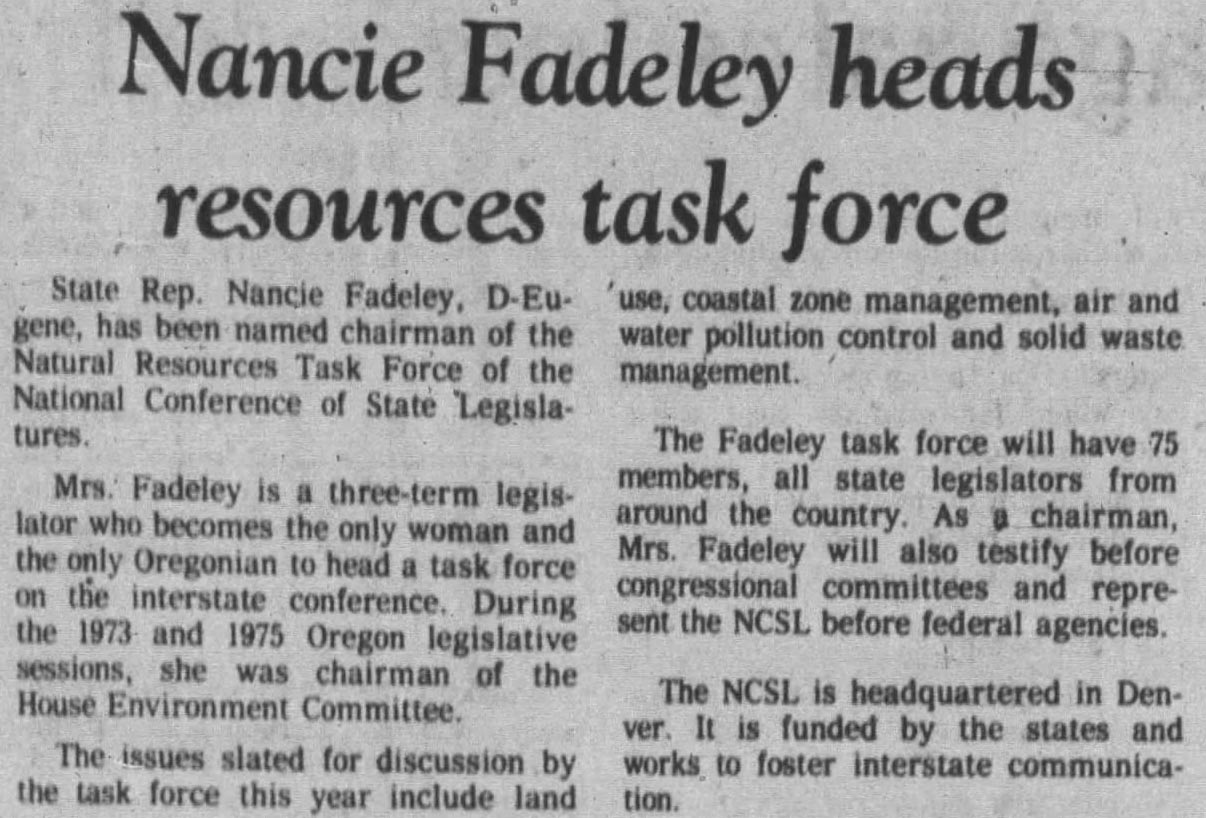
"Nancie Fadeley heads resources task force," Eugene Register-Guard article, January 14, 1976, p.17.
Courtesy Eugene Register-Guard
-
![]()
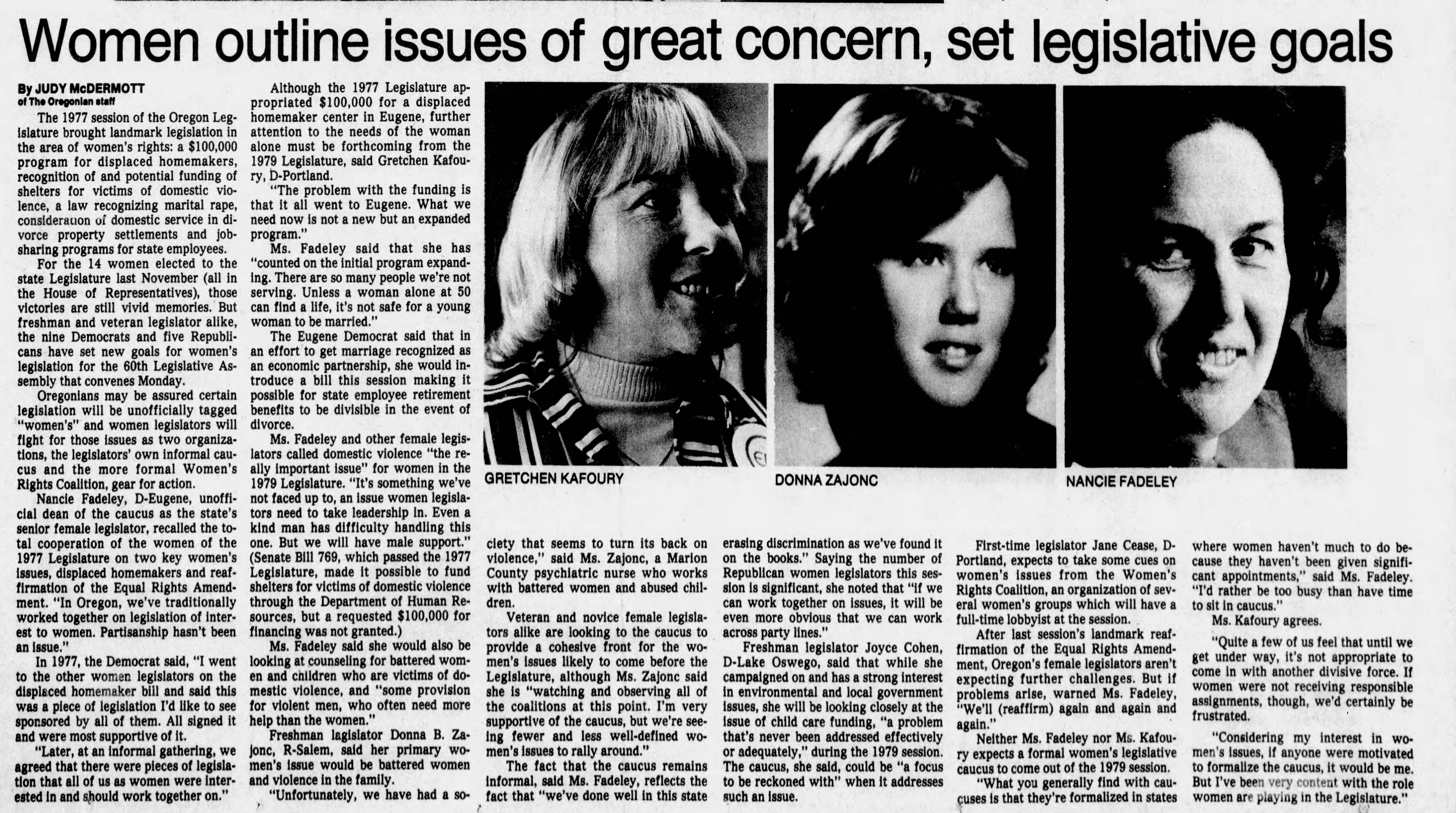
"Women outline issues of great concern, set legislative goals," Oregonian article, January 8, 1979, p.20.
Courtesy The Oregonian
-
![]()
"Bills for women win, lose in '79 session," Eugene Register-Guard article, July 7, 1979, p.6.
Courtesy Eugene Register-Guard
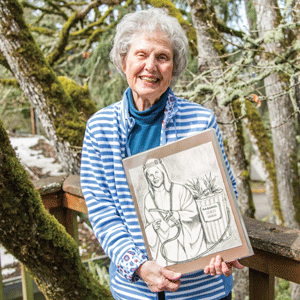
Documents
Related Entries
-
![1000 Friends of Oregon]()
1000 Friends of Oregon
1000 Friends of Oregon was founded in 1975 by Governor Tom McCall and a…
-
![Beverage Container Act (Bottle Bill)]()
Beverage Container Act (Bottle Bill)
The Oregon Beverage Container Act of 1971, popularly called the Bottle …
-
![Eugene]()
Eugene
Eugene is a metropolitan center at the head of the Willamette Valley, a…
-
![Oregon Bicycle Bill]()
Oregon Bicycle Bill
On June 11, 1971, Governor Tom McCall, with his usual flair for publici…
-
![Senate Bill 100]()
Senate Bill 100
Signed into law on May 29, 1973, Oregon Senate Bill 100 created an inst…
Related Historical Records
Map This on the Oregon History WayFinder
The Oregon History Wayfinder is an interactive map that identifies significant places, people, and events in Oregon history.